







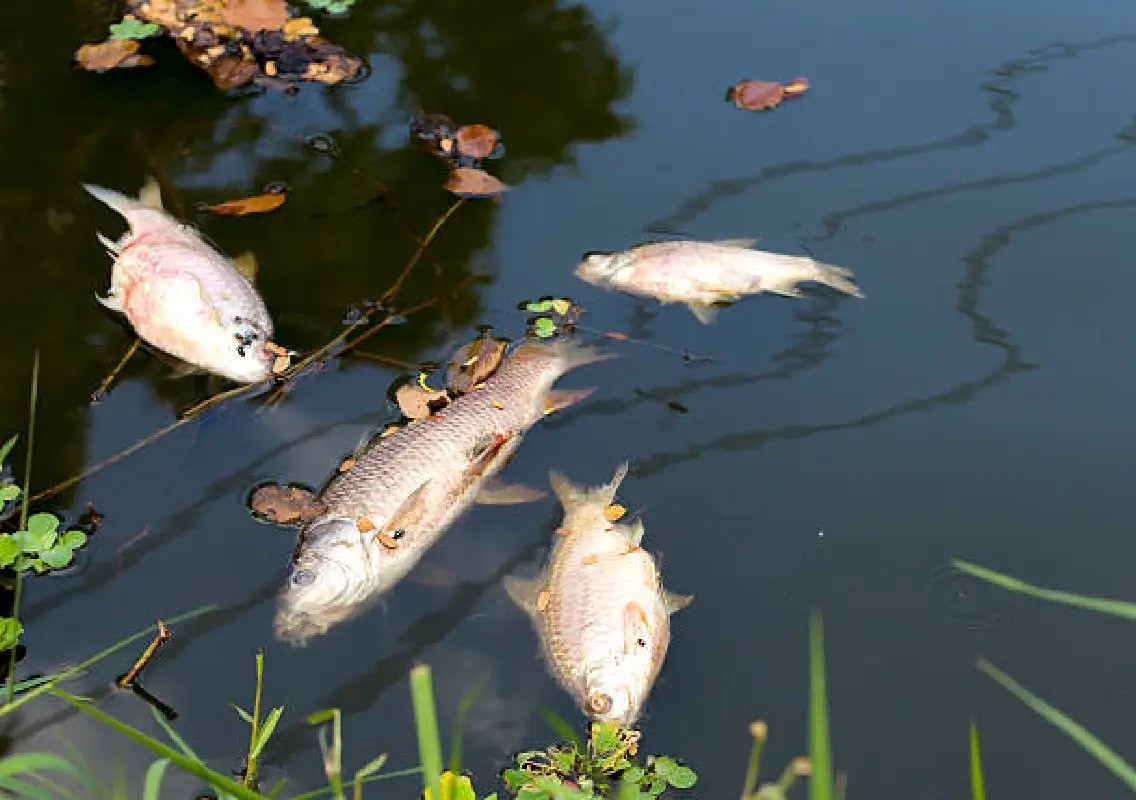


Mangaluru: A massive fish kill in the polluted Phalguni River at Malavoor-Kenjar on the outskirts of Mangaluru has triggered widespread public outrage, with residents blaming industrial waste discharge and civic negligence for the worsening environmental crisis in the region.
Large numbers of dead fish were found floating across several stretches of the river on Thursday, alarming local residents and raising serious concerns over water pollution and ecological degradation.
Locals alleged that the river water had recently turned black due to severe contamination and claimed that untreated waste from nearby industrial units has been flowing into the river for years without effective monitoring or intervention from authorities.
Residents allege years of unchecked pollution
People living near the riverbanks said the pollution has not only affected aquatic life but has also contaminated groundwater sources and household wells in surrounding areas.
Residents under the Bajpe gram panchayat limits claimed they have repeatedly raised complaints about the deteriorating condition of the river, but little action has been taken so far.
“Even the water in our wells has become polluted. Nobody is listening to our problems,” a local resident said while expressing frustration over the continuing environmental damage.
Several residents stated that the foul smell from the polluted river has become unbearable in recent weeks, especially during the summer season when water levels are low.
Locals fear the contamination could also pose serious health risks to families dependent on groundwater and nearby water sources for daily use.
The fish kill incident has intensified public anger, with many demanding immediate action against industries or agencies responsible for releasing untreated waste into the river.
Panchayat warns of protests
The pollution issue has reportedly affected several water sources within the jurisdiction of the Bajpe gram panchayat.
Frustrated by the lack of permanent solutions, panchayat representatives have warned that public protests may be organised if authorities fail to take urgent corrective measures.
Residents and local leaders have called for strict monitoring of industrial discharge, regular water quality checks and accountability from agencies responsible for maintaining environmental standards in the area.
Environmental activists have also voiced concern over the recurring pollution in the Phalguni river, stating that unchecked contamination could permanently damage the fragile river ecosystem and affect biodiversity.
They stressed the need for stronger enforcement of pollution control regulations and long-term restoration measures to revive the river.
Pollution Control Board begins investigation
Following the incident, officials from the Karnataka State Pollution Control Board visited the affected area to assess the situation.
Deputy environmental officer Dr Maheshwari Singh conducted an on-site inspection after reports of the fish kill and water contamination emerged.
Officials suspect that untreated wastewater from the Pachanady sewage treatment plant may have entered the river, contributing to the sudden decline in water quality and the death of aquatic life.
Authorities have collected water samples from multiple points in the river as well as nearby household wells for laboratory testing.
The analysis is expected to determine the exact source and nature of the contamination.
Officials said further action would be initiated based on the laboratory findings and the outcome of the investigation.
Concerns over environmental degradation grow
The incident has once again drawn attention to the growing environmental concerns surrounding the Phalguni river region and the impact of urbanisation, sewage discharge and industrial activities on local ecosystems.
Residents pointed out that pollution levels in the river have steadily worsened over the years, affecting fishing activities, agriculture and daily life in nearby villages.
Environmental experts have repeatedly warned that untreated industrial and sewage discharge into rivers can lead to oxygen depletion in water bodies, resulting in mass fish deaths and long-term ecological imbalance.
The latest incident has renewed demands for stronger environmental safeguards, regular inspections and sustainable waste management systems to protect water bodies in and around Mangaluru.
Local residents now await the Pollution Control Board’s report and hope that concrete action will be taken to prevent similar incidents in the future.