







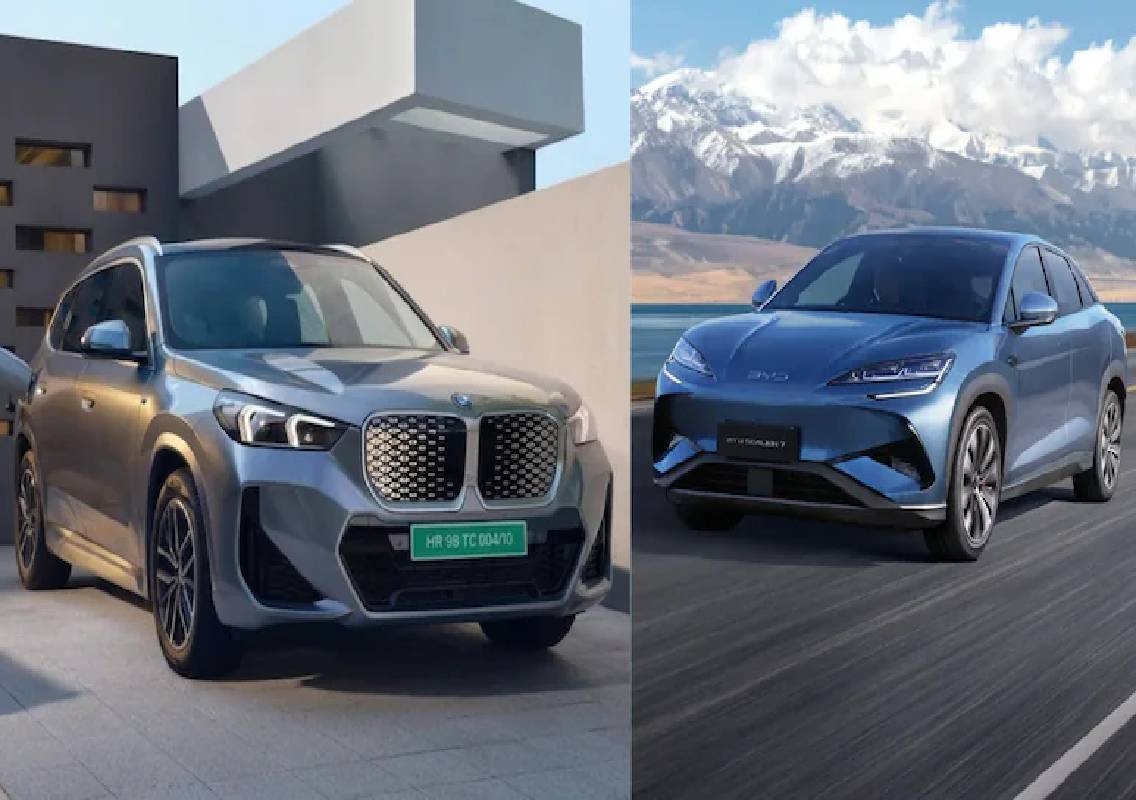


New Delhi: The launch of the BYD Sealion 7 Dynamic has changed the equation in India’s premium electric SUV segment. Priced at ₹41.90 lakh ex-showroom, the new entry-level variant gives buyers a more affordable route into BYD’s electric SUV range while taking on established premium offerings such as the BMW iX1 LWB.
The two electric SUVs target buyers looking for a premium urban vehicle, but they follow different approaches. The Sealion 7 Dynamic focuses strongly on size, battery capacity and value, while the BMW iX1 LWB brings the advantages of an established luxury badge, mature service network and comfort-oriented driving experience.
Here’s a closer look at three areas where the BYD Sealion 7 Dynamic has an advantage over the BMW iX1 LWB, and two areas where BMW continues to hold the upper hand.
1. BYD Sealion 7 Dynamic offers a significant price advantage
The biggest advantage of the Sealion 7 Dynamic is its pricing.
The new variant has been launched at ₹41.90 lakh ex-showroom, making it the entry point to the Sealion 7 range. The BMW iX1 LWB, meanwhile, sits at a considerably higher price point.
This gives BYD a strong value proposition for buyers who want a premium electric SUV but do not necessarily want to spend close to ₹50 lakh or more.
The lower price also makes the Sealion 7 Dynamic an interesting alternative for customers who may have traditionally considered German luxury EVs.
However, the lower price does come with some compromises compared with the higher-spec Sealion 7 variants. The Dynamic is positioned as the entry-level version, meaning buyers should not expect every feature available on the more expensive models.
Even so, its pricing gives BYD a clear advantage when the focus is on the amount of electric SUV buyers get for their money.
2. It gets a larger battery than the BMW iX1 LWB
Another area where the BYD has an advantage is battery capacity.
The Sealion 7 Dynamic uses a 71.8 kWh Blade battery and claims an NEDC range of 520 km. The BMW iX1 LWB uses a smaller 66.4 kWh battery and is quoted with a range of up to 546 km under its test conditions.
The two figures are based on different testing cycles, so they cannot be directly compared as a like-for-like real-world range figure.
Nevertheless, the BYD’s larger battery is an important advantage on paper, particularly for buyers who place importance on battery capacity.
The larger battery can also make the Sealion 7 Dynamic appear more compelling to customers looking for an EV suited to longer journeys.
The BMW, however, manages to claim a higher official range figure despite its smaller battery, highlighting the importance of efficiency and testing methodology rather than battery size alone.
3. The Sealion 7 is a bigger SUV
The third major advantage for the BYD is its physical size.
Despite the BMW carrying the Long Wheelbase designation, the iX1 LWB remains a compact SUV. The Sealion 7 is positioned in a larger midsize SUV category and offers substantially greater exterior dimensions.
The Sealion 7 measures:
- Length: 4,830 mm
- Width: 1,925 mm
- Height: 1,620 mm
- Wheelbase: 2,930 mm
The BMW iX1 LWB measures:
- Length: 4,616 mm
- Width: 1,845 mm
- Height: 1,627 mm
- Wheelbase: 2,800 mm.
The difference is particularly noticeable in length, width and wheelbase.
For passengers, the larger dimensions can translate into a roomier cabin and more rear-seat legroom. This could make the Sealion 7 particularly attractive to buyers who regularly travel with family or chauffeur-driven rear passengers.
The BMW’s smaller footprint, meanwhile, can be an advantage in crowded city environments where manoeuvrability and parking ease are important.
Where the BMW iX1 LWB does better
While the BYD has clear advantages in price, battery capacity and size, the BMW still has two important strengths.
4. BMW has stronger brand value and a wider service network
BMW’s biggest advantage is its established luxury-car presence in India.
The German brand has built significant brand equity, along with a mature sales and service network in major cities. For luxury-car buyers, the badge itself can be an important part of the purchase decision.
BMW also has years of experience selling premium vehicles in India, giving customers greater familiarity with its dealerships, service operations and ownership ecosystem.
BYD, by comparison, is still developing its brand image and service network in the Indian market.
This does not necessarily mean that the BYD offers an inferior ownership experience, but customers considering a premium EV may still value the reassurance associated with an established luxury manufacturer.
Resale-value expectations can also influence the decision. BMW’s long-standing presence in India’s luxury-car market gives it an advantage in terms of familiarity and perceived premium positioning.
5. BMW offers a more comfort-focused driving experience
The second area where the BMW iX1 LWB has an advantage is ride comfort.
The iX1 LWB’s suspension tuning, steering feel and overall dynamics are designed to provide a comfortable and composed experience in both city and highway conditions.
The Sealion 7, in contrast, has a firmer and more dynamic setup. While this can make the BYD feel engaging to drive, early impressions suggest that the suspension can feel stiffer when dealing with broken or uneven surfaces.
Indian roads can be challenging for any vehicle, particularly when potholes, speed breakers and rough patches are involved.
For buyers who prioritise a plush and relaxed driving experience, the BMW may therefore have the stronger appeal.
Those who prefer a firmer and more responsive driving character may find the BYD’s setup more attractive.
BYD focuses on value, BMW on luxury
The comparison ultimately highlights two very different philosophies.
The BYD Sealion 7 Dynamic is designed to offer a lot of electric SUV for the money. Its lower price, larger battery and bigger dimensions make it particularly attractive to buyers who prioritise value, space and battery capacity. (NDTV)
The BMW iX1 LWB, on the other hand, relies heavily on its established luxury credentials. Its stronger brand presence, mature service network and comfort-oriented driving characteristics can justify its premium for buyers who place greater importance on ownership experience and brand reputation.
Which one makes more sense?
The answer depends largely on what the buyer values.
For someone looking for maximum space and value, the Sealion 7 Dynamic makes a strong case. It is larger than the BMW and starts at a considerably lower price.
For buyers who want an established luxury badge and place a high value on dealership and service support, the BMW iX1 LWB remains an attractive proposition.
Ride comfort is another important consideration. Those frequently driving on uneven roads may prefer the BMW’s more comfort-focused setup, while buyers who appreciate a firmer driving character may lean towards the BYD.
A new challenge for premium EVs
The arrival of the Sealion 7 Dynamic also shows how competition is changing in India’s premium EV market.
Buyers now have more choices beyond traditional luxury manufacturers, with brands such as BYD offering larger vehicles and substantial battery packs at comparatively aggressive prices.
The new Dynamic variant strengthens that proposition by lowering the entry price of the Sealion 7 range to ₹41.90 lakh.
At the same time, established manufacturers such as BMW continue to rely on brand reputation, customer experience and refinement to differentiate their products.
Conclusion
The BYD Sealion 7 Dynamic has three clear advantages over the BMW iX1 LWB: a lower price, a larger battery and a bigger overall footprint. Its ₹41.90 lakh introductory ex-showroom price makes it significantly more accessible, while its 71.8 kWh battery and larger dimensions strengthen its value proposition.
The BMW iX1 LWB fights back with two important strengths: BMW’s established brand and service network, along with a more comfort-focused driving experience. Its suspension and overall setup are better suited to buyers looking for a plush and composed ride.
Ultimately, the Sealion 7 Dynamic is the more value-focused choice, particularly for buyers who prioritise space and battery capacity. The BMW iX1 LWB remains the more established premium choice for those who value brand reputation, ownership support and ride comfort.