







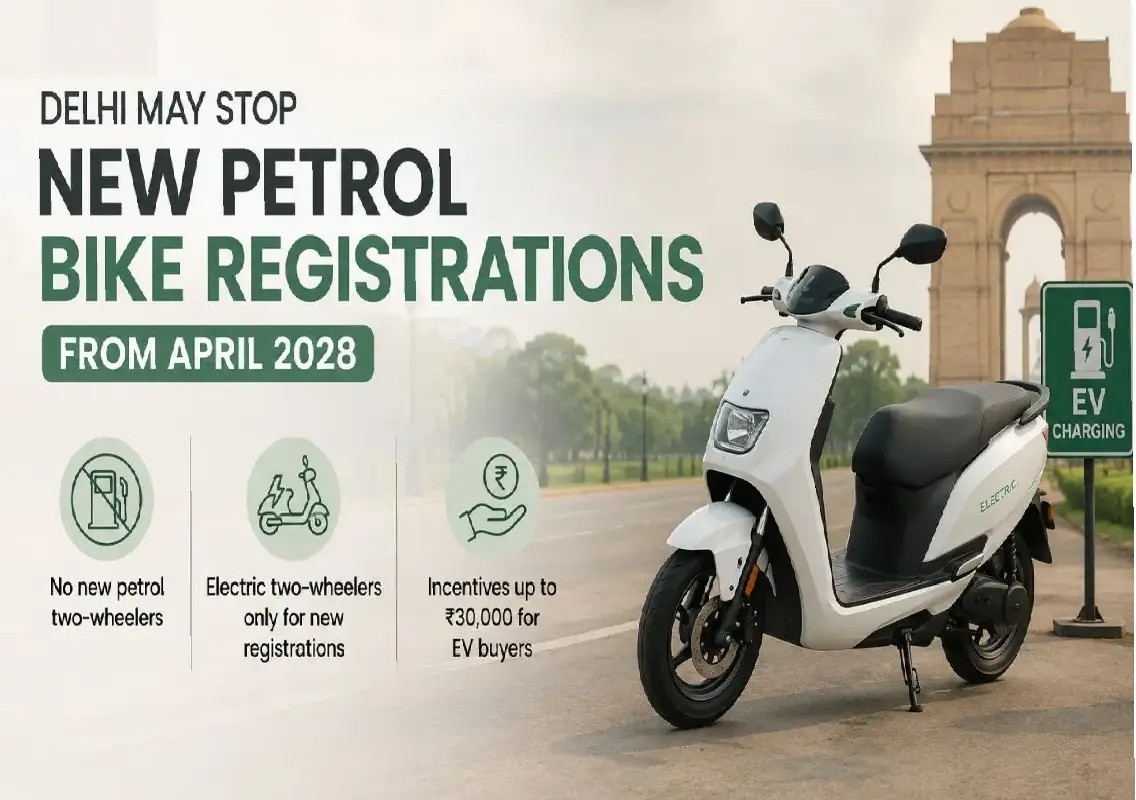


The Delhi government has announced that it will stop registering new petrol-powered two-wheelers from April 2028 as part of its revised Electric Vehicle (EV) Policy, marking a major step towards reducing vehicular emissions and improving air quality in the national capital.
The policy is aimed at accelerating the adoption of electric vehicles while supporting India’s transition to cleaner and more sustainable transportation.
Petrol two-wheelers to be phased out
Under the revised policy, registration of new petrol-powered two-wheelers will be discontinued from April 2028. The government also plans to expand the use of electric vehicles across its own departments by transitioning government fleets to EVs.
Officials said the move is expected to reduce air pollution, lower dependence on fossil fuels and encourage wider adoption of electric mobility in Delhi.
Focus on pollution control
The EV Policy will work alongside Delhi’s Winter Action Plan, which is designed to strengthen pollution-control measures during the months when air quality typically deteriorates.
Authorities said coordinated implementation of the EV policy and the Winter Action Plan will help curb vehicular emissions, one of the major contributors to pollution in the city.
Public reaction remains divided
The announcement has triggered mixed reactions among the public. While many welcomed the decision as a necessary step towards cleaner air, others argued that the transition should be supported by better infrastructure and financial incentives.
Many residents called for the expansion of EV charging stations across the city before restrictions on petrol vehicles come into effect. Others stressed the need to make electric two-wheelers more affordable through subsidies and improved financing options.
Experts believe the success of the policy will depend on the availability of reliable charging infrastructure, affordable electric vehicles and a smooth transition plan that balances environmental goals with the needs of daily commuters