







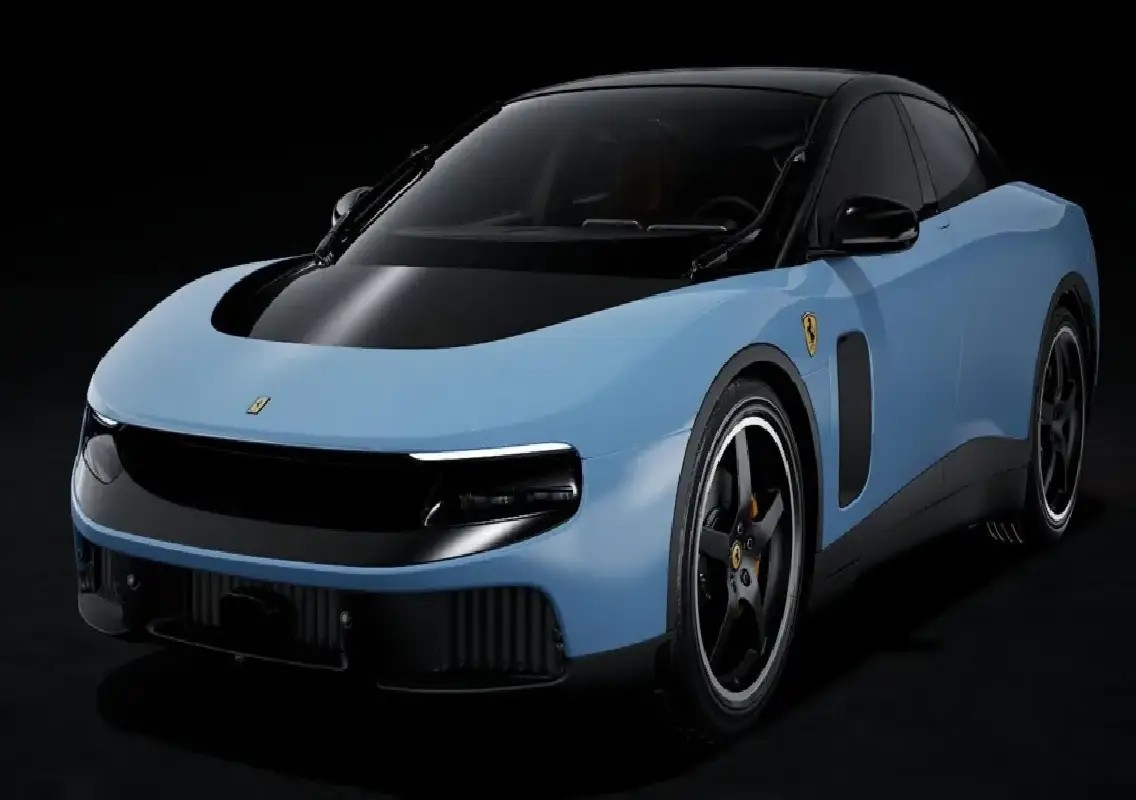


Maranello: Ferrari’s first fully electric vehicle, the Luce, has triggered intense debate across the automotive world, drawing criticism from loyal enthusiasts, investors and public figures despite being unveiled with considerable fanfare. Designed under the creative direction of renowned designer Jony Ive, the Luce represents one of the most significant transformations in Ferrari’s history as the iconic Italian marque enters the electric vehicle era.
The launch attracted global attention, with Italian President Sergio Mattarella and Pope Leo XIV among those invited to view the luxury carmaker’s first electric model. However, the vehicle’s debut was quickly overshadowed by criticism over its design, pricing and departure from Ferrari’s traditional identity.
A historic shift for Ferrari
The Luce marks Ferrari’s first all-electric vehicle and its first five-seater model, signalling a major strategic shift for a company long associated with high-performance petrol-powered sports cars and distinctive engine sounds.
Ferrari had resisted the transition to fully electric vehicles for years, even as competitors and mainstream manufacturers accelerated their EV programmes. The Luce therefore represents a landmark moment for the company and the broader luxury automotive sector.
Performance-wise, the vehicle remains true to Ferrari’s reputation. The Luce reportedly accelerates from 0 to 60 mph in approximately 2.5 seconds and can exceed a top speed of 190 mph, placing it among the fastest electric performance cars in the world.
Design draws sharp criticism
While the performance figures have impressed many observers, the vehicle’s styling has become the focal point of controversy.
Unlike Ferrari’s traditional low-slung sports cars, the Luce features a larger and more unconventional design that some critics argue lacks the visual identity associated with the brand.
Former Ferrari chairman Luca Cordero di Montezemolo reportedly criticised the vehicle, warning that it risks undermining Ferrari’s legacy. Similar concerns have been voiced by enthusiasts who believe the design does not reflect the brand’s historic character.
Online reactions have ranged from praise for innovation to sharp criticism, with social media users comparing the vehicle to mainstream electric cars and posting alternative AI-generated interpretations of how the car could have looked.
Market reacts cautiously
Investor sentiment also reflected uncertainty surrounding Ferrari’s bold move into the EV market. Shares reportedly fell by approximately 8 per cent following the vehicle’s unveiling, indicating concerns about customer acceptance and the long-term impact on the brand’s image.
The Luce carries a price tag of approximately 640,000 US dollars, placing it firmly within the ultra-luxury segment. Some analysts have questioned whether buyers will view the premium as justified amid increasing competition from high-performance electric vehicles produced by established and emerging manufacturers.
However, Ferrari Chief Executive Officer Benedetto Vigna has defended the vehicle, stating that interest from prospective buyers has been encouraging and that the pricing reflects the innovation and engineering involved.
Growing competition in the EV market
Ferrari’s move comes at a time when the global electric vehicle market is becoming increasingly competitive, particularly in China, where manufacturers have rapidly expanded into the premium segment.
Companies such as BYD have introduced high-performance electric models capable of rivaling traditional luxury sports cars. The emergence of these competitors has intensified pressure on established European brands to innovate while preserving their identity.
Several major manufacturers have also reassessed their EV strategies amid fluctuating demand. Luxury sports car maker Lamborghini has scaled back plans for a fully electric model and continues to prioritise hybrid technology. Other global brands, including Porsche and Ford Motor Company, have similarly adjusted their electric vehicle plans.
New customers or brand risk?
Industry experts believe the Luce may appeal to a younger generation of luxury car buyers who are more receptive to electric vehicles than Ferrari’s traditional customer base.
Analysts suggest the unconventional design could help Ferrari attract entirely new buyers while simultaneously risking alienation of long-time enthusiasts who associate the brand with petrol-powered supercars.
The debate mirrors the controversy that surrounded Ferrari’s first SUV, the Ferrari Purosangue, which initially faced criticism but later achieved commercial success.
Whether the Luce ultimately becomes a landmark success or a divisive experiment remains to be seen. What is certain is that Ferrari’s entry into the electric age has generated one of the most talked-about automotive stories of the year.