









The Indian automobile industry is expected to witness significant changes in 2026 as evolving technology, changing consumer preferences and government policies drive a shift towards multiple powertrain options. Electric vehicles are moving steadily into the mainstream, hybrid models are gaining popularity and flex fuel vehicles are now emerging as another key component of the industry’s future strategy.
Major automobile manufacturers are increasingly adopting a multi-powertrain approach to meet market demands and regulatory requirements while providing consumers with wider choices.
Among leading manufacturers, Maruti Suzuki and Tata Motors are preparing to introduce their first flex fuel vehicles in India by the end of the year.
What are flex fuel vehicles?
Flex fuel vehicles (FFVs) are designed to operate using petrol blended with a higher percentage of ethanol.
These vehicles can typically run on fuel blends such as E85, which contains 85 per cent ethanol and 15 per cent petrol, and E100, which consists of nearly pure ethanol.
India has already achieved nationwide availability of E20 petrol and the introduction of FFVs is expected to support the country’s broader goals of reducing dependence on imported crude oil.
The technology is also expected to help reduce vehicle emissions while potentially lowering fuel costs for consumers.
Maruti Suzuki preparing Fronx Flex Fuel model
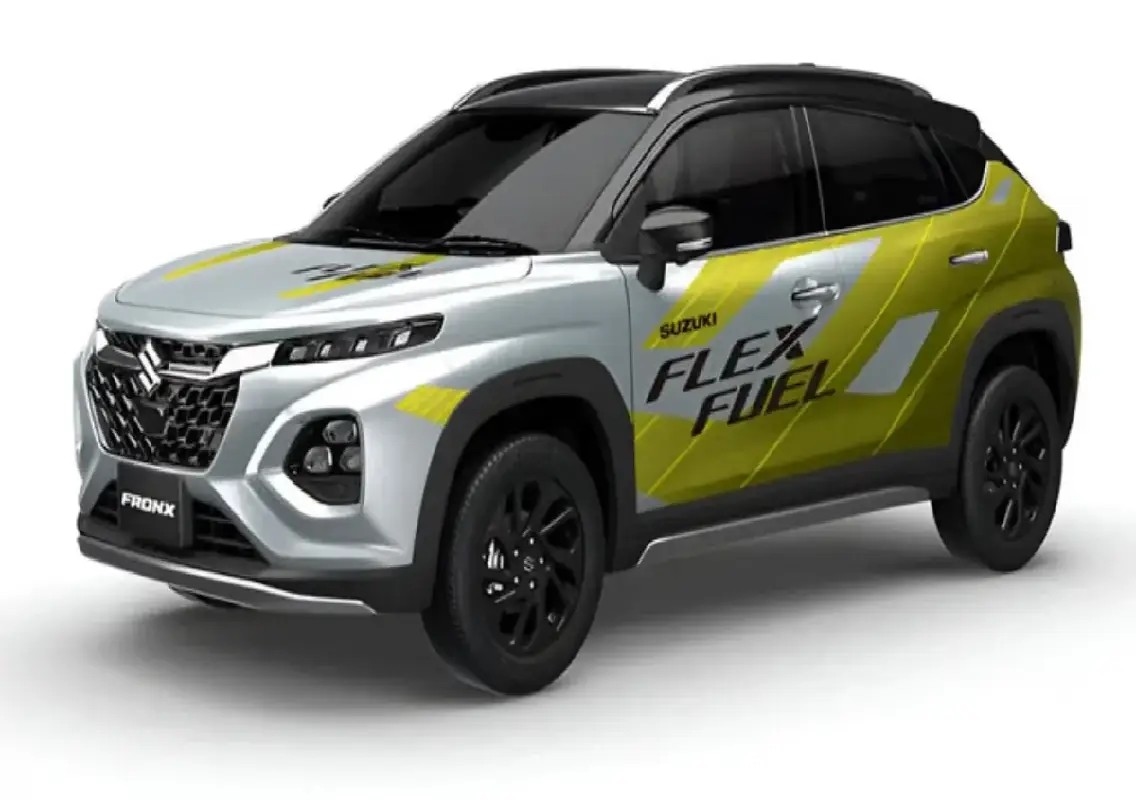
Maruti Fronx is expected to be among the first flex fuel offerings from Maruti Suzuki for the Indian market.
The company showcased the flex fuel concept at the Japan Mobility Show 2025.
The showcased vehicle carried distinctive bright green “Flex Fuel” branding while retaining the overall styling of the standard Fronx model.
Design elements included black 17-inch multi-spoke alloy wheels, split headlamps, faux skid plates, chrome accents, black cladding and a sloping roofline.
Maruti Suzuki’s existing 1.2-litre and 1.5-litre petrol engines are already considered compatible with flex fuel technology, and one of these powertrains is expected to be used in the upcoming model.
Tata Punch flex fuel model likely to arrive
Tata Punch could become Tata Motors’ first flex fuel vehicle for the Indian market.
The model was unveiled in concept form at the Bharat Mobility Show 2025.
The concept retained the same 1.2-litre three-cylinder naturally aspirated petrol engine found in the regular Punch model. However, several modifications were introduced to support ethanol fuel compatibility.
These included an updated engine control unit (ECU), revised fuel injection systems and changes to the exhaust after-treatment system.
The revised system enables the engine to identify ethanol content in the fuel blend and automatically make operational adjustments.
Multi-powertrain strategy gaining momentum
Tata Motors already offers the Punch in petrol, CNG and electric versions.
The addition of a flex fuel model reflects the broader strategy increasingly being adopted by automakers, where multiple fuel and powertrain technologies are offered simultaneously.
Industry observers believe that as infrastructure develops and government policies continue to evolve, flex fuel vehicles could become another important segment within India’s rapidly changing automobile landscape.