







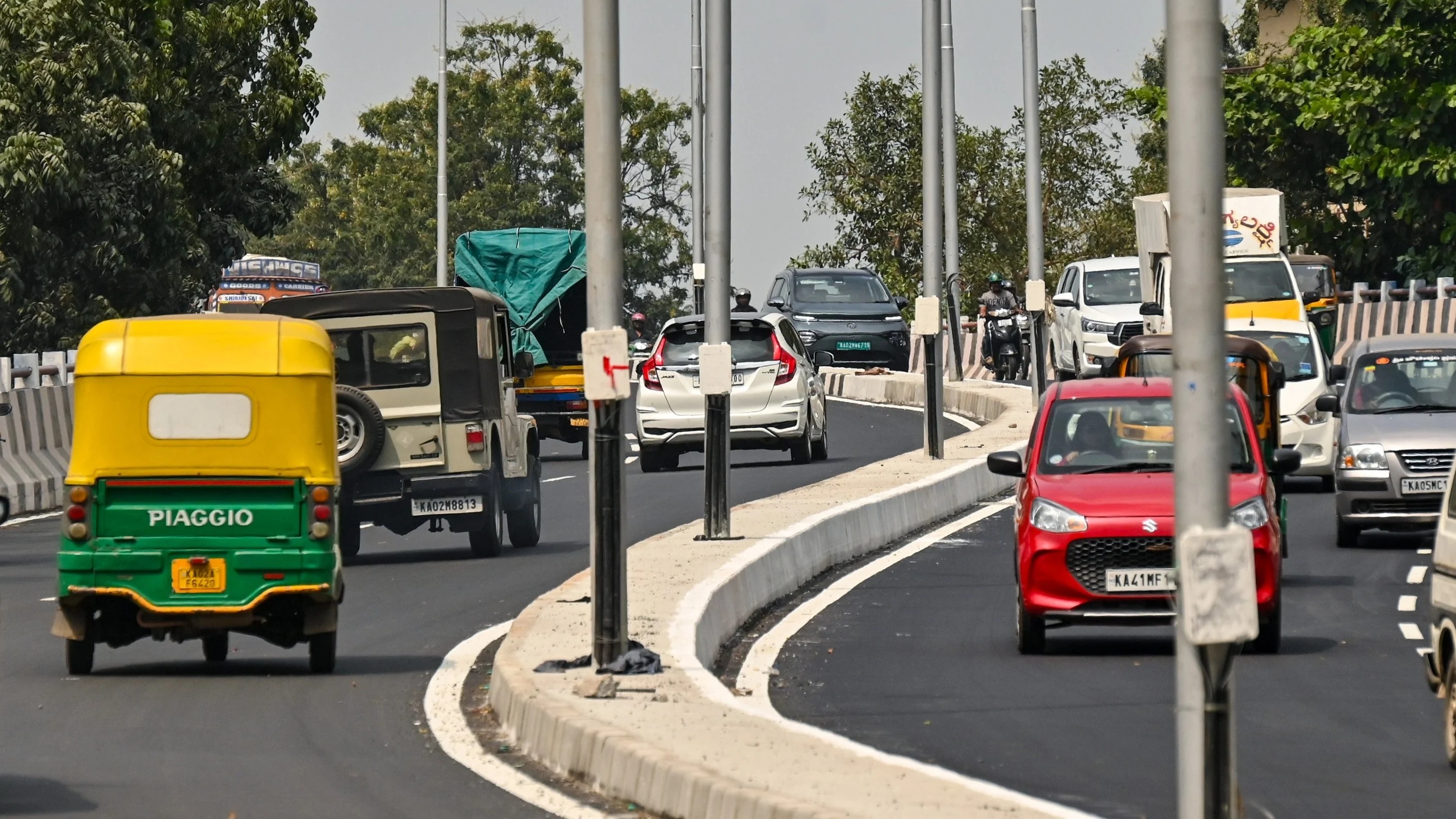


The daring ₹7.11-crore ATM cash van heist in Bengaluru has exposed a serious gap in the city’s surveillance network, with police revealing that the robbery was carefully planned on a flyover lacking CCTV coverage.
Investigators said the accused deliberately chose the Dairy Circle flyover for the cash transfer, knowing that the stretch had no CCTV surveillance, allowing them to evade immediate detection.
Heist planned around surveillance gaps
According to Bengaluru City Police (BCP), officers were forced to piece together footage from CCTV cameras located before and after the flyover to identify the vehicle used in the robbery. This lack of direct footage significantly delayed the investigation.
Police officials noted that CCTV footage and mobile phone location data have become critical tools in modern crime detection, often serving as strong and undeniable evidence accepted by courts.
Flyovers and underpasses emerge as blind spots
While Bengaluru is considered one of India’s most CCTV-covered cities, the heist has highlighted a major weakness. Flyovers and underpasses remain largely unmonitored, as government agencies have not installed cameras on these stretches, and nearby private cameras usually point away from them.
The city currently has 43 flyovers and 28 underpasses, with at least five under construction and plans for 17 more. Most of these areas remain outside the CCTV grid.
Police seek urgent camera coverage
Following the incident, BCP has written to the Greater Bengaluru Authority (GBA), urging the installation of CCTV cameras at all flyovers and underpasses.
“We have identified flyovers and underpasses that have turned into blind spots and written to the concerned agencies to install cameras. We are working closely to improve coverage,” said City Police Commissioner Seemant Kumar Singh.
Police are also attempting to realign existing cameras to cover entry and exit points of flyovers wherever possible.
Beyond crime, traffic and safety benefits
Officials say CCTV coverage on flyovers will help curb not just organised crime but also late-night nuisance, wheeling, traffic violations, and hit-and-run cases.
“Cameras will help us analyse congestion, plan traffic alternatives, and crack down on violations,” said Joint Commissioner of Police (Traffic) Kartik Reddy.
Police believe enhanced surveillance will also improve conviction rates, as video evidence strengthens cases in court.
A wake-up call for urban safety
The ATM van heist has become a wake-up call, prompting authorities to rethink surveillance planning in fast-growing urban spaces. As Bengaluru continues to expand vertically with flyovers and underpasses, police say plugging these CCTV gaps is no longer optional, but essential.