


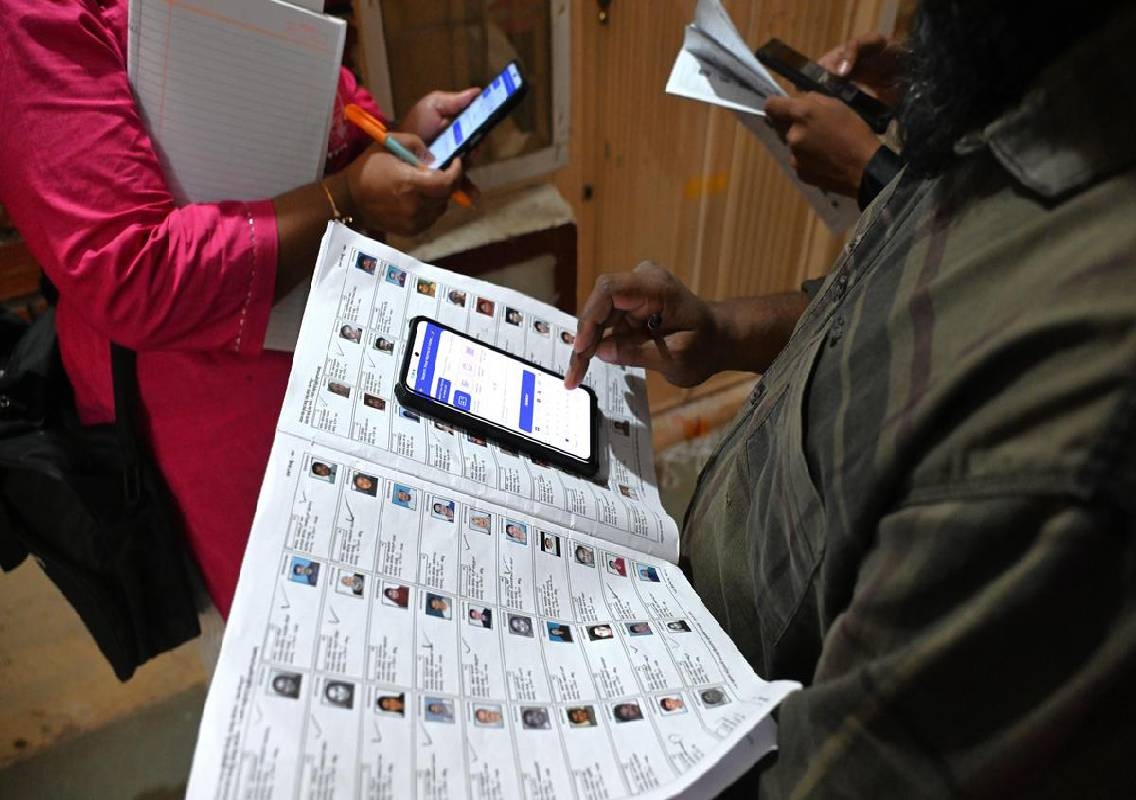


Bengaluru: More than 1.13 lakh new enrolments added to Bengaluru’s final electoral rolls after the Special Intensive Revision (SIR) exercise could not be matched with the corresponding application records, raising questions about the documentation of nearly 44% of the new additions.
An analysis on November 17, found that 1,13,059 of the 2,55,926 new enrolments across Bengaluru’s 28 Assembly constituencies could not be traced to either Form 6 or Form 8 records. This means nearly one in every two additions to the final voter list did not have a corresponding record in the reports examined by the newspaper.
The discrepancy was identified by comparing the final electoral rolls with the reports maintained for applications seeking fresh voter registration and changes in polling-station details.
Form 6 and Form 8 records examined
During the SIR process, additions to the final electoral rolls were made primarily through two types of applications.
Form 6 is used by eligible citizens seeking inclusion in the electoral roll as new voters. It also allows people whose names were missing from the draft rolls to apply for inclusion.
Form 8 is used for changes to existing electoral entries, including shifting a voter from one polling station to another within the same Assembly constituency or to a different constituency.
To verify the new enrolments, compared the final voter lists with Form 9 reports, which consolidate details of Form 6 applications, and Form 11A and Form 11B reports, which contain records of Form 8 applications for shifting voters within and outside an Assembly constituency, respectively.
The analysis found that 1,13,059 additions could not be matched with either set of application records.
Bangalore South records highest number of untraceable additions
The discrepancy was reported across most of Bengaluru’s Assembly constituencies. In 25 of the 28 constituencies, at least 35% of the new enrolments could not be traced to Form 6 or Form 8 records.
Bangalore South recorded the highest number of such additions. Of the 20,914 new enrolments in its final electoral roll, 9,434, or 45.1%, could not be matched with the application records examined.
Other constituencies with substantial numbers of untraceable additions included:
- Mahadevapura: 9,279
- K.R. Pura: 8,013
- Yeshwanthapura: 7,373
- Byatarayanapura: 6,885
Together with Bangalore South, these five constituencies accounted for 40,984 additions, representing 36.3% of the 1,13,059 entries that could not be traced across the city. India News Live
Chief Electoral Officer’s office responds
The Chief Electoral Officer’s office said it had all the Form 6 applications and explained that some applications might not appear in the Form 9 reports because they were submitted outside the claims and objections period.
The claims and objections period ran from August 24 to September 23. According to the office, Form 9 reports were made available only during this period. However, the consolidated Form 9 reports continued to remain available on the Chief Electoral Officer’s website even after the period ended.
The explanation highlights a possible gap between the application records available in the reports used for the newspaper’s analysis and the complete set of applications held by the election authorities. The office’s response does not, by itself, establish whether every one of the 1,13,059 entries has been individually reconciled.
Bengaluru’s electorate after SIR
The findings come after a major revision of Bengaluru’s electoral rolls. The final list published on October 27 contained 59,08,151 voters, compared with 1,03,88,363 on June 16, before the revision began. The final roll included 28,67,256 male voters, 30,40,221 female voters and 674 voters belonging to the third gender.
Across Karnataka, the final electoral roll published after the SIR contained 4,55,45,689 general electors. The Chief Electoral Officer said 10,08,038 electors were added and 1,88,324 deleted following the claims, objections and verification process, while modifications were made to 8,96,519 entries.
The latest analysis has brought attention to the need for clear and accessible documentation of additions to the electoral rolls. While the Chief Electoral Officer’s office has said it possesses the Form 6 applications, the discrepancy identified in the published reports leaves questions about how the additions were recorded and reconciled.
The issue is significant because electoral rolls form the basis of the voting process. Accurate records of enrolments, transfers and corrections are essential to ensure transparency and public confidence in the preparation of voter lists.