







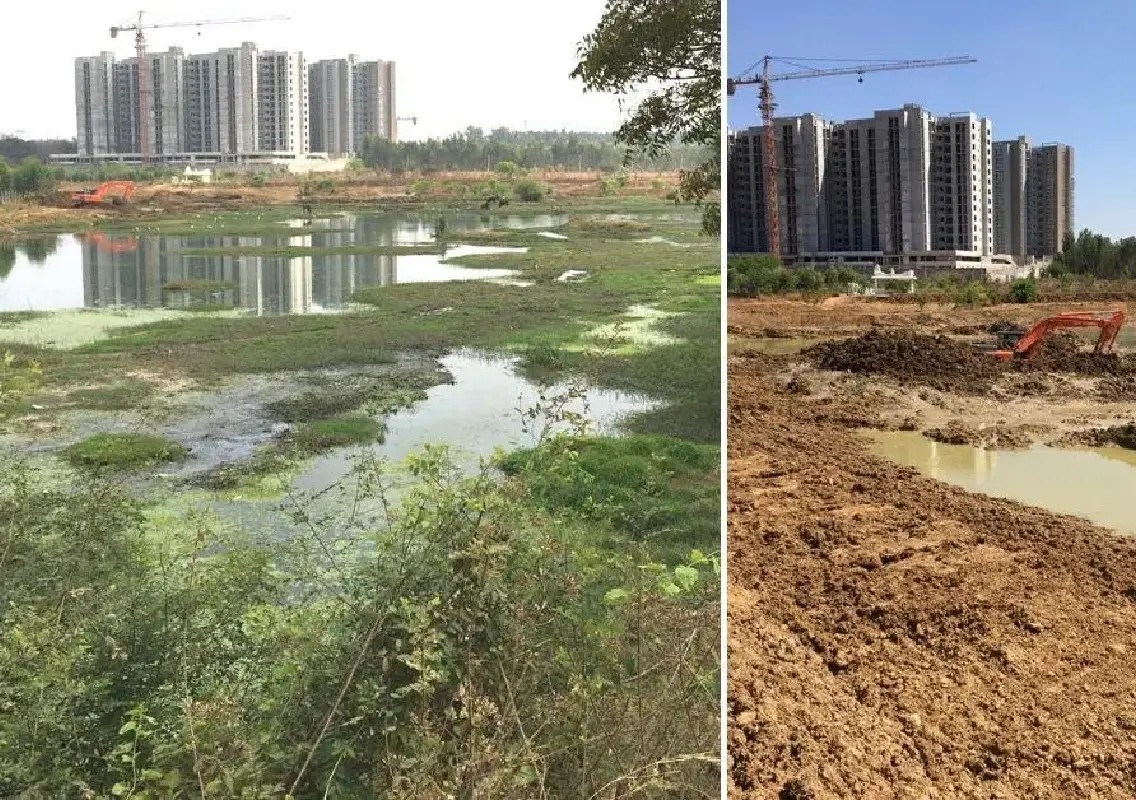


The Greater Bengaluru Authority (GBA) has initiated discussions on reviving 32 lakes that continue to fall under the worst water quality category, highlighting persistent pollution concerns despite years of lake rejuvenation efforts across the city.
The issue was reviewed during a GBA meeting held on Friday following the latest water quality assessment conducted by the Karnataka State Pollution Control Board (KSPCB).
32 lakes fall in worst pollution category
According to the KSPCB’s April 2026 assessment, 32 lakes under the GBA’s jurisdiction were classified as Class ‘E’, indicating severe pollution and water quality unsuitable even for bathing purposes.
Of the 182 lakes maintained by the GBA, water samples from 93 lakes were tested. The assessment found that 61 lakes fell under Class ‘D’, while 32 were categorised under the more severely polluted Class ‘E’ category.
The findings indicate that around 34 per cent of the tested lakes continue to suffer from serious water quality issues.
East Bengaluru records highest number of polluted lakes
The eastern region of Bengaluru accounted for the highest number of severely polluted lakes, with 12 water bodies falling under the Class ‘E’ category.
These include Doddanekkundi, Tubarahalli (Siddapura), Rampura, Devarabeesanahalli, Vibhuthipura, Doddakannahalli, Seegehalli, Bhoganahalli, Soulkere, Vijinapura and Panathur lakes.
North Bengaluru recorded eight polluted lakes, while South Bengaluru had seven. West Bengaluru accounted for five such lakes, and Byrasandra in Central Bengaluru also featured on the list.
Officials asked to submit solutions
During the meeting, engineers and technical experts were directed to identify remedial measures and prepare detailed recommendations to improve lake water quality.
Greater Bengaluru Authority Chief Commissioner M. Maheshwar Rao instructed officials to submit a report outlining immediate and long-term solutions for the affected lakes.
Concerns despite years of rejuvenation projects
The findings have raised concerns as Bengaluru has witnessed extensive investments in lake rejuvenation projects, sewage treatment infrastructure and environmental restoration initiatives over the past several years.
Experts have repeatedly pointed to untreated sewage inflow, encroachments, solid waste dumping and inadequate maintenance as key factors contributing to the deterioration of lake ecosystems.
Authorities are now expected to prioritise corrective measures to improve water quality and restore the ecological health of these critical urban water bodies.