







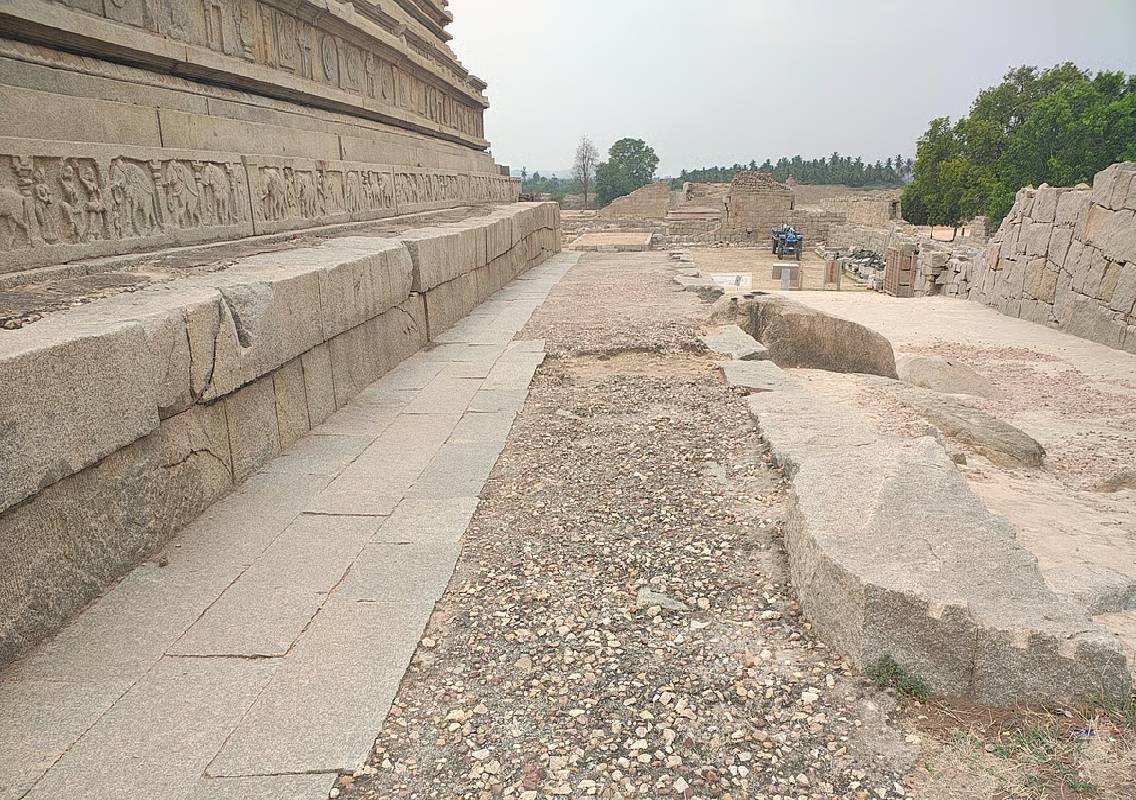


Hampi: The Archaeological Survey of India (ASI) has begun conservation and restoration works at the historic Hazara Ramachandra Temple in Hampi at an estimated cost of Rs 56 lakh, following directions issued by Union Culture Minister Gajendra Singh Shekhawat during his recent visit to the UNESCO World Heritage site.
The restoration project is being carried out by the ASI’s Hampi Circle and is aimed at preserving the temple’s architectural heritage and historical significance. Officials stated that the conservation work will focus primarily on restoring the stone flooring within the temple complex while ensuring that the monument’s original Vijayanagara-era character remains intact.
According to ASI officials, the restoration work is expected to be completed within 60 days.
Restoration to follow Vijayanagara-era techniques
The ASI has emphasised that the conservation process will strictly follow traditional construction methods that were prevalent during the Vijayanagara Empire period. Authorities stated that preserving authenticity remains one of the key objectives of the project.
As part of the restoration effort, the ASI is using traditional materials commonly employed in ancient temple construction and conservation works. These include lime, river sand, jaggery, gallnut, bael fruit and river pebbles for preparing lime concrete and plaster.
Officials explained that such materials help maintain the historical accuracy and structural stability of heritage monuments while also ensuring compatibility with the original construction methods used centuries ago.
The use of traditional restoration techniques is considered crucial in heritage conservation, particularly in ancient temple complexes like Hampi, where modern materials can sometimes affect the monument’s long-term preservation.
Hazara Rama Temple among Hampi’s key monuments
The Hazara Ramachandra Temple, popularly known as the Hazara Rama Temple, is one of the most historically significant monuments in Hampi. The temple is renowned for its intricate carvings, detailed Ramayana panels and unique Vijayanagara-style architecture.
Historians believe the temple once served as a private place of worship for the royal family of the Vijayanagara Empire. The monument attracts thousands of tourists, historians and architecture enthusiasts every year.
The temple complex is especially famous for its bas-relief sculptures depicting scenes from the Ramayana, along with detailed carvings of royal processions, warriors, elephants and cultural activities from the Vijayanagara period.
Focus on preserving heritage structures
The latest restoration initiative forms part of broader efforts to preserve Hampi’s heritage monuments, many of which face gradual deterioration due to weather exposure, ageing stone structures and heavy tourist footfall.
During his recent visit to Hampi, Union Minister Gajendra Singh Shekhawat reportedly directed officials to prioritise the conservation of historically significant monuments and ensure timely restoration works.
The ASI has reiterated that all conservation activities at the temple will be carried out under expert supervision while adhering to heritage preservation norms.
Officials noted that using traditional lime-based techniques instead of modern cement-based materials allows monuments to retain breathability and structural flexibility, both of which are important for the long-term conservation of ancient stone architecture.
Hampi remains a major heritage destination
Hampi, located in Vijayanagara district near Hosapete in Karnataka, continues to be one of India’s most prominent archaeological and tourism destinations. Recognised as a UNESCO World Heritage Site, the region preserves the remains of the once-glorious Vijayanagara Empire.
The ongoing restoration of the Hazara Rama Temple is expected to further enhance conservation efforts in the region while helping protect one of Karnataka’s most treasured historical landmarks for future generations.
Experts believe such initiatives are essential not only for heritage preservation but also for promoting cultural tourism and historical awareness among visitors.