




Bengaluru: The alleged e-Khata scam in Bengaluru has taken a significant turn, with Halasuru Gate police registering a case against 31 people, including an assistant commissioner, for allegedly facilitating the issuance of e-Khatas to ineligible properties under the Greater Bengaluru Authority (GBA).
The FIR names Basavaraj N. Magi, Assistant Commissioner of the KR Puram division and acting revenue officer, among the accused. The case was registered following a complaint by GBA Special Commissioner (Revenue) Munish Moudgil, who alleged that a special facility intended for banks was misused to obtain e-Khatas for properties that did not meet the prescribed eligibility conditions.
The complaint points to alleged collusion between government officials, builders and private applicants, raising concerns about the verification process used for issuing e-Khatas.
Special facility allegedly misused
The special e-Khata facility was introduced to help banks obtain property records for assets taken over and auctioned after borrowers defaulted on their loans under the Securitisation and Reconstruction of Financial Assets and Enforcement of Security Interest (SARFAESI) Act.
Under this arrangement, banks can apply for e-Khatas for properties acquired through the recovery process, subject to the required legal documentation.
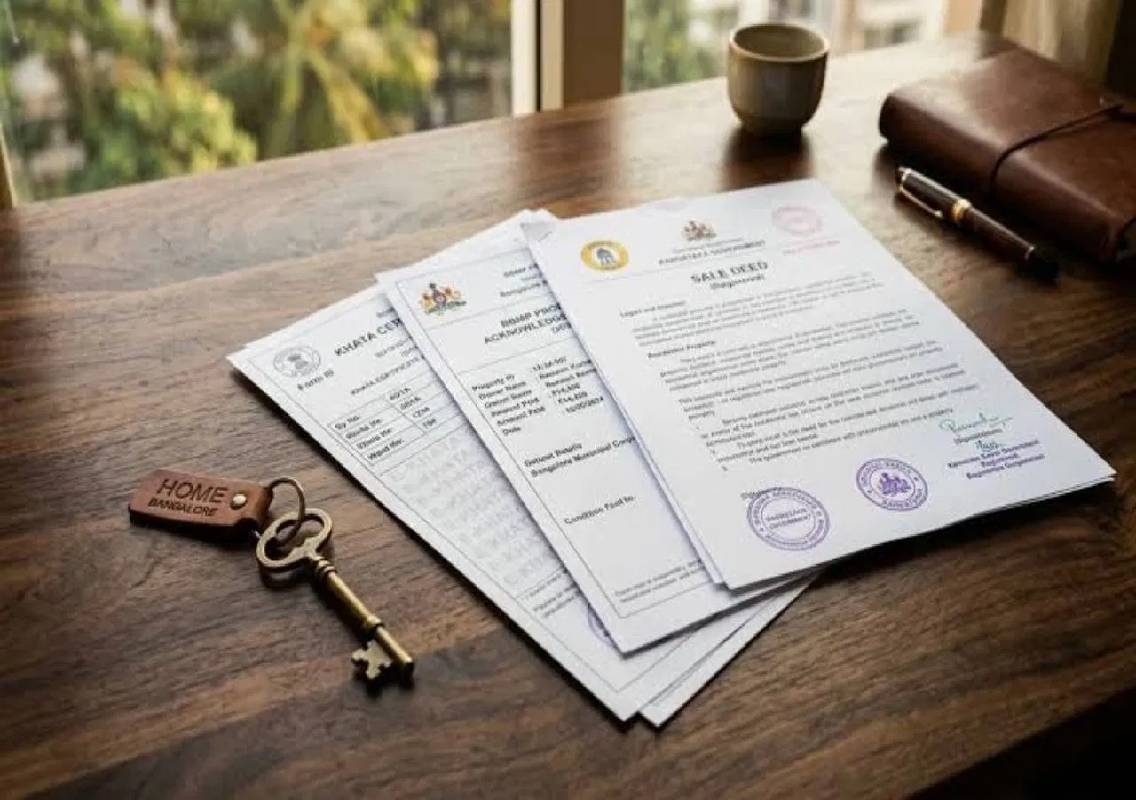
However, according to the complaint, the facility was allegedly misused to secure e-Khatas for properties that were not eligible under the scheme. Instead of submitting mandatory documents such as SARFAESI orders or sale certificates, applicants allegedly uploaded ordinary sale deeds and joint development agreements.
These documents were reportedly used to process applications for sites and buildings that did not qualify for the special facility. The complaint alleges that the irregularities were facilitated through the misuse of official access and the e-Khata approval process.
98 properties allegedly cleared through official login
One of the key allegations concerns 98 properties in Horamavu and KR Puram. According to the complaint, these properties were granted e-Khatas through Magi’s official login between January 29 and June 19, 2026, despite allegedly not meeting the eligibility requirements.
Magi, who served as the assistant commissioner of the KR Puram division and acting revenue officer, is among the 31 people named in the FIR.
Investigators are expected to examine how the applications were submitted, which documents were uploaded and how the approvals were processed. The role of officials who handled the applications, along with that of builders and private applicants who allegedly benefited from the approvals, is also under scrutiny.
The alleged use of ordinary sale deeds and joint development agreements in place of mandatory SARFAESI-related documents is a central aspect of the complaint.
Case registered under Bharatiya Nyaya Sanhita
Halasuru Gate police have invoked provisions of the Bharatiya Nyaya Sanhita (BNS) relating to criminal conspiracy, cheating, forgery and using forged documents as genuine.
The FIR names 31 individuals in connection with the alleged irregularities. The investigation will seek to establish whether the documents submitted by applicants were deliberately misrepresented and whether officials knowingly facilitated approvals for ineligible properties.
The allegations are yet to be established through investigation and legal proceedings. The registration of an FIR does not by itself establish the guilt of those named in the case.
Earlier recommendations for suspension
The alleged irregularities had also led to recommendations for disciplinary action against officials. Recommendations were earlier made to suspend Basavaraj Magi and Lokamatha D.S., Assistant Commissioner of the Kengeri division.
The latest police action has brought the alleged misuse of the e-Khata system under further scrutiny. Investigators are examining the involvement of government officials and private individuals, including the process through which the disputed property records were approved.
The case has raised questions about safeguards in the digital property documentation system, particularly the verification of supporting documents and the use of special provisions intended for financial institutions.
The investigation is expected to establish the individual roles of those named in the FIR, the extent of the alleged irregularities and whether further action is required against other persons involved.