







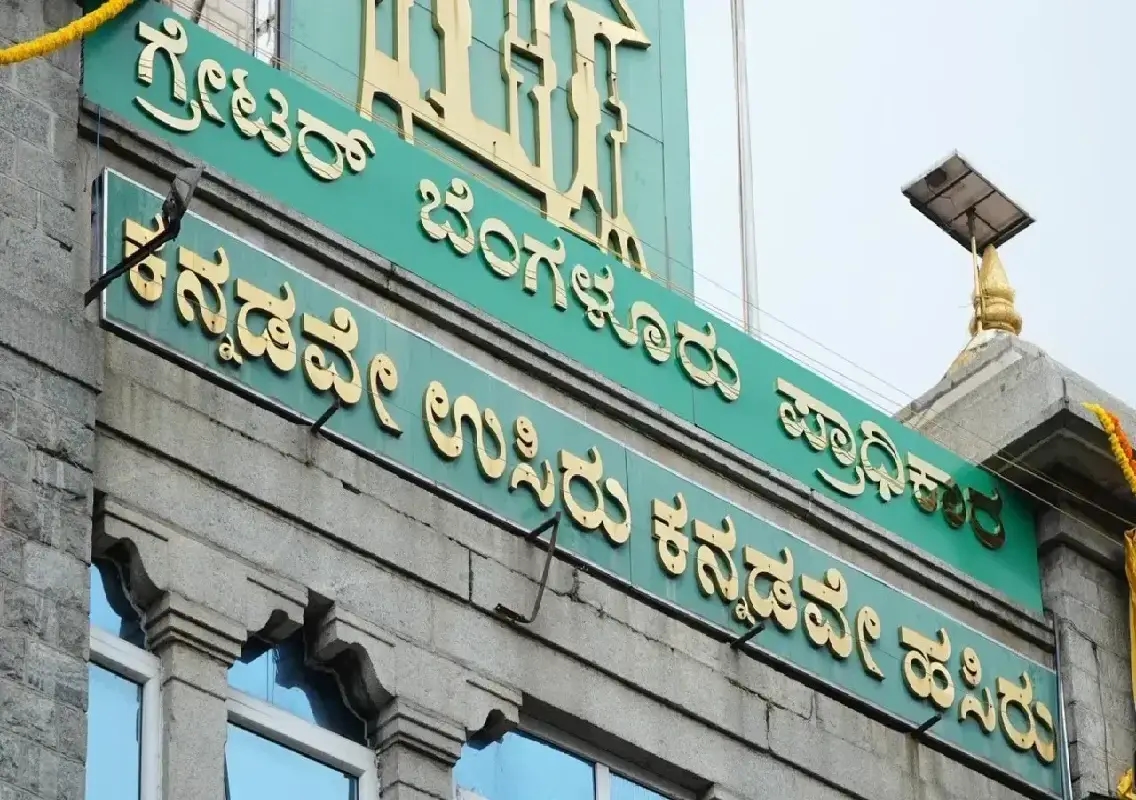


Bengaluru: In a significant shift towards decentralised urban governance, the Greater Bengaluru Authority (GBA) has initiated India’s first ward-level climate action plan, focusing on hyper-local environmental challenges rather than broad city-wide strategies. The initiative marks a pioneering step in climate governance, aiming to design scientific, customised solutions for individual wards based on their unique geography, infrastructure and climate vulnerabilities.
Unlike conventional climate action plans that address entire cities or states, the GBA’s approach drills down to the ward level, recognising that climate risks vary sharply even within the same city. Urban flooding, air pollution, water scarcity and groundwater depletion affect neighbourhoods differently depending on land use patterns, green cover, population density and drainage systems.
Pilot project across city corporations
As part of the pilot phase, the GBA has decided to select two wards from each of Bengaluru’s five city corporations. The programme has already commenced with Shanthinagar ward, which comes under the Bengaluru Central City Corporation. Over time, nine more wards will be identified for the initial phase, bringing the total to ten wards across the city.
Officials said the pilot wards were chosen to reflect a range of urban challenges, from highly concretised commercial zones to mixed residential areas that face recurring flooding or water stress. The findings from these wards will help the authority develop a replicable framework that can later be scaled up across Bengaluru’s 369 wards.
Why ward-level planning matters
Explaining the rationale behind the initiative, Ramachandran R, Special Commissioner for Forest, Environment, Climate Change and Mobility (FECCM), Disaster Management, Public Relations and Coordination, said this is the first time in India that climate planning is being attempted at such a micro level.
“Each ward has its own environmental profile. Some are flood-prone because of low-lying terrain and blocked drains, others suffer from water scarcity due to over-extraction of groundwater, while some experience higher air pollution because of traffic density. A single city-level plan cannot effectively address all these variations,” he said.
According to officials, Bengaluru’s rapid urbanisation has made ward-level disparities more pronounced. While some neighbourhoods have retained tree cover and open spaces, others are heavily concretised, intensifying heat stress and runoff during heavy rainfall. Micro-planning, they believe, will make climate interventions more precise and cost-effective.
Scientific studies and data-driven solutions
A key pillar of the ward-level climate action plan is the use of scientific data and modelling. Detailed studies will be conducted for each selected ward, covering parameters such as topography, soil type, green cover, degree of concretisation, drainage networks and historical rainfall patterns.
This data will be analysed in coordination with the Karnataka State Natural Disaster Monitoring Centre (KSNDMC) and experts from various disciplines, including hydrology, urban planning and environmental science. Based on these inputs, flood models and other climate-related simulations will be developed to predict risks and test possible interventions.
For wards identified as flood-prone, the plan may recommend measures such as additional rainwater harvesting pits, redesign of stormwater drains, desilting of existing channels and creation of permeable surfaces to reduce runoff. In areas facing groundwater depletion, solutions could include stricter borewell regulation, recharge structures and improved water-use efficiency.
Similarly, wards affected by poor air quality may see targeted interventions such as increased green buffers, traffic management measures and monitoring of local pollution sources.
Citizen participation at the core
Citizen involvement is a central component of the initiative. The GBA plans to hold consultations with ward residents, resident welfare associations and local stakeholders to understand ground realities that may not be evident from data alone.
“Local residents are the first to experience flooding, water shortages or pollution. Their inputs are crucial to ensure that the action plans reflect real issues and not just theoretical models,” Ramachandran said.
Officials believe that involving citizens will also help build public ownership of climate solutions, increasing the likelihood of successful implementation and long-term maintenance of infrastructure.
Timeline and future expansion
According to the GBA, the ward-level climate action plans for the pilot wards are expected to be completed by January or February next year. Once the plans are finalised, the authority will evaluate their effectiveness, feasibility and public response.
Based on the outcomes, the GBA intends to gradually extend the micro-level planning exercise to more wards across Bengaluru. Given that the city currently has 369 wards, officials acknowledge that full-scale implementation will take time but insist that the pilot is a critical first step.
Conclusion
The ward-level climate action plan represents a bold departure from traditional urban climate strategies in India. By shifting the focus from broad city-wide policies to neighbourhood-specific solutions, Bengaluru is attempting to address climate risks where they are felt most acutely.
If successful, the initiative could serve as a model for other Indian cities grappling with the uneven impacts of climate change. As extreme weather events become more frequent, Bengaluru’s experiment in micro-level climate planning may well redefine how urban India prepares for an uncertain environmental future.