







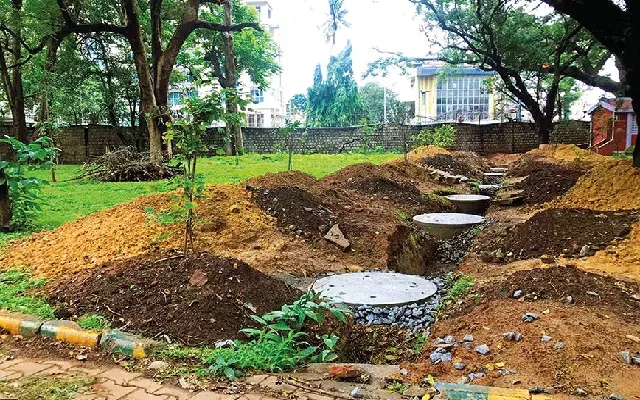


As summer approaches, Bengalureans fear another water shortage after last year’s crisis. The Bangalore Water Supply and Sewerage Board (BWSSB) has constructed nearly 1,000 recharge wells, but experts warn that groundwater recovery may take years.
Over the past few years, 250 recharge wells have been dug in Lalbagh, with 74 in Cubbon Park alone. These efforts have helped curb soil erosion and marginally improved borewell water levels. However, Vishwanath Srikantaiah, Bengaluru’s ‘Rain Man,’ stresses that real impact could take up to five years. He urges residents to install recharge wells in homes and apartments, ensuring rainwater flows from clean catchments into aquifers.
Shashank Palur, a senior hydrologist, explains that aquifers act like sponges, with different depths holding varying water reserves. While recharge wells, typically 20 feet deep, can help replenish groundwater, deeper borewells—extending up to 900 feet—may not benefit immediately.
To promote rainwater harvesting, United Way Bengaluru (UWBe) launched the ‘One Billion Drops’ initiative, recently building 12 percolation wells at Indira Gandhi Musical Fountain Park, each conserving 1.28 lakh litres annually. Experts agree that while recharge wells aren’t a silver bullet, a city-wide effort could significantly bolster Bengaluru’s water resilience.
Read Also: