







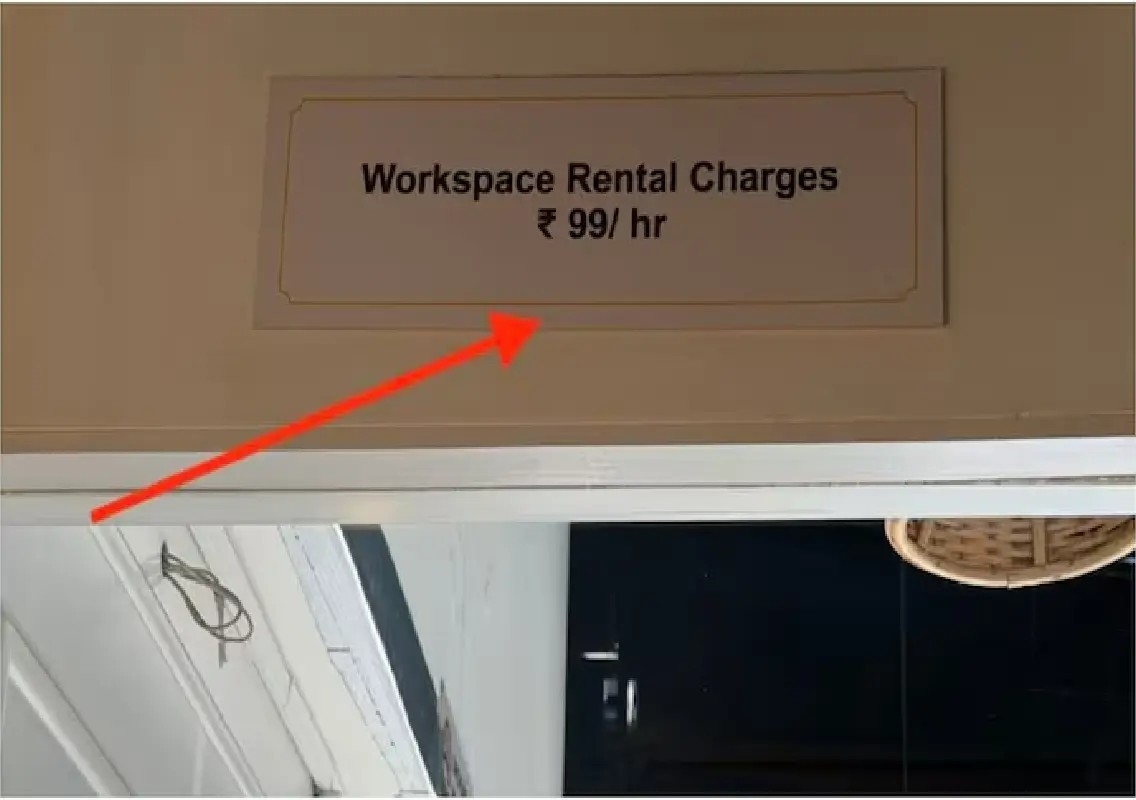


Bengaluru: A Bengaluru cafe’s decision to charge customers Rs 99 per hour for using its premises as a workspace has sparked a lively debate on remote work etiquette, customer behaviour and the challenges faced by cafes in balancing hospitality with business sustainability.
The discussion gained momentum after Bengaluru-based professional Karthik Suroju shared his experience on LinkedIn, questioning whether the cafe’s policy addressed the actual problem faced by coffee shops in the era of remote work.
LinkedIn post triggers discussion
According to Suroju, he noticed a prominently displayed sign at the entrance of the cafe informing visitors that anyone using the space as a workspace would have to pay Rs 99 per hour.
Curious about the policy, he entered the cafe expecting to find customers working on laptops for extended periods. Instead, he found the establishment largely empty.
Sharing his observations on LinkedIn, Suroju questioned whether the policy was solving the right problem or inadvertently discouraging potential customers from entering the cafe.
He remarked that while the issue of customers occupying tables for long hours is real, publicly displaying an hourly workspace charge could send the wrong message.
Balancing customer comfort and business needs
In his post, Suroju acknowledged that many cafes struggle with customers who purchase a single beverage and continue occupying a table for several hours.
He pointed out that this can be particularly challenging in premium commercial areas such as Indiranagar, where cafes face high rental costs and rely on quick table turnover to maintain profitability.
According to him, businesses are justified in addressing prolonged occupancy, but introducing an upfront workspace fee may create an unwelcoming impression.
“Cafes genuinely can’t absorb someone nursing one coffee for five hours. Fair enough. But pricing the awkwardness out loud doesn’t invite people in. It repels them,” he wrote.
Internet divided over workspace fee
The LinkedIn post quickly attracted widespread attention, with users expressing differing opinions on the cafe’s approach.
Many supported the decision, arguing that cafes are commercial establishments rather than free co-working spaces. They said customers occupying tables for several hours after placing minimal orders reduce seating availability for others and negatively affect revenue, especially during busy periods.
Others felt the policy could discourage regular customers before they even entered the cafe. They argued that charging an hourly fee might create the perception that customers were unwelcome, regardless of whether they intended to work or simply enjoy a meal or beverage.
The discussion highlighted the growing tension between the increasing popularity of remote work and the operational realities faced by hospitality businesses.
Alternative suggestions emerge
Several social media users suggested alternative ways for cafes to manage long-staying customers without imposing a direct hourly charge.
Among the suggestions were introducing a minimum spending requirement, creating designated laptop-friendly seating areas, or implementing time limits during peak hours to ensure tables remain available for more customers.
Some also proposed offering dedicated work packages that include beverages and snacks, allowing cafes to generate predictable revenue while providing a comfortable environment for remote workers.
Growing challenge for urban cafes
The debate has once again brought attention to the evolving role of cafes in major Indian cities, where many have become informal workspaces for freelancers, students and remote employees.
As flexible working arrangements continue to grow, cafes are increasingly faced with the challenge of accommodating customers who stay for extended periods while ensuring the business remains financially sustainable.
The discussion reflects the broader question of how hospitality businesses can strike a balance between offering a welcoming atmosphere and managing operational costs in high-rent urban neighbourhoods.
Whether through hourly workspace charges, minimum spending policies or designated work zones, many believe cafes will continue experimenting with different approaches to meet the changing expectations of customers while protecting their business interests.