







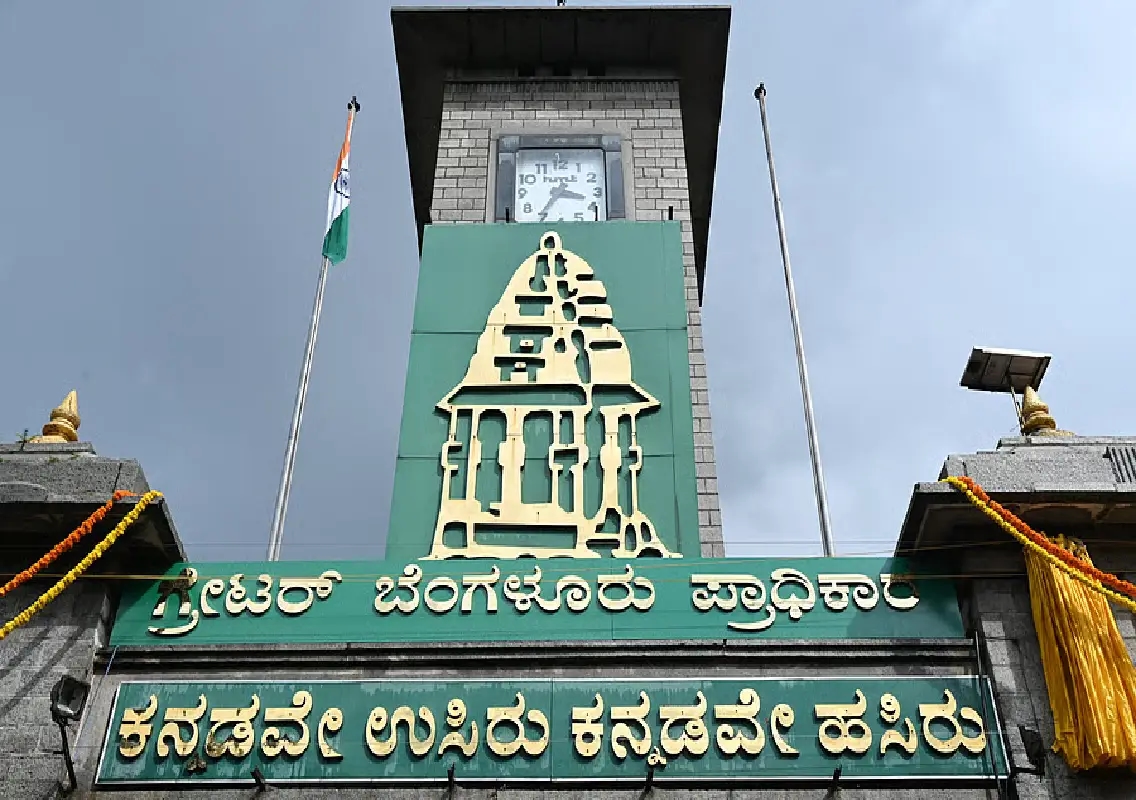


Bengaluru: The Karnataka government has announced that the five corporations functioning under the Greater Bengaluru Authority (GBA) will mobilise funds for infrastructure development by issuing municipal bonds. The decision marks a significant shift in the way Bengaluru’s civic administration plans to finance large-scale urban infrastructure projects in the coming years.
The move comes in the wake of the restructuring of the Bruhat Bengaluru Mahanagara Palike (BBMP), which has now been divided into five separate municipal corporations to improve governance and administrative efficiency in the rapidly expanding city.
Chief Minister Siddaramaiah made the announcement while presenting the State Budget for the financial year 2026–27. He said the newly formed corporations will raise resources independently based on their financial strength and balance sheets.
The introduction of municipal bonds is expected to provide a new avenue for funding major civic projects without placing additional burden on the State government’s finances.
Municipal bonds to fund city infrastructure
Municipal bonds are debt instruments issued by local governments to raise funds from investors for public infrastructure projects. The Karnataka government believes this financing mechanism will help Bengaluru’s corporations undertake large-scale development works more efficiently.
Siddaramaiah said the five corporations under the Greater Bengaluru Authority will mobilise resources through these bonds depending on their financial capacity and fiscal management.
The Chief Minister emphasised that the reorganisation of BBMP into multiple corporations is aimed at improving transparency, accountability and citizen-friendly governance.
According to the government, decentralised civic administration will help ensure quicker decision-making and better implementation of development projects across different parts of the city.
With Bengaluru continuing to expand rapidly in terms of population and urban infrastructure needs, the new financing approach is expected to play an important role in meeting growing demands.
Major allocations for road infrastructure
The State Budget has also announced several infrastructure initiatives for Bengaluru, including substantial allocations for road development.
The government has earmarked Rs 1,255 crore for ward-level road development across the city. This initiative aims to improve local roads and connectivity in residential areas.
In addition, Rs 1,700 crore has been allocated for white-topping 158 km of roads in Bengaluru. White-topping involves laying a concrete layer over asphalt roads, which significantly improves durability and reduces maintenance costs.
Another Rs 1,936 crore will be spent on the development and strengthening of arterial and sub-arterial roads in different parts of the city.
The government has also committed Rs 450 crore for infrastructure improvements along the Outer Ring Road corridor, one of the busiest stretches in Bengaluru that connects major IT hubs.
These projects are intended to improve road quality, reduce traffic congestion and support the city’s growing transportation needs.
Metro expansion to benefit commuters
Public transportation remains a key component of Bengaluru’s urban development strategy. Currently, Namma Metro operates across approximately 96 km of track and serves nearly 10 lakh commuters every day.
The Chief Minister announced that an additional 41 km of metro lines will become operational during the financial year 2026–27.
Once completed, the expanded metro network is expected to serve around 15 lakh commuters daily, significantly improving connectivity and reducing traffic congestion across the city.
Siddaramaiah also pointed out the financial contributions made by the State government towards metro development.
He said that out of the total Rs 67,460 crore spent on metro infrastructure so far, the State government has contributed Rs 59,376 crore while the Centre has contributed Rs 8,084 crore.
According to him, the Central government’s share accounts for only 12 per cent of the total expenditure, while the State government’s contribution stands at 88 per cent.
Pedestrian walkway along Outer Ring Road
In an effort to improve pedestrian infrastructure, the government has also announced plans to construct a 9-km-long pedestrian walkway along the Outer Ring Road metro viaduct.
The project is estimated to cost around Rs 160 crore and will be supported by sponsorship from the Outer Ring Road Companies Association (ORRCA).
The walkway is expected to benefit office-goers and residents in the IT corridor by providing safer and more convenient pedestrian access.
Cauvery Phase VI water supply project
The Budget also includes plans to strengthen Bengaluru’s water supply system through the Cauvery Phase VI project.
At present, around 1.40 crore residents receive approximately 2,225 million litres per day (MLD) of water through Phases I to V of the Cauvery Water Supply Scheme.
The new Phase VI project is estimated to cost Rs 6,939 crore and will be implemented with assistance from the Japan International Cooperation Agency (JICA).
Once completed, the project will supply an additional six TMC of water to the city, helping meet the growing demand for drinking water.
New corridors and ring road projects
To address the city’s persistent traffic congestion, the government has also announced several major road corridor projects.
Land acquisition will begin for Phase I of the 73-km Bengaluru Business Corridor between Tumkuru Road and Hosur Road. Compensation to farmers affected by the project will be distributed on priority.
The government plans to complete the corridor within four years.
In addition, plans are underway to build the North–South and East–West corridors at an estimated cost of Rs 40,000 crore. These projects are expected to significantly improve connectivity across Bengaluru.
A short tunnel at Hebbal Junction, estimated to cost Rs 2,250 crore, has also been proposed to ease traffic congestion in the area.
Further, the government will construct an intermediate ring road between Nelamangala, Tavarekere and Bidadi to divert traffic away from the city centre and improve regional connectivity.
Conclusion
The Karnataka government’s decision to allow Bengaluru’s municipal corporations to raise funds through municipal bonds marks an important step in urban governance and infrastructure financing.
Combined with major investments in metro expansion, road development, water supply and traffic management, the initiatives announced in the State Budget are aimed at strengthening Bengaluru’s infrastructure and improving the quality of life for its residents.
As the city continues to grow as a major economic and technological hub, such financial and infrastructure reforms are expected to play a crucial role in shaping its future development.