







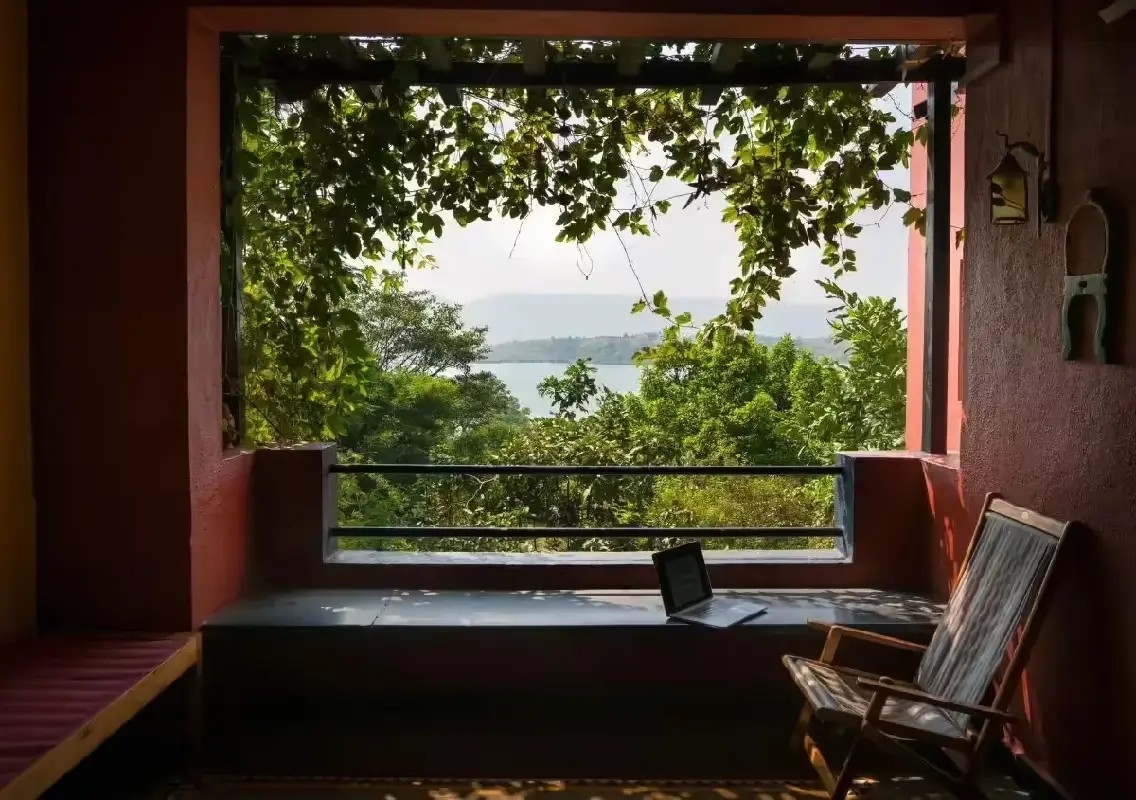


While many homeowners invest heavily in luxury interiors and energy-intensive features, a Bengaluru couple has taken a different approach by building an environmentally conscious home that is both affordable and naturally comfortable.
Satish and Dharitri Shastry envisioned a home that reflected simplicity, sustainability and mindful living rather than extravagance. Working with architect Sathya of Sathya Consultants, they created a residence inspired by nature and designed to minimise environmental impact.
Designed around nature
The house incorporates curved forms and arch foundations instead of conventional straight-line designs, creating a softer and more organic living environment.
One of its most distinctive features is that nearly 95 per cent of the structure remains unpainted. Where paint was required, the couple opted for zero-VOC products to reduce indoor pollution and environmental harm.
Natural materials such as Athangudi tiles, hollow clay blocks and Kota stone have been extensively used throughout the home, enhancing durability while maintaining aesthetic appeal.
Cooler and more affordable
According to reports, the sustainable construction approach made the house nearly 45 per cent cheaper than a conventional concrete structure.
The use of stabilised mud blocks provides excellent thermal insulation, helping maintain indoor temperatures that are around 10 to 12 degrees Celsius cooler than the outside environment. This significantly reduces the need for air conditioning and lowers energy consumption.
A self-sustaining ecosystem
The home is equipped with solar panels and a rainwater harvesting system, reducing dependence on external resources.
A thriving terrace garden produces fruits, vegetables and herbs, including papayas, mangoes, oranges and chillies. Organic waste generated by the household is composted and reused as manure for the garden.
The terrace also houses a workspace and yoga room featuring red oxide flooring, known for its cooling properties.
More than just a residence, the home functions as a sustainable ecosystem where architecture, food production, renewable energy and daily living work together harmoniously.