









Bengaluru: New vehicle parking rules proposed by the Karnataka Urban Development Department could significantly change the way parking is managed across Bengaluru, with the draft policy seeking to reduce roadside congestion and encourage the development of organised off-street parking facilities.
Under the proposed rules, public parking would no longer remain free of charge, with bicycles and autorickshaw stands among the exceptions. The proposed system would also cover residents who park their vehicles on public roads near their homes.
The draft comes amid growing concerns over congestion in Bengaluru, where the number of registered private vehicles has risen sharply over the years and road space remains limited.
Public parking may become chargeable
One of the most significant changes proposed in the draft is the introduction of charges for public parking.
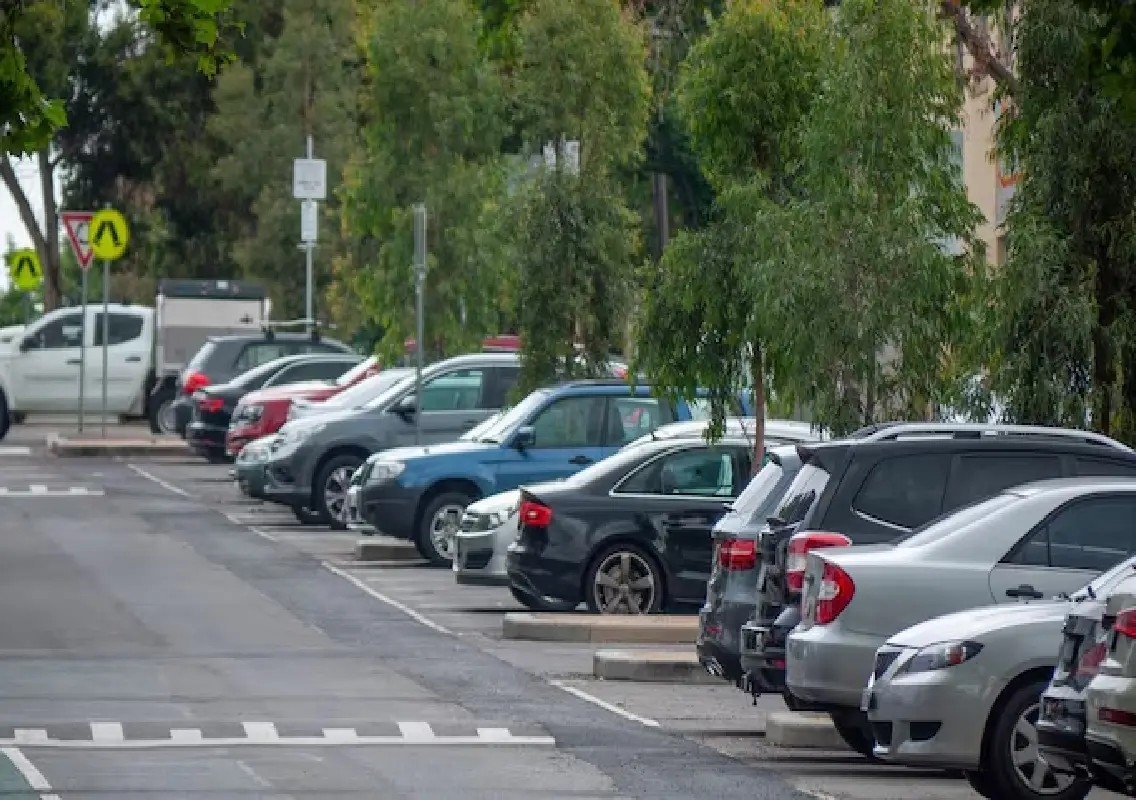
At present, vehicles are commonly parked along public roads and streets, including roads located close to residential properties. The proposed rules seek to treat such public road space differently by introducing a regulated parking system.
Under the draft, residents would also not automatically have the right to park their vehicles for free on public roads outside or near their homes.
Bicycles and autorickshaw stands have been identified as exceptions under the proposed framework.
The move is aimed at discouraging indiscriminate parking and ensuring that valuable road space is not occupied indefinitely by parked vehicles.
Focus on freeing carriageways
The central objective of the proposed parking policy is to free up carriageways, particularly on high-density roads and major traffic corridors.
Vehicles parked along busy roads can reduce the usable width of carriageways, forcing moving traffic into fewer lanes and contributing to bottlenecks.
The draft rules seek to address this problem by shifting parking away from important traffic corridors and towards designated off-street facilities.
This approach could particularly affect roads where long-term roadside parking has become common.
By keeping parked vehicles away from traffic lanes, authorities hope to improve traffic flow and make better use of the existing road network.
Off-street parking facilities proposed
The proposed framework places significant emphasis on developing off-street parking.
Land owned by Bengaluru’s five city corporations could be considered for creating organised parking facilities.
Such facilities could include conventional parking lots as well as multi-level parking structures, depending on the availability of land and the requirements of individual areas.
The idea is to create dedicated locations where vehicles can be parked without occupying carriageways.
This could allow major roads to remain available primarily for moving traffic while providing motorists with designated places to leave their vehicles.
Vacant plots could be used for parking
The draft also proposes incentivising owners of vacant plots to develop parking facilities.
Unused land in developed urban areas could potentially be converted into parking spaces, providing additional capacity without requiring authorities to acquire large parcels of land.
Owners could be encouraged to participate in the system by developing parking facilities on vacant properties.
The approach could be particularly useful in densely populated neighbourhoods where constructing new public infrastructure is difficult because land is scarce and expensive.
Multi-level parking facilities could also increase the number of vehicles accommodated on a relatively small land parcel.
Bengaluru’s vehicle numbers add pressure
The proposed policy comes against the backdrop of Bengaluru’s enormous vehicle population.
The city currently has about 25 lakh personal cars registered locally.
The number of two-wheelers is considerably higher, with around 86.7 lakh two-wheelers registered in Bengaluru.
Across all categories, including transport and other vehicles, the overall number of Bengaluru-registered vehicles stands at approximately 1.281 crore.
The rising number of vehicles has placed substantial pressure on the city’s road infrastructure.
While two-wheelers require less road space than cars individually, their sheer numbers contribute significantly to the demand for parking.
Parking and congestion closely linked
Parking has become an increasingly important component of Bengaluru’s traffic problem.
When vehicles are parked along busy roads, the available space for moving traffic is reduced.
In some locations, vehicles can occupy a significant portion of the road throughout the day, affecting buses, cars, two-wheelers and emergency vehicles.
The proposed rules seek to address this by treating road space as a limited public resource rather than allowing it to be occupied indefinitely by parked vehicles.
Introducing charges could also encourage motorists to consider whether they need to park on public roads or use designated facilities.
Residents may face a major change
The proposed rules could have a particularly direct impact on residents who currently park their vehicles on roads outside their homes.
In many Bengaluru neighbourhoods, roadside parking has become a routine practice because houses and apartment buildings may not have sufficient private parking space.
The proposed system would challenge the assumption that residents automatically have an unrestricted right to use nearby public roads for parking.
If implemented, residents may have to pay for designated public parking or find alternative private or off-street arrangements.
This could create difficulties in areas where dedicated parking facilities are currently limited.
Need for adequate alternatives
The success of the proposed parking framework would depend heavily on the availability of sufficient alternatives.
Simply charging for roadside parking without providing accessible parking facilities could place an additional burden on residents and motorists.
The proposed emphasis on off-street facilities is therefore important.
Authorities would need to ensure that parking spaces are available at reasonable distances from residential areas, commercial centres and public destinations.
The creation of multi-level facilities could help address the shortage in high-density areas, provided they are properly located and connected to the surrounding road network.
Five city corporations have a role
The draft envisages the use of land owned by Bengaluru’s five city corporations for parking facilities.
This could provide authorities with an opportunity to make better use of publicly owned land.
Instead of allowing suitable parcels to remain underutilised, such properties could potentially be developed into structured parking facilities.
However, decisions on land use would need to consider local requirements, pedestrian access, public transport connectivity and the potential impact on surrounding neighbourhoods.
A shift from free road space
The proposed policy represents a broader change in how Bengaluru’s public roads could be viewed.
Roads are primarily intended to facilitate movement, but in many areas they also function as informal parking spaces.
The draft seeks to separate these two functions by encouraging vehicles to be parked in designated locations and keeping major carriageways clear for traffic.
The introduction of parking charges would also place an economic value on the use of public road space.
Such a system could encourage shorter parking durations and discourage people from leaving vehicles parked on roads for extended periods.
Implementation will determine impact
The draft rules are yet to become the final regulatory framework.
Their eventual impact will depend on the final provisions, implementation mechanisms, parking charges, enforcement procedures and availability of alternative parking spaces.
Effective enforcement will also be necessary to prevent motorists from shifting from regulated roads to nearby residential streets.
Authorities would need to ensure that parking regulations are applied consistently and that motorists are clearly informed about designated parking areas and applicable charges.
Conclusion
The Karnataka Urban Development Department’s proposed parking rules could mark a major shift in Bengaluru’s approach to managing road space.
By making public parking chargeable, including roadside parking used by residents, and encouraging off-street and multi-level parking facilities, the draft seeks to reduce the pressure caused by parked vehicles on congested roads.
With around 25 lakh cars, 86.7 lakh two-wheelers and 1.281 crore vehicles overall registered in Bengaluru, the need for better parking management is increasingly evident.
However, the success of the proposed policy will ultimately depend on whether authorities can provide sufficient, accessible and affordable alternatives while enforcing the rules effectively.