







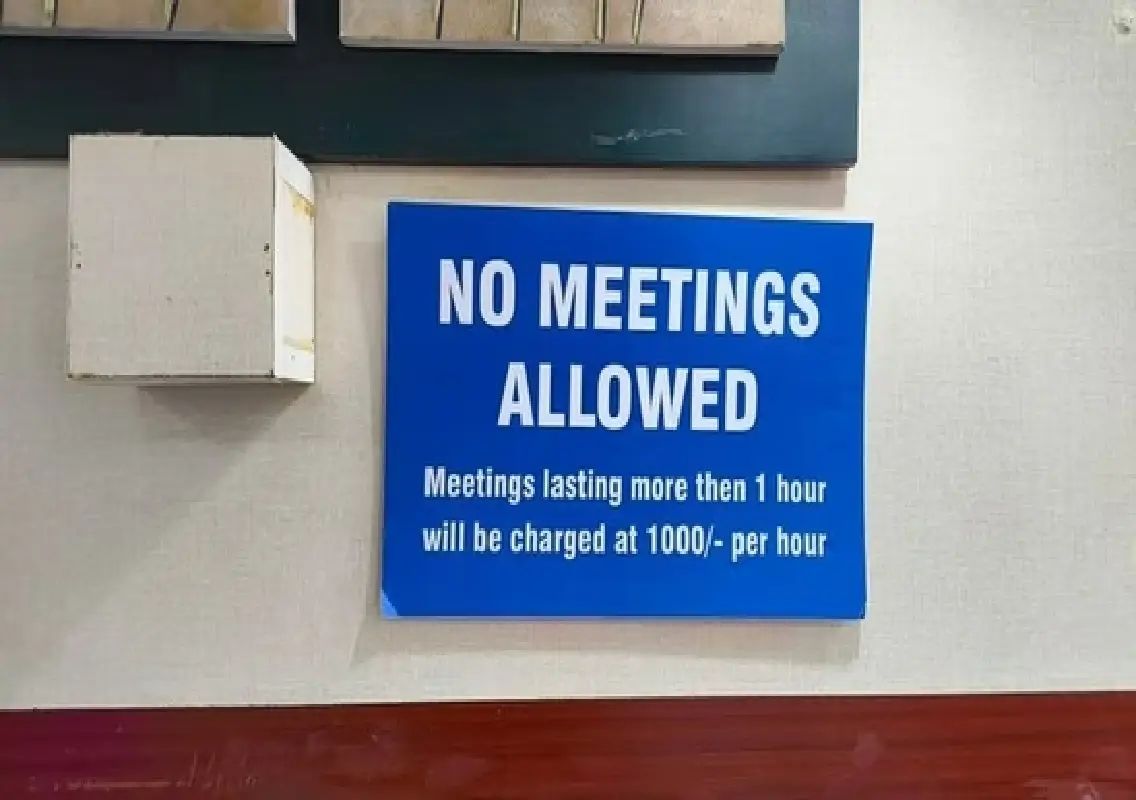


Bengaluru: A simple notice pasted on the wall of a local eatery has triggered a lively online discussion about café culture, remote work habits and the challenges faced by small food businesses in the city. The sign, which bluntly discourages long meetings at the establishment, went viral after a Bengaluru resident shared its photograph on social media.
The image was posted on X by Shobhit Bakliwal, who said he spotted the notice at an eatery in the city. The printed sign read: “No meetings allowed. Meetings lasting more than 1 hour will be charged at Rs 1,000 per hour.” Though the post carried no commentary beyond a brief caption, it quickly struck a chord with users across platforms.
Within a short span, the post crossed 30,000 views and attracted a flurry of comments ranging from humour and surprise to strong support for the eatery’s stance.
Notice reflects a growing frustration
The viral sign has drawn attention to an issue that many small café and eatery owners in Bengaluru quietly grapple with. In a city known for its start-up ecosystem, work-from-anywhere culture and long coffee-fuelled discussions, eateries often end up doubling as informal offices and meeting rooms.
Several users pointed out that customers frequently occupy tables for hours with minimal orders, especially during peak lunch or evening hours. For small establishments operating on thin margins, this directly impacts turnover and revenue.
One user commented, “I have seen this in so many eateries. People will sit and chat for hours without ordering much. I really feel for café owners.” Another wrote, “Work from café culture has gone too far in some places.”
The notice, though blunt, was seen by many as an honest expression of a problem that business owners hesitate to address openly for fear of losing customers.
Online reactions range from humour to support
While some users empathised with the eatery, others reacted with amusement at the directness of the message. “Bengaluru eateries have some of the quirkiest rules and regulations,” one user wrote, while another remarked, “This is next level.”
Several comments appreciated the transparency. “At least they are being honest instead of hinting indirectly,” a user said. Another added, “It looks funny, but I completely get why they did this.”
The notice also prompted comparisons with other types of establishments. One user pointed out, “You will never see such notices in pubs and bars. There is a lesson here,” suggesting that spaces where customers continuously spend money rarely face the same issue.
A city shaped by start-ups and remote work
Bengaluru’s identity as India’s technology capital has significantly shaped its food and café culture. With thousands of start-ups, freelancers and remote workers, cafés have become preferred spots for brainstorming sessions, informal meetings and even full workdays.
While larger café chains often factor this behaviour into their business models, smaller independent eateries are less equipped to absorb the costs of prolonged table occupancy without corresponding sales.
Industry observers say that the issue has become more pronounced after the pandemic, as hybrid and remote work arrangements normalised working from public spaces. Many eateries, especially those in commercial and tech hubs, report customers spending two to three hours over a single beverage.
Drawing boundaries without losing customers
The viral notice has reignited debate on how eateries can strike a balance between being welcoming spaces and protecting their business interests. Some restaurant owners prefer subtle measures such as limiting Wi-Fi access, removing charging points or introducing minimum order values during peak hours.
Others believe clear communication, like the notice that went viral, may actually help set expectations and reduce awkward confrontations between staff and customers.
“Clear rules upfront are better than staff having to repeatedly ask customers to order or vacate tables,” said a café consultant familiar with Bengaluru’s food and beverage sector. “Customers may laugh at the sign, but many will also respect it.”
Broader conversation on public spaces
Beyond the eatery itself, the viral post has sparked a broader conversation on how public and semi-public spaces are used in urban India. Some users questioned whether cafés should be expected to function as co-working spaces, while others argued that spending time is part of the café experience.
However, most agreed that prolonged meetings without adequate spending place an unfair burden on small businesses.
Conclusion
What began as a quirky notice on a wall has turned into a reflection of Bengaluru’s evolving work and social culture. While the sign amused many online, it also highlighted a genuine concern faced by small eateries navigating a city where laptops, meetings and coffee often go hand in hand. As remote work continues to blur the lines between offices and cafés, clearer boundaries like these may become increasingly common.