







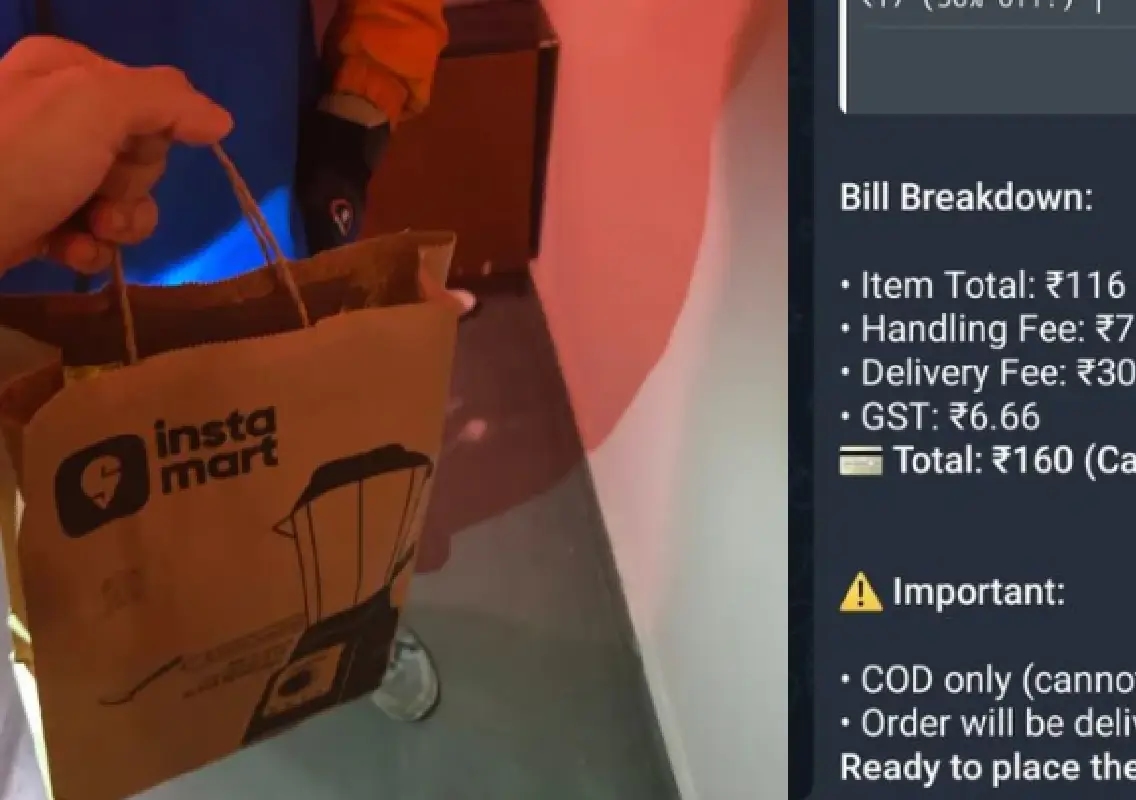


Ordering tea, snacks or groceries may seem trivial, but for many urban professionals, it quietly consumes time and mental energy. A Bengaluru-based entrepreneur has now found a way to automate this daily routine using artificial intelligence — and the internet is divided.
Neil Agarwal recently shared how he connected an AI assistant to his Swiggy account, allowing everyday orders like evening chai and groceries to be placed automatically, without manual input.
How the AI assistant works
According to Neil, his AI places his regular tea order every day at 5 pm. It also helps prepare grocery lists based on meals he plans to cook at home and even suggests dinner options depending on his mood.
Explaining the setup, he said it takes barely a minute. Once activated, the system runs on autopilot. Before placing any order, the AI shows a complete cost breakup, including item prices, delivery charges, taxes and the final payable amount.
The assistant then seeks confirmation, reminding users that orders cannot be cancelled. Only after approval does it place the order. In one example shared online, the total bill came to ₹160, with cash-on-delivery selected.
Convenience versus control
Neil described the system as a time-saver that removes small but repetitive decisions from daily life. However, social media reactions were mixed.
Several users praised the idea, saying AI should solve everyday problems and reduce mental clutter. “This is exactly what I want AI to do,” one user commented.
Others were more cautious. Some expressed concerns about overspending and losing track of expenses due to automation. “Money matters should stay manual,” a user wrote, while another questioned the need for AI in such simple tasks.
A glimpse of everyday automation
The experiment highlights how AI is slowly entering everyday routines, beyond work and productivity tools. Whether it becomes a norm or remains a niche convenience, it has certainly sparked a conversation about how much control people are willing to hand over to technology.