









Bengaluru: The Karnataka government has intensified its investigation into a suspected counterfeit medicine racket after authorities uncovered fake and relabelled drugs allegedly supplied to hospitals, clinics and medical stores across Bengaluru and potentially beyond the state.
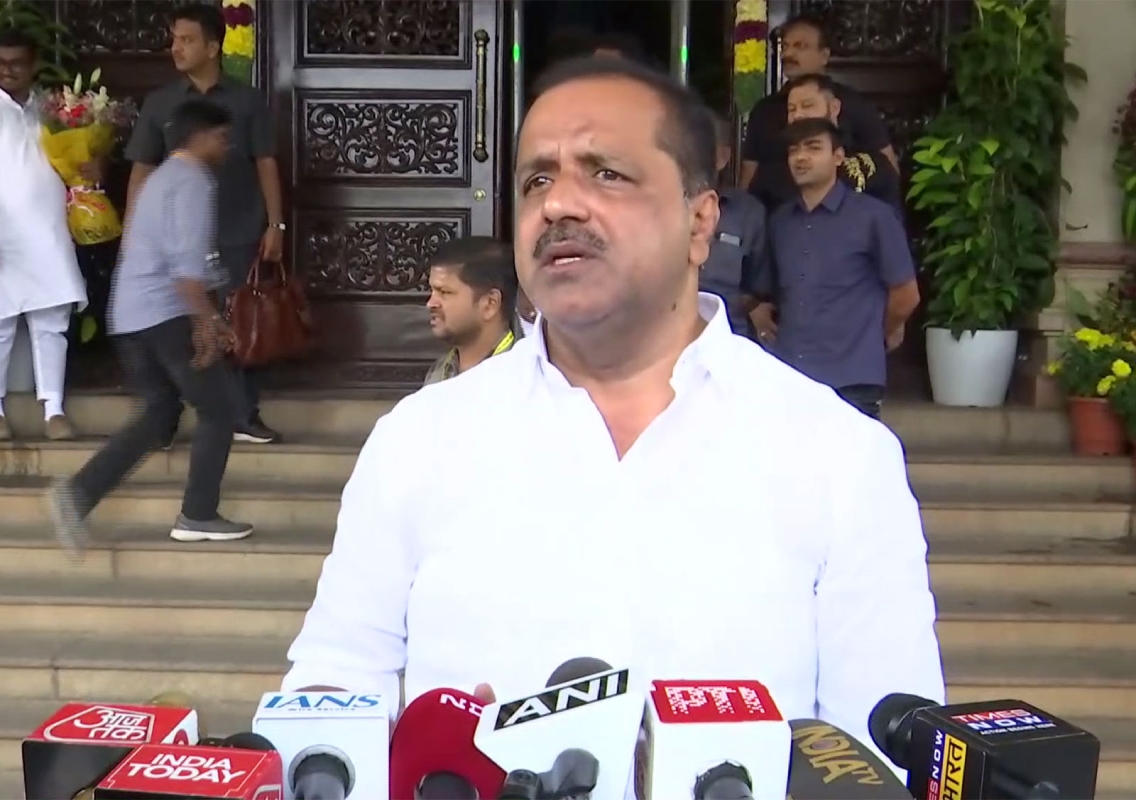
A six-member Special Investigation Team (SIT) has been constituted to investigate the network, following the seizure of suspected spurious medicines worth around Rs 4.91 crore from an unlicensed repacking and relabelling facility near Bidadi in Bengaluru South district. Health and Family Welfare Minister U.T. Khader has also sought the Centre’s intervention in connection with the suspected interstate and international dimensions of the racket.
The investigation has since expanded after a separate probe led authorities to a pharmacy near Minerva Circle that allegedly supplied counterfeit cancer medicines, life-saving drugs and ICU injections to more than 90 hospitals and clinics in Bengaluru.
Six-member SIT takes charge
The Karnataka government constituted the six-member SIT in August after the initial Bidadi raid exposed the alleged repackaging operation.
Joint Commissioner of Police (West) C. Vamshikrishna was appointed to head the team. The SIT functions under the supervision of the Additional Director General of Police (Law and Order).
The team includes Bengaluru Superintendent of Police Shiva Prakash Devaraju, CID Superintendent of Police Lokesh B. Jagalasar, Assistant Drug Controllers Manjunath Reddy and Namrata Hallur of Bengaluru South district, and Drug Inspector Neha Murki.
The SIT has been tasked with investigating the wider network, including related cases registered at other police stations in Karnataka.
Investigators are also examining how the suspected counterfeit medicines were sourced, repackaged, relabelled and distributed.
Fake medicines worth Rs 4.91 crore seized
The investigation began after authorities raided an unlicensed unit at a farmhouse near Bidadi and recovered suspected spurious medicines and equipment.
Officials alleged that lower-cost or generic medicines sourced from other states were being repacked into new vials and given labels resembling those of expensive pharmaceutical brands.
Authorities also recovered expired medicines, raising concerns that some products may have been reintroduced into the supply chain after their expiry.
The initial seizure was valued at approximately Rs 4.91 crore, according to reports on the SIT formation.
Health Minister U.T. Khader had earlier described the operation as potentially part of a wider network extending beyond Karnataka. He said investigators needed to establish where the medicines originated, how they were transported and which hospitals and medical stores received them.
Investigation widens to more than 90 hospitals
The probe took a significant turn after the SIT and Drugs Control Department raided Krupa Healthcare near Minerva Circle in Bengaluru.
Pharmacy owner Veeresh Kumar Jain was arrested in connection with the investigation after authorities seized a large stock of suspected counterfeit medicines.
Investigators suspect that the network supplied counterfeit cancer drugs, other critical medicines and ICU injections to more than 90 hospitals and clinics in Bengaluru and surrounding areas.
The medicines were allegedly offered at discounts of around 50 per cent, according to investigators. Police are now examining purchase records, sale vouchers, bank transactions and other documents to establish the movement of medicines and money.
The investigation has also raised the possibility of an interstate network involving multiple states.
Police suspect wider interstate network
The suspected counterfeit medicine operation is not believed to have been limited to one location.
During the earlier investigation, authorities conducted coordinated searches at more than 10 locations across several states, including Karnataka, Haryana, Himachal Pradesh, Tamil Nadu and Maharashtra.
Investigators are examining the role of more than 15 medical representatives who are suspected of having helped move or distribute the medicines.
The SIT is also attempting to trace the alleged key operator identified as Prashanth, who remains at large, according to investigators.
Police are examining financial records and supply documents to determine the full extent of the suspected operation.
U.T. Khader seeks wider action
The scale of the investigation has prompted the Karnataka government to seek greater coordination between state and central agencies.
Khader has previously said that the suspected network could involve sources outside Karnataka and that the Centre and other states would need to be informed.
The minister has also stressed the need to identify hospitals and intensive care units where suspected counterfeit medicines may have been supplied.
The concern is particularly serious because some of the medicines under investigation are reportedly used in critical-care settings.
If counterfeit or improperly labelled medicines entered hospitals, patients could potentially have been exposed to medicines whose identity, quality or efficacy could not be reliably established.
Authorities are therefore attempting to trace the distribution chain and determine whether any patients were affected.
Counterfeit medicines pose serious health risks
The suspected racket has raised concerns well beyond the financial value of the seized medicines.
Counterfeit medicines can pose serious risks because patients and healthcare professionals may believe they are receiving genuine products from established pharmaceutical manufacturers.
The problem becomes even more serious when medicines are intended for cancer treatment, intensive care or other critical conditions.
According to the investigation, some lower-cost medicines were allegedly repackaged and sold under labels resembling established brands.
Officials also suspect that expired medicines may have been repackaged, adding another potential danger to patients.
The investigation will have to establish which products were genuine, which were counterfeit, how they were altered and where they ultimately reached.
Karnataka plans stricter action against fake drugs
The latest investigation has also prompted the Karnataka government to consider stronger measures against counterfeit pharmaceutical networks.
The Drugs Control Department said the state is looking at comprehensive regulations and special measures to curb the illegal manufacture and distribution of fake medicines.
The government has indicated that enforcement will need to cover not only manufacturing and storage facilities but also the wider supply chain.
This includes tracing distributors, intermediaries, medical representatives and outlets through which suspected counterfeit products may enter legitimate healthcare channels.
Investigation continues
The six-member SIT will continue to examine evidence collected from raids, including medicines, packaging materials, purchase and sale records and financial transactions.
Investigators are also expected to establish the full distribution network and identify other people who may have been involved.
The probe is particularly important because the suspected network appears to have operated across multiple locations and may have supplied medicines to a large number of healthcare establishments.
Authorities have so far made arrests in connection with different stages of the investigation, while some suspected key individuals remain at large.
The SIT has been directed to submit periodic progress reports through the senior police hierarchy and eventually place its final investigation report before the competent court.
Focus shifts to patient safety
The counterfeit medicine investigation has highlighted the need for stronger checks across the pharmaceutical supply chain.
For authorities, the immediate priority is to determine whether suspected fake or relabelled medicines reached patients, particularly those receiving critical treatment.
The investigation will also have to establish the source of the medicines, identify every intermediary involved and determine how counterfeit products entered the legitimate medical distribution system.
With a six-member SIT now leading the wider probe and the Drugs Control Department working alongside the police, Karnataka is attempting to dismantle the suspected network at multiple levels.
The case has also underlined the importance of strict verification of pharmaceutical products before they reach hospitals, clinics and patients.
As the investigation continues, authorities will be watching closely for further arrests, seizures and evidence that could reveal the full scale of the suspected counterfeit medicine racket.