









Bengaluru: Elections to the five newly created city corporations under the Greater Bengaluru Authority (GBA) will be conducted between May 25 and June 30, the Karnataka State Election Commission (KSEC) announced on Monday. The announcement follows a clear directive from the Supreme Court, which has instructed the state government and the Election Commission to complete the long-pending civic body elections in Bengaluru by June 30.
State Election Commissioner GS Sangreshi said the poll schedule has been planned carefully to ensure that it does not clash with major academic examinations, particularly the SSLC and PUC exams, which involve a large number of students and families across the city.
Supreme Court directive sets deadline
The decision to fix the election window comes in the backdrop of a Supreme Court order that pulled up the Karnataka government for delays in holding civic elections in the state capital. Bengaluru has been without an elected municipal council for several years, following the dissolution of the Bruhat Bengaluru Mahanagara Palike (BBMP) and the subsequent restructuring of the city’s governance framework.
Under the Greater Bengaluru Authority Act, the BBMP has been split into five separate city corporations — Bengaluru Central, Bengaluru North, Bengaluru South, Bengaluru East and Bengaluru West — with the aim of improving decentralised governance and administrative efficiency in a city with a population running into several crores.
The Supreme Court has made it clear that the democratic process must not be delayed further and directed that elections be completed by June 30, 2026.
Ballot papers instead of EVMs
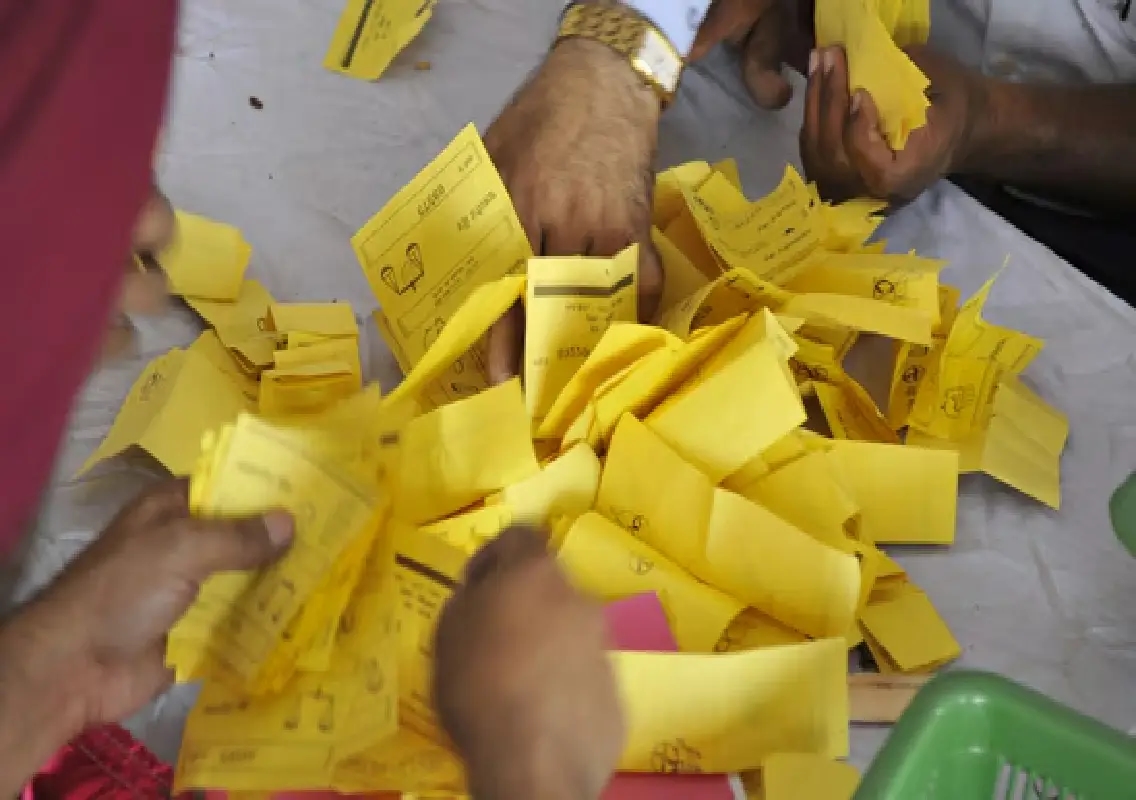
One of the most significant announcements made by the State Election Commission is that the GBA elections will be conducted using ballot papers instead of electronic voting machines (EVMs). According to PTI, Commissioner Sangreshi said the law permits elections to be held either through EVMs or ballot papers, and there is no legal prohibition on the use of ballots.
Defending the decision, he pointed out that several elections across India — including Gram Panchayat, cooperative society and Legislative Council (MLC) polls — are routinely conducted using ballot papers. He also noted that even developed democracies such as the United States continue to rely on ballot-based voting systems.
“The choice of voting method is within the legal framework, and there is no question of illegality or impropriety,” Sangreshi said, dismissing speculation that the move was politically motivated.
Exams considered while planning polls
The Election Commission said the polling window was selected after taking into account the academic calendar. SSLC and PUC examinations are expected to conclude by late May, and holding elections thereafter would reduce inconvenience to students, parents and educational institutions, which are often used as polling stations.
Officials said the aim was to ensure smooth conduct of both examinations and elections without logistical overlap or disruption.
Rejection of pressure allegations
Addressing allegations of political pressure, the State Election Commissioner categorically stated that the KSEC is an independent constitutional authority and functions without interference from the state government.
Deputy Chief Minister DK Shivakumar also publicly clarified that the government would not interfere in the decisions of the Election Commission. “The Election Commission is autonomous. The government has no role in influencing how or when elections are conducted, beyond providing administrative support,” he said.
Security measures to prevent malpractice
Responding to concerns over the use of ballot papers and the possibility of rigging, Sangreshi said robust safeguards would be put in place. These include the installation of CCTV cameras at polling stations, webcasting of the voting process, and deployment of adequate police personnel to ensure law and order.
“These measures are meant to ensure transparency, fairness and public confidence in the electoral process,” he said.
The Commissioner also indicated that zilla panchayat and taluk panchayat elections, which are expected later this year, will also be conducted using ballot papers.
Voters’ list details released
The draft electoral rolls for the GBA elections were released on Monday, covering all five city corporations. According to official data, Bengaluru will have a total of 88,91,411 voters across 369 wards.
This includes 45,69,193 male voters, 43,20,583 female voters and 1,635 voters registered under the ‘others’ category, reflecting a marginal increase in voter diversity and registration compared to previous civic rolls.
Verification and final roll timeline
As part of the revision process, Booth Level Officers (BLOs) will visit households from January 20 to February 3 to verify voter details and ensure accuracy in the rolls. During this period, citizens can file claims and objections related to inclusion, deletion or correction of entries.
After the verification process is completed, the final electoral rolls are scheduled to be published on March 16.
Election officials have urged eligible voters to cooperate with BLOs and make use of the claims and objections window to avoid discrepancies on polling day.
Conclusion
The announcement of the election window for Bengaluru’s new city corporations marks a crucial step towards restoring democratic local governance in the state capital. With clear timelines, enhanced security measures and a renewed focus on voter verification, the State Election Commission has indicated its intent to conduct the long-delayed civic polls in a transparent and orderly manner. All eyes will now be on how political parties and civic groups prepare for what is expected to be a closely watched election in India’s technology hub.