







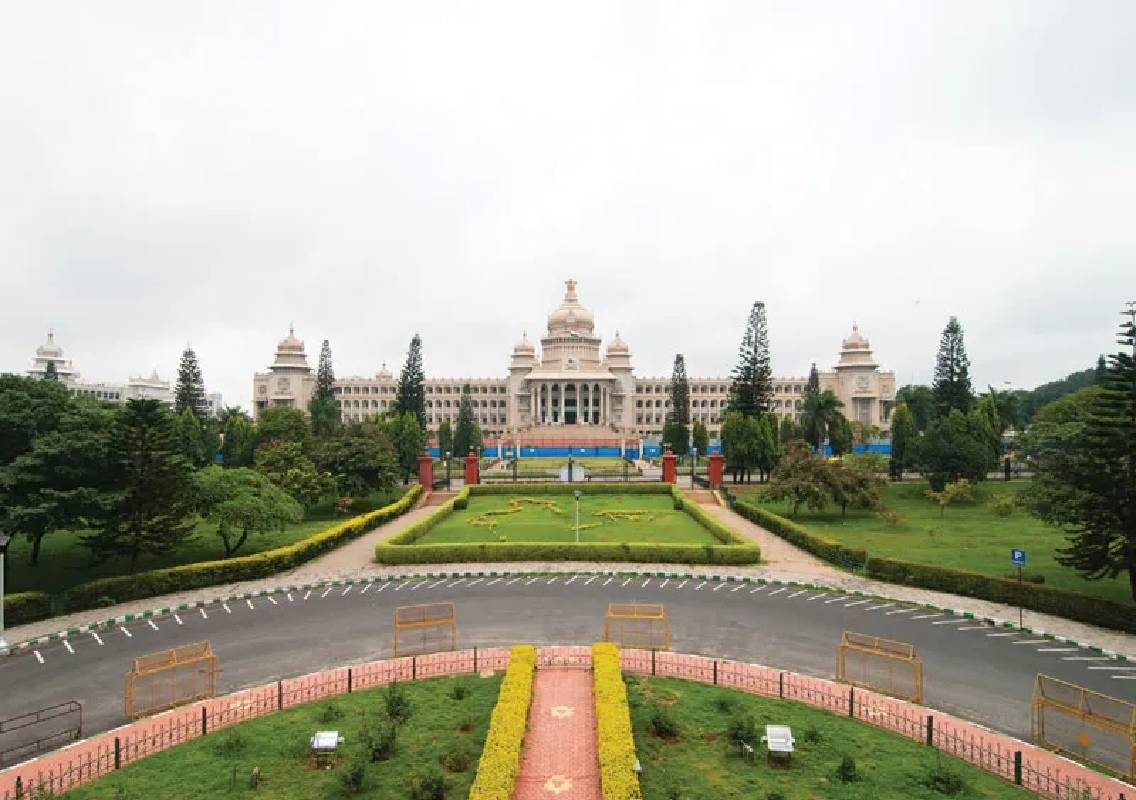


Bengaluru: A talk focusing on Bengaluru’s recent history is being held at the Bangalore International Centre (BIC), offering an opportunity to examine the city’s transformation and the developments that have shaped its modern identity. The programme comes as Bengaluru continues to evolve rapidly, with its growth as a technology and economic hub bringing major changes to its landscape, culture, infrastructure and population.
The event is part of the Bangalore International Centre’s wider programme of talks and discussions that explore history, society, culture, politics and the changing character of Bengaluru and India. The BIC, located in Domlur II Stage, has regularly hosted conversations involving historians, writers, researchers, artists and other experts.
The discussion on Bengaluru’s recent history is particularly relevant at a time when the city is experiencing rapid urban expansion. Once widely associated with its gardens, public-sector institutions and relatively relaxed pace of life, Bengaluru has undergone a dramatic transformation over the past several decades.
Bengaluru’s transformation takes the spotlight
The city’s recent history cannot be separated from its economic transformation.
Bengaluru’s development from an important administrative and industrial centre into one of India’s leading technology hubs has fundamentally changed the city. The growth of the information technology sector brought large numbers of companies, professionals and migrants to Bengaluru, accelerating construction and expanding the city’s boundaries.
The transformation has also altered the city’s relationship with surrounding areas.
Neighbourhoods that were once located on Bengaluru’s outskirts have become major residential and commercial centres. Areas such as Whitefield, Electronic City, Sarjapur Road and the Outer Ring Road corridor have experienced extensive development as the city’s population and employment opportunities have grown.
A discussion on recent history provides an opportunity to look beyond these visible changes and examine how Bengaluru arrived at its present form.
From Garden City to technology hub
Bengaluru’s popular identity has changed considerably over time.
The city was once popularly described as the Garden City because of its greenery, tree-lined streets, parks and pleasant climate. It was also associated with institutions such as Indian Institute of Science, Hindustan Aeronautics Limited, Indian Telephone Industries and several public-sector organisations.
The emergence of the technology industry added another layer to this identity.
The growth of software companies and technology parks brought Bengaluru international attention and created a new economic ecosystem. The city began attracting skilled workers from across India and eventually from other parts of the world.
This economic growth helped create employment and investment but also placed pressure on roads, public transport, housing, water resources and other urban infrastructure.
History helps explain today’s Bengaluru
Understanding Bengaluru’s recent history is important because many of the city’s current challenges are connected to decisions and developments that took place over several decades.
The expansion of the city has not happened uniformly.
Some parts of Bengaluru developed around established commercial and residential neighbourhoods, while others grew rapidly around technology parks, highways and new employment centres.
This has produced a city with very different urban landscapes existing alongside one another.
Historic neighbourhoods, old markets, colonial-era structures, traditional residential areas and newly developed technology corridors now form part of the same metropolitan region.
Growth changed the city’s population
One of the most significant aspects of Bengaluru’s recent history has been its population growth.
People from different parts of Karnataka and other states have moved to the city for employment, education and business opportunities.
This migration has contributed to Bengaluru’s diverse cultural identity.
Kannada remains central to the city’s history and public life, while the presence of communities from across India has created a multilingual and multicultural urban environment.
The changing population has also influenced food, entertainment, housing, education and workplace culture.
Technology industry’s lasting impact
The information technology industry has arguably been one of the most important forces in Bengaluru’s modern transformation.
The establishment and expansion of software companies created new employment opportunities and increased demand for office space, housing, restaurants, transport and other services.
Technology corridors developed rapidly, changing areas that had previously been relatively peripheral to the city.
Bengaluru’s reputation as India’s technology capital also encouraged further investment.
The city’s economic importance grew beyond the technology sector, with industries including biotechnology, aerospace, startups, finance and research adding to its economic profile.
Infrastructure struggles accompany growth
Rapid growth has also produced major infrastructure challenges.
Traffic congestion has become one of Bengaluru’s most visible problems. As the number of private vehicles increased alongside population growth, roads in several parts of the city came under sustained pressure.
Public transport has expanded, particularly through the Bengaluru Metro, while BMTC bus services continue to play a major role in daily commuting.
However, the scale of the metropolitan area means that transport infrastructure remains a major subject of discussion.
Looking at the city’s recent history can help explain why infrastructure development has struggled to keep pace with urban expansion.
Bengaluru’s changing landscape
The physical appearance of Bengaluru has changed dramatically.
Older low-rise neighbourhoods and independent houses have increasingly been joined or replaced by apartment complexes, commercial buildings and technology campuses.
The growth of the real estate sector has reshaped several parts of the city.
At the same time, concerns about the loss of trees, lakes and open spaces have become increasingly prominent.
The city’s history of lakes and interconnected water systems has also received renewed attention because of recurring flooding and water shortages.
Lakes and water in Bengaluru’s history
Bengaluru’s relationship with water is an important part of its urban history.
The city historically relied on a network of lakes and tanks designed to collect and store rainwater.
Over time, urban expansion and changes in land use affected several of these water bodies and their connecting channels.
The resulting challenges have become increasingly visible through episodes of flooding as well as periods of water scarcity.
The history of Bengaluru’s water systems therefore offers an important example of how urban development can affect natural infrastructure.
The changing meaning of Bengaluru
The city has acquired several identities over the decades.
It has been called the Garden City, Pensioners’ Paradise, India’s Silicon Valley and the country’s technology capital.
Each description reflects a particular period in Bengaluru’s development.
A discussion about recent history can help connect these different identities rather than treating them as separate versions of the city.
The Bengaluru of today contains elements of all these phases.
Its parks and older neighbourhoods continue to exist alongside technology campuses, high-rise apartments and modern commercial districts.
Heritage remains part of the story
Despite rapid development, Bengaluru retains a significant architectural and cultural heritage.
Areas such as Basavanagudi, Malleswaram, Chickpet and Shivajinagar preserve aspects of the city’s older urban character.
Historic markets, temples, churches, colonial-era buildings and traditional homes remain important reminders of Bengaluru’s past.
The challenge is to balance preservation with the demands of a rapidly growing metropolitan region.
Discussions on the city’s history can contribute to this conversation by highlighting the importance of understanding what existed before today’s urban landscape emerged.
Public institutions shaped Bengaluru
Bengaluru’s development was also influenced by its strong institutional base.
Research institutions, educational establishments, defence organisations and public-sector companies played an important role in the city’s economic and intellectual development.
These institutions helped create a skilled workforce and established Bengaluru as a centre for science, engineering and research even before the technology boom.
The later expansion of the IT sector built upon this existing ecosystem.
This is one reason why Bengaluru was particularly well positioned to become a major technology hub.
A city shaped by migration
Migration has been an important part of Bengaluru’s modern history.
People have arrived from different parts of Karnataka and from states across India.
This has influenced the city’s language, food, workplaces and cultural life.
Bengaluru’s restaurants, neighbourhoods, educational institutions and professional communities reflect this diversity.
At the same time, the rapid increase in population has created pressure on housing and public infrastructure.
Understanding migration therefore forms an important part of understanding the city’s recent development.
Culture has evolved alongside the city
Bengaluru’s cultural landscape has also changed.
The city has long been associated with classical music, theatre, literature and traditional arts.
Over time, these have existed alongside contemporary music, independent theatre, cinema, stand-up comedy, art exhibitions and literary festivals.
Institutions such as the Bangalore International Centre have become spaces where conversations about history, culture and contemporary society can take place.
The recent-history discussion is therefore part of a wider cultural conversation about Bengaluru’s identity.
BIC as a space for public discussion
The Bangalore International Centre regularly hosts programmes examining subjects ranging from history and politics to books, cinema, international relations and culture.
Previous programmes at the centre have included discussions on Indian history and international relations, featuring historians, writers, journalists and academics.
The institution’s location in Domlur places it within a city that itself reflects Bengaluru’s changing character.
The area is surrounded by established residential neighbourhoods as well as newer commercial and technology developments.
Why recent history matters
Studying recent history is not simply about looking backwards.
For a city such as Bengaluru, the past helps explain many of the issues currently dominating public conversations.
Questions around transport, housing, water, urban planning, heritage and environmental protection are connected to the way the city expanded.
Understanding those developments can help residents and policymakers assess the consequences of future decisions.
Bengaluru at a crossroads
Bengaluru continues to grow, but the nature of that growth is increasingly being debated.
The city needs to accommodate economic activity and new residents while maintaining liveability.
Issues such as traffic, water availability, pollution, waste management and loss of green spaces have become central to discussions about its future.
The city’s recent history provides useful context for these debates.
It shows how decisions made during different phases of growth have contributed to the opportunities and challenges Bengaluru faces today.
Balancing growth and heritage
One of the major questions facing Bengaluru is how to balance development with preservation.
Economic growth has created employment and wealth, but rapid construction can put pressure on historic neighbourhoods, trees, lakes and other elements of the city’s heritage.
Preserving the city’s identity does not necessarily mean preventing development.
Instead, it requires planning that recognises the value of existing cultural, environmental and architectural assets.
What Bengaluru’s history tells its residents
For many residents, Bengaluru is experienced through daily routines — travelling to work, using public transport, visiting markets, attending schools or colleges and living in neighbourhoods that may have changed dramatically within a generation.
A historical perspective provides a broader view of those experiences.
It shows that the city has never been static.
Bengaluru has repeatedly adapted to changes in technology, industry, population and governance.
The current transformation is another stage in a much longer process.
A conversation for a changing city
The discussion at the Bangalore International Centre comes at a time when Bengaluru is facing questions about what kind of city it wants to become.
The city’s success as an economic and technology centre has created opportunities but has also exposed weaknesses in urban planning and infrastructure.
A conversation about its recent history can encourage residents to consider both sides of that transformation.
It can also help bring attention to aspects of the city that may otherwise be overlooked amid its rapid growth.
Looking ahead
Bengaluru’s future will inevitably be shaped by the choices made today.
Urban planning, public transport, environmental conservation, housing and heritage protection will determine how the city develops in the coming decades.
Understanding the city’s past can help inform those decisions.
The history of Bengaluru demonstrates that the city has repeatedly reinvented itself while retaining elements of its older identity.
The challenge now is to ensure that future growth does not come at the cost of the qualities that made the city distinctive.
Conclusion
Bengaluru: A talk on Bengaluru’s recent history at the Bangalore International Centre is drawing attention to the city’s remarkable transformation and the developments that have shaped its modern identity. The discussion comes as Bengaluru continues to balance rapid economic growth with challenges involving infrastructure, mobility, housing, water and heritage.
From its earlier identity as the Garden City and an important centre for public-sector institutions to its emergence as a global technology hub, Bengaluru has undergone significant changes. Its history has been shaped by economic growth, migration, infrastructure expansion and changing patterns of urban development.
The discussion also offers a timely opportunity to reflect on what Bengaluru has become and where it could be headed next. As the city continues to expand, understanding its recent history can provide valuable context for decisions about its future.