







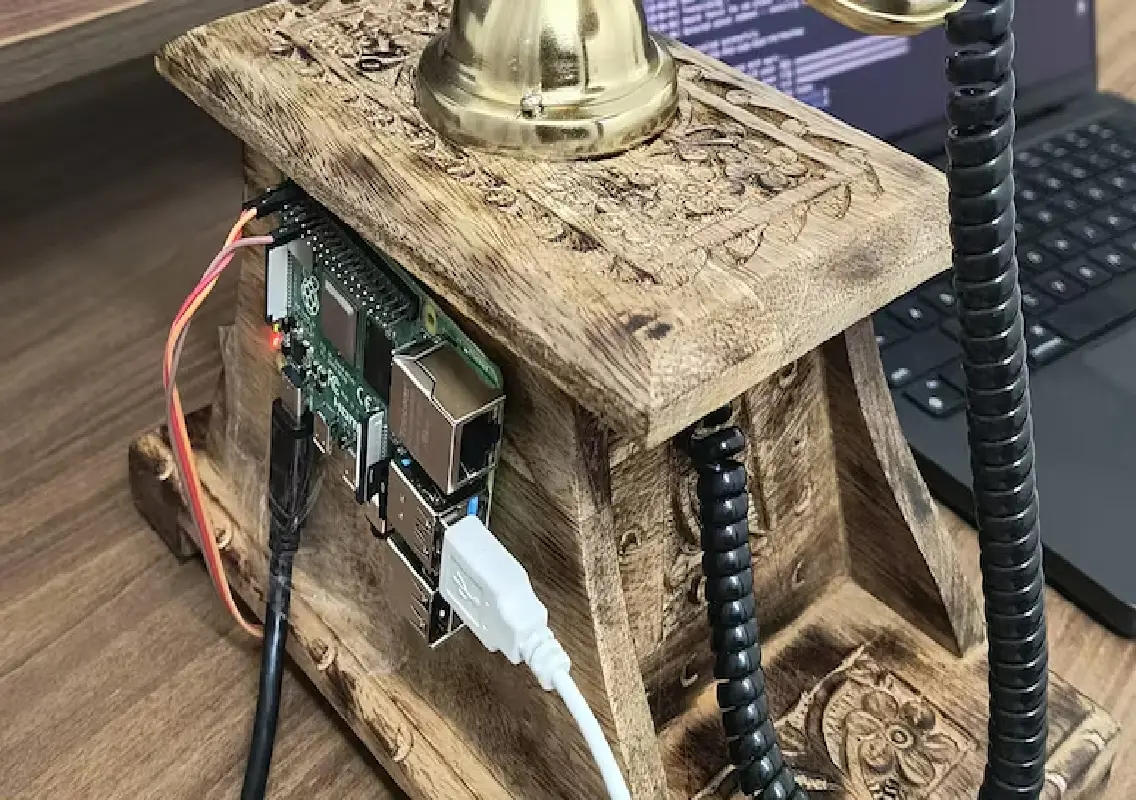


Bengaluru: A Bengaluru-based tech enthusiast has caught the attention of social media users after transforming a vintage rotary telephone from the 1970s into a fully functional artificial intelligence-powered assistant. The project, which blends nostalgia with modern technology, has been widely praised online for its creativity and surprisingly low cost.
The creator, identified as Pankaj on the social media platform X, shared photos and a demonstration video of the device, explaining how he repurposed his grandfather’s old rotary phone into a voice-controlled AI interface.
His post quickly attracted attention from the technology community, with many users applauding the idea of combining classic hardware with modern AI tools.
Inspired by dislike for modern smart speakers
According to Pankaj, the idea for the project came from his dissatisfaction with the design of modern smart speakers.
In his post, he said he was tired of interacting with what he described as “ugly plastic boxes”, referring to contemporary voice assistants used in homes.
Instead of buying another smart speaker, he decided to build his own AI-powered device using a classic rotary telephone that belonged to his grandfather.
From the outside, the device appears identical to a traditional rotary phone from the 1970s, preserving its vintage aesthetic. However, internally it has been modified with modern electronics and software that allow it to function as a smart assistant.
How the AI-powered phone works
The modified telephone operates using a simple voice activation system.
Whenever the receiver is lifted, the system automatically activates and begins listening for commands. The user then triggers the assistant by saying the wake phrase “Hey Kiri”.
Once activated, the AI assistant can perform a range of tasks similar to modern smart devices.
According to Pankaj, the assistant can help with several everyday activities, including:
- Booking a cab
- Scheduling meetings
- Ordering food such as instant noodles
- Turning off smart home lights
- Summarising emails
The interaction mimics the experience of having a phone conversation, making the device both functional and nostalgic.
Pankaj wrote in his post that he simply picks up the receiver, says “Hey Kiri”, and starts speaking commands, much like talking to another person over the phone.
Built at a remarkably low cost
One of the most striking aspects of the project is its affordability.
Pankaj revealed that the entire device was built for approximately ₹2,307, making it far cheaper than most commercially available smart assistants.
Despite the low cost, the system performs a wide range of functions and serves both as a decorative desk item and a practical AI interface.
The project highlights how hobbyists and independent developers can experiment with artificial intelligence and smart devices using relatively inexpensive components.
Social media users praise the idea
After Pankaj shared images and a short demo video of the rotary phone assistant on X, the post quickly gained traction among technology enthusiasts and members of the online maker community.
Several users praised the project for creatively repurposing old hardware instead of discarding it.
One user commented, “You are a legend! But more than the demo, I loved the classic phone you used.”
Another user wrote, “Using old hardware to build something new is such a fun way to learn.”
A third user simply remarked, “Looks cool in retro style.”
The responses reflected a broader appreciation for projects that combine vintage design with modern technology.
Growing interest in retro-tech innovation
Projects like Pankaj’s are part of a growing trend in the technology community where developers and hobbyists restore or repurpose vintage devices with modern capabilities.
By integrating artificial intelligence, microcontrollers, and voice recognition systems, creators are giving new life to older gadgets while preserving their classic design.
Such innovations often attract attention online because they blend nostalgia with functionality, appealing both to technology enthusiasts and those who appreciate retro aesthetics.
A blend of nostalgia and innovation
Pankaj’s rotary phone assistant now sits on his desk, serving both as a conversation starter and a working AI interface.
The project demonstrates how creativity and curiosity can transform everyday objects into innovative technological tools.
As interest in DIY electronics and AI experimentation continues to grow, projects like this highlight the possibilities of combining old technology with new ideas.