







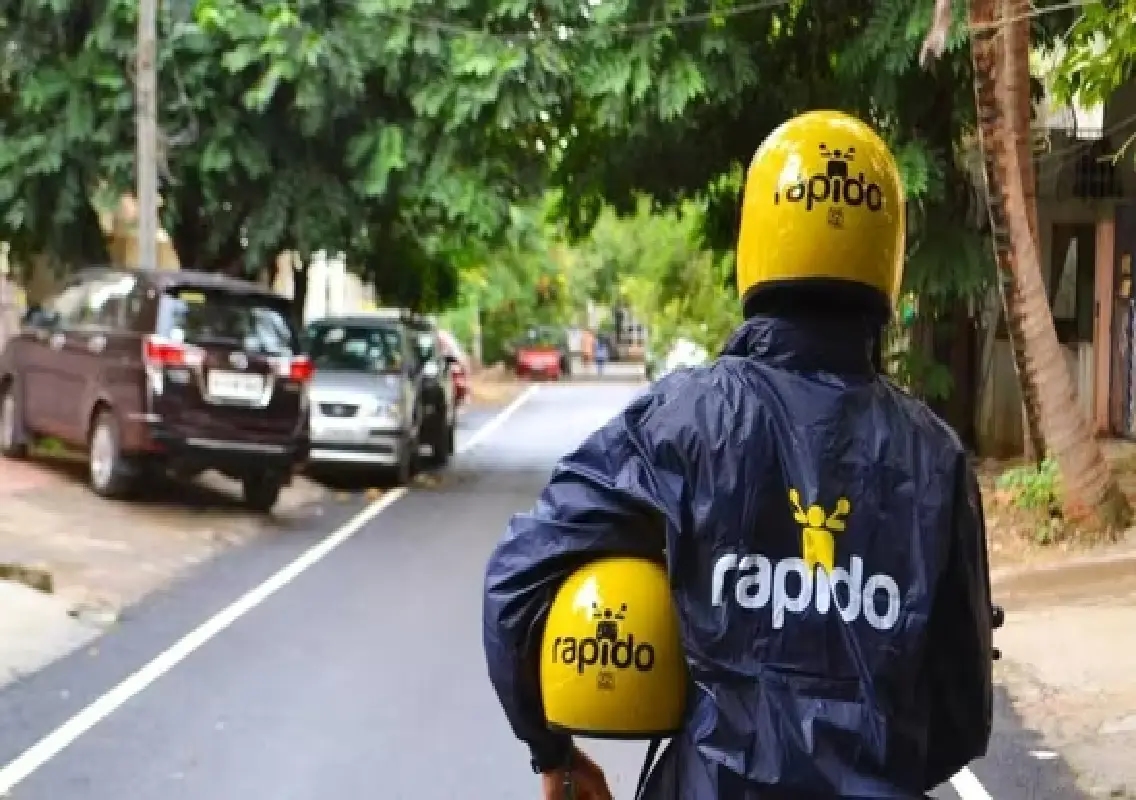


Bengaluru: A first-hand experiment by a city resident who worked as a Rapido bike taxi rider for four days has triggered renewed online debate on whether gig economy platforms can realistically supplement income, especially in the short term. The detailed account, shared on Reddit’s popular r/Bangalore forum, has drawn widespread attention for offering a rare, transparent breakdown of earnings, expenses and working conditions in part-time bike-taxi work.
Four days on the road
The Bengaluru resident documented his experience of riding for Rapido over four consecutive days, explaining that his goal was to test whether gig work could provide meaningful supplementary income. He shared precise details of his working hours, ride timings, daily earnings and fuel costs, helping readers understand the real economics behind bike-taxi platforms.
He said he logged around four to five hours a day, largely during late-night slots after 10 pm. According to him, this was a strategic choice, as Rapido offers a 20 per cent night-time fare incentive between 10 pm and 6 am. Riding at night also meant lighter traffic, faster trips and reduced stress compared to peak daytime hours.
Why night shifts made sense
In his post, the rider noted that late-night demand remained steady throughout his experiment. Passengers included shift workers, late-night commuters and people returning home after social outings. With fewer vehicles on the road, ride completion times were shorter, allowing him to take more trips within the same time frame.
He also pointed out that the night incentive significantly boosted earnings per ride. This bonus, combined with smoother traffic conditions, made night shifts more profitable than daytime riding, even with fewer total rides.
No commission deducted
One of the most striking aspects of his experience was that Rapido did not deduct any commission from his fares during the four-day period. While he admitted he was not entirely sure why this was the case, he speculated that it could be linked to recent nationwide protests by gig workers.
Over the past few months, delivery partners and ride-hailing drivers across India have raised concerns over declining pay, safety issues, sudden account deactivations and the absence of social security benefits. The rider suggested that the zero-commission period might have been a temporary measure introduced in response to these protests.
Daily earnings breakdown
The Reddit post included a clear day-by-day earnings summary. On the first day, he earned ₹630 after riding for about five hours across a mix of evening and late-night trips. On the second day, his earnings increased to ₹750 for a similar duration.
On the final two days, he reduced his riding time to around three to four hours each night, earning ₹420 on both occasions. By the end of the four-day experiment, his total gross income stood at ₹2,220.
After deducting approximately ₹400 spent on fuel, he calculated his net earnings at around ₹1,820 for nearly 17 hours of riding. This worked out to a modest hourly rate, but one that he felt was acceptable for short-term or emergency income.
Key takeaways from the experiment
Reflecting on his experience, the rider listed several observations. He noted that late-night riding offered consistent demand, quicker trips and better incentives. With no commission deducted, the effort-to-earning ratio felt reasonable, especially for someone who already owned a bike and was not relying on gig work as their sole income source.
However, he was clear in his conclusion: “Works well as a side hustle, not full-time income.” He added that while the money was not extraordinary, part-time Rapido riding could be useful for short-term needs or emergency cash flow.
Online reactions and wider debate
The post quickly gained traction online, with many users sharing their own experiences and opinions on gig work. One commenter wrote about his roommate, who works a regular office job from 2 pm to 10 pm and then rides for Rapido from 10 pm to 6 am.
According to the commenter, the roommate targets earnings of around ₹1,000 per night and often manages to achieve it. With a monthly office salary of ₹24,000, the commenter claimed that the roommate ends up earning more through gig work than from his IT job.
Such responses have fuelled broader discussions on whether gig platforms are filling gaps left by stagnant wages in traditional employment, particularly for young professionals in urban centres.
Not a long-term solution
Despite some positive anecdotes, several users cautioned against viewing gig work as a sustainable long-term career. Concerns were raised about physical fatigue, safety during night shifts, lack of health insurance and the absence of retirement benefits.
Experts note that while gig work can provide flexibility and quick cash, it shifts risks such as fuel costs, vehicle maintenance and medical emergencies entirely onto workers. Without formal protections, long-term dependence on such platforms can be precarious.
Conclusion
The Bengaluru resident’s four-day Rapido experiment has provided valuable insight into the realities of bike-taxi gig work. While it highlights the potential for short-term income and flexible hours, it also reinforces the limitations of gig platforms as a primary livelihood. As debates around fair pay and worker protections continue, such first-hand accounts are likely to play an important role in shaping public opinion and policy discussions around the gig economy.