









In the bustling lanes of Bengaluru‘s New Thippasandra market, shopkeepers and vendors have unexpectedly become part of a global artificial intelligence experiment.
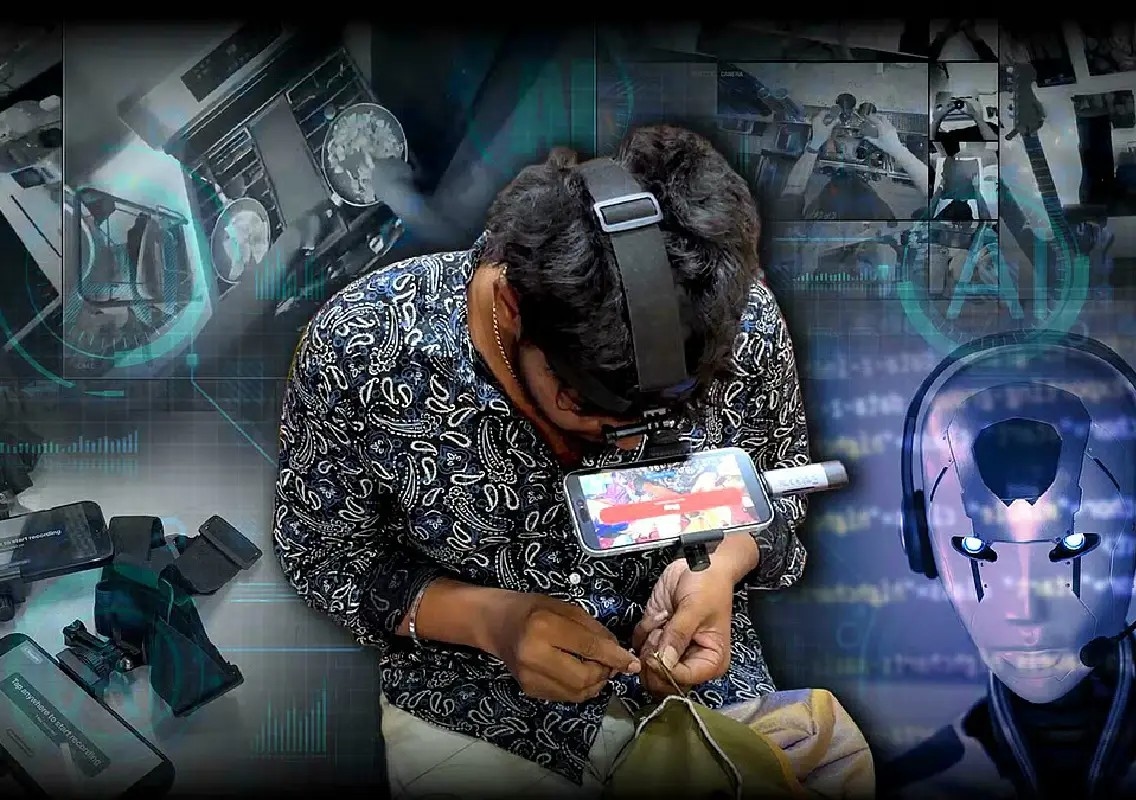
For the past few weeks, several workers in the market have been wearing small cameras mounted on headbands while carrying out their daily tasks. The footage they record is reportedly being used to train AI systems and humanoid robots to understand how humans interact with objects and navigate real-world environments.
Everyday work becomes AI training data
Among those participating is Nagraj, a grocery shop owner who spends his day serving customers and managing stock. The only difference is the camera attached to his forehead, silently recording every movement.
According to workers, representatives of San Francisco-based company Instawork approached them with an offer to wear the devices while working. Participants were told that the recordings would help future robots learn human actions such as handling products, organising shelves and performing routine tasks.
Workers said they were paid for their participation and instructed to continue their normal activities while wearing the cameras.
Questions over consent and transparency
The initiative is part of a broader project involving “egocentric data capture” — first-person video recordings collected from the wearer’s perspective. Such data is considered valuable for training AI models that require an understanding of human movement and decision-making.
However, several workers told media outlets that no formal contracts were signed. The arrangement was reportedly based on verbal agreements, with participants receiving equipment and instructions directly from company representatives.
The absence of written consent documents has sparked discussions about transparency, data ownership and whether workers fully understand how their recordings may be used in future AI development.
India’s role in the AI revolution
Industry experts note that large volumes of real-world training data are essential for developing advanced robotics. Markets, shops and workplaces provide rich environments where AI systems can learn from human behaviour.
As artificial intelligence continues to expand into everyday life, projects such as this highlight both the opportunities and ethical questions surrounding the collection of human-generated data.
For workers in New Thippasandra, however, the experience remains simple: go about your daily work while helping teach machines how humans live and work.