







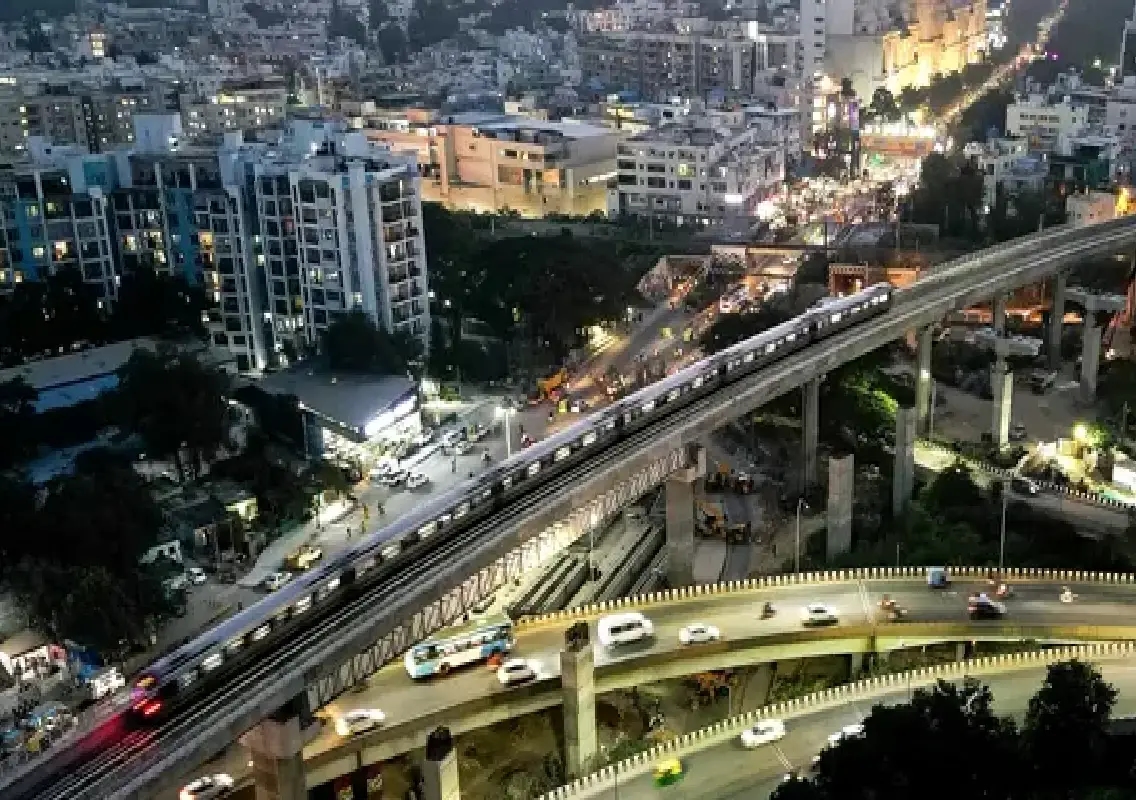


Bengaluru: Housing demand in residential areas located close to metro stations has risen sharply by 8–19 per cent, with both property prices and rentals outperforming the broader city average, according to latest data released by property platform NoBroker. The report indicates that metro connectivity has emerged as a decisive factor shaping buyer and tenant preferences, particularly across established neighbourhoods and IT-linked corridors.
The data for 2025 shows that micro-markets with direct metro access recorded stronger demand growth, faster capital appreciation and higher rental increases compared to non-metro-linked areas. Both end-user buyers and tenants are increasingly prioritising commute efficiency and last-mile connectivity while making housing decisions.
Strong demand growth along key metro lines
The report highlights that the strongest demand surge was recorded along operational and expanding metro corridors across the city. Demand rose between 8 per cent and 19 per cent across multiple station-linked neighbourhoods.
Along the Purple Line towards the eastern IT corridor, Whitefield registered a 14 per cent rise in housing demand, while K.R. Puram saw an 18 per cent increase and Vijayanagar recorded a 9 per cent rise. These areas have benefited from improved connectivity to office clusters and central business districts.
On the Green Line, which connects major north–south zones, Jayanagar saw a 13 per cent increase in demand and Rajajinagar recorded a 9 per cent rise. The Yellow Line influence in the southern belt also supported buyer interest, with Electronic City witnessing a 12 per cent increase and Bommanahalli 8 per cent.
According to market observers, improved metro reach has reduced travel uncertainty and made these areas more attractive to working professionals and families seeking predictable commute times.
Capital values rise in established metro hubs
Property prices in several long-established residential hubs near metro stations recorded double-digit appreciation. Rajajinagar posted a 13 per cent rise in capital values, while Jayanagar saw an 11 per cent increase.
K.R. Puram recorded a 9 per cent increase in property prices, reflecting growing investor and end-user interest as connectivity improves in the eastern corridor.
Premium neighbourhoods such as Indiranagar and Malleswaram, where base prices are already high, showed moderate but steady growth of around 5–6 per cent. Analysts interpret this as a sign of price stability and market maturity rather than slowdown.
Saurabh Garg, Chief Business Officer at NoBroker, said sustained end-user demand is driving price resilience in metro-linked areas, especially where social infrastructure and transit access are both strong.
Rentals near metro stations outperform city average
Rental markets around metro stations also recorded robust growth, exceeding the city-wide average in many locations. The data shows that tenants are willing to pay a premium for homes within walking distance or short last-mile reach of metro stops.
Malleswaram led rental growth with a 19 per cent increase, followed by Jayanagar at 18 per cent and Indiranagar at 13 per cent. In IT-focused belts, metro-linked hubs such as Whitefield, K.R. Puram and Electronic City recorded rental increases of more than 10 per cent.
The report notes that properties located close to metro stations and major arterial roads commanded a rental premium of 15–20 per cent compared to homes located deeper inside the same localities. This premium reflects the value tenants place on daily commute savings and transport reliability.
Steady return-to-office trends and hybrid work models have also supported rental demand in well-connected neighbourhoods.
Upcoming metro lines also influencing prices
Interestingly, the effect is not limited to areas with fully operational metro stations. Several localities expecting future metro connectivity have also recorded notable increases in both demand and prices as buyers factor in upcoming infrastructure.
Bellandur recorded an 18 per cent increase in prices, while Bommanahalli saw a 13 per cent rise, largely driven by expectations linked to planned metro access. Peripheral markets such as Begur and Attibele also witnessed appreciation as transit networks gradually expand towards southern corridors.
Real estate brokers say infrastructure-led speculation is returning selectively, with buyers willing to enter early in growth corridors where metro timelines appear clearer.
Metro expansion reshaping housing choices
Industry experts say metro expansion has consistently reshaped residential choice patterns in the city. Technology professionals and daily commuters are increasingly choosing homes based on transit access rather than only social status of neighbourhoods.
When new corridors are approved or opened, enquiry volumes tend to rise not only along the direct line but also in adjacent feeder areas. Travel time reductions of 30–40 per cent in some stretches have enabled buyers and tenants to shift from high-cost micro-markets to more affordable but well-connected zones.
This trend has been visible after metro operations expanded into major IT corridors, where professionals reassessed living locations once commute times dropped significantly.
Conclusion
The latest data indicates that metro connectivity has moved from being a value-add to a core pricing and demand driver in the city’s housing market. With multiple corridors under construction and expansion plans underway, transit-linked micro-markets are likely to continue attracting stronger buyer interest, price appreciation and rental premiums compared to less connected areas.