







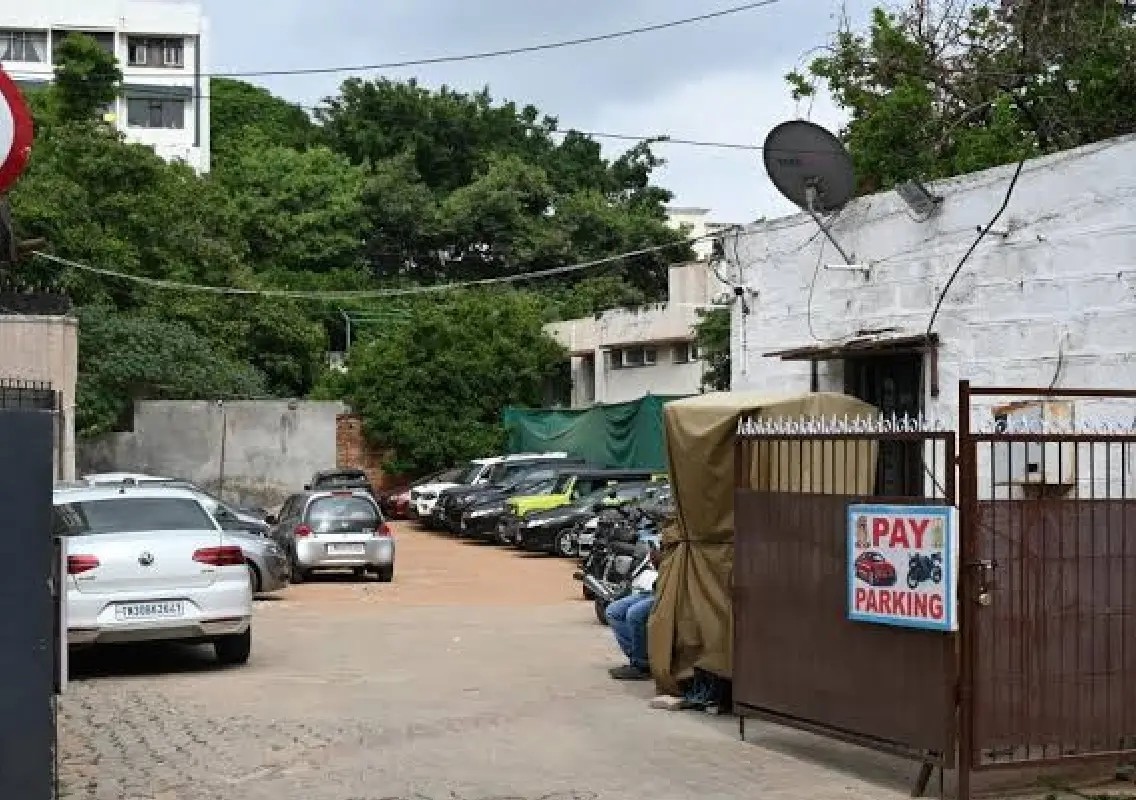


Bengaluru: The draft Greater Bengaluru Area (Parking) Rules, 2026, aim to bring greater discipline to parking in the city, but residents and business owners have raised concerns over how the proposed system will work in older buildings with inadequate parking.
Old buildings pose a major challenge
The draft rules assume that residential complexes have designated parking spaces and that commercial buildings provide planned or underground parking. However, residents point out that thousands of older and unauthorised buildings do not meet these requirements.
They argue that parking shortages caused by decades-old construction and deviations from sanctioned plans cannot be resolved overnight.
Christopher Cruz, executive member of the North East Residents’ Welfare Association (NERWA), said the growth of hotels and restaurants in residential areas could further increase pressure on available parking spaces.
He expressed concern that commercial establishments could begin using vacant plots in neighbourhoods for customer parking, leaving fewer spaces for local residents.
Businesses worried about penalties
The draft proposes fines ranging from Rs 1,000 to Rs 5,000 per week for commercial establishments that fail to meet parking requirements.
Business owners, however, say some premises simply do not have enough space to accommodate the required parking.
A shop owner on New BEL Road pointed out that although the commercial complex has underground parking, it is shared by several establishments and cannot meet the demand generated by the large number of visitors.
Residents seek accountability
Residents said the government should address the legacy of illegal constructions and building-plan deviations before imposing fresh penalties on property owners and businesses.
They also called for accountability among officials who permitted such buildings to come up without adequate parking provisions.
The concerns highlight the challenge before the government: while regulating parking is necessary to ease Bengaluru’s congestion, the new rules may also need practical solutions for the city’s older buildings and established neighbourhoods.