







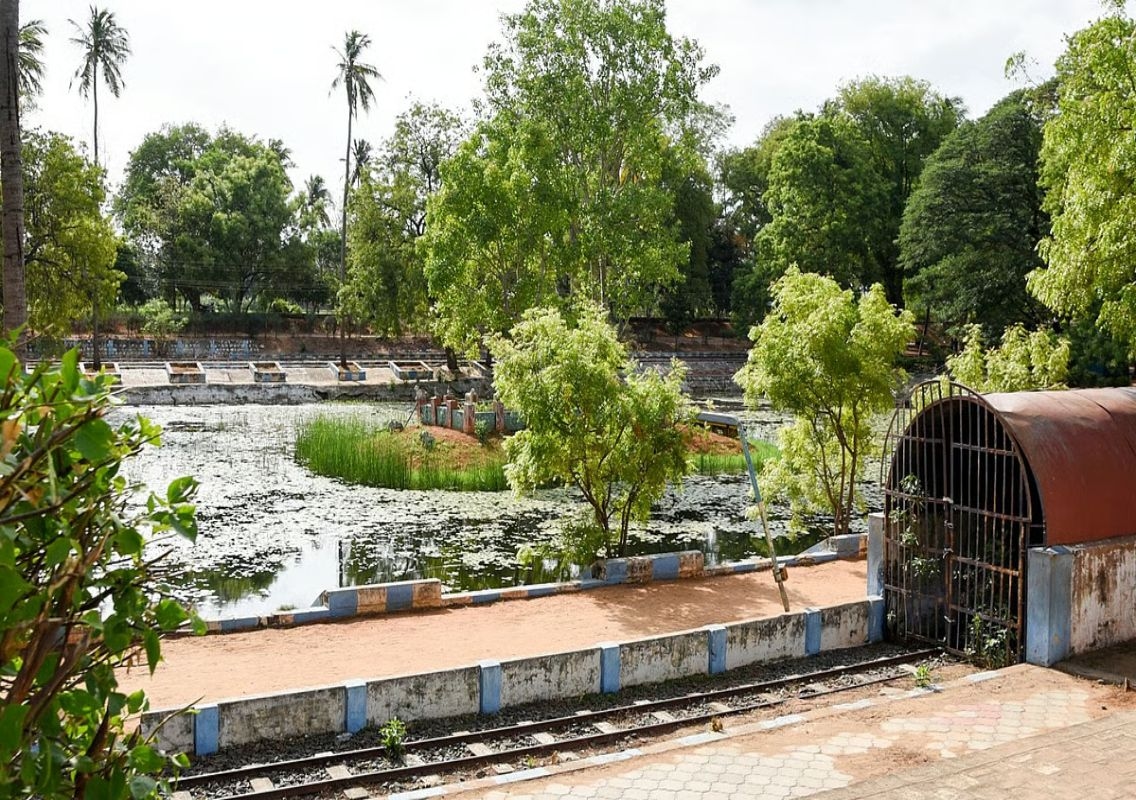


Bengaluru: Bengaluru’s long-standing identity as India’s Garden City is facing renewed scrutiny after the Karnataka Government Parks (Preservation) (Amendment) Bill, 2026, introduced a provision allowing up to 5% of parkland to be alienated for infrastructure projects. The legislation has triggered a debate over the future of the city’s public green spaces and the safeguards needed to protect them.
The issue has gained particular attention because of the proposed 17-km Hebbal-Silk Board tunnel road, which envisages ramps and other allied infrastructure within the Lalbagh premises. Environmentalists, citizen groups and urban experts have raised concerns over the possible impact on Bengaluru’s remaining green spaces.
The amendment to the Karnataka Government Parks (Preservation) Act, 1975, was passed during the recent legislative session. It allows the government, subject to prescribed conditions, to alienate up to 5% of a park or garden for public utility and infrastructure projects.
The controversy has now widened beyond the proposed tunnel road, with experts questioning whether the change could establish a precedent for the gradual diversion of protected urban green spaces across Karnataka.
What does the 5% provision allow?
The Karnataka Government Parks (Preservation) (Amendment) Bill, 2026, changes the framework governing protected government parks.
Under the amendment, up to 5% of the total area of a park or garden can be alienated for public utility projects, subject to recommendations from a high-level committee. The provision covers government departments, companies, statutory authorities and local authorities.
The amendment is significant because the parent legislation was designed primarily to preserve parks and prevent their alienation.
The 1975 Act contained restrictions against the sale, lease, gift, exchange, mortgage or other forms of alienation of land or buildings within protected parks. The amendment creates an exception that permits limited diversion for infrastructure purposes.
Supporters of the provision argue that the change can help the government undertake essential public works without facing difficulties in acquiring private land. Critics, however, fear that even a limited exception could gradually weaken the protection given to public parks.
Lalbagh tunnel road brings issue into focus
The debate has become especially intense because of the proposed Hebbal-Silk Board tunnel road.
The 17-km project is planned to connect north Bengaluru with the Silk Board area in the south. Parts of the proposed infrastructure, including ramps and utility-related works, are expected to affect areas associated with Lalbagh.
According to experts quoted by The New Indian Express, the proposed project could require around six acres of Lalbagh for ramps, shafts and utility works.
The project has consequently become a focal point in the discussion surrounding the new 5% provision.
Critics of the amendment have alleged that the legislative change could provide legal backing for the use of parkland for the tunnel project. Some experts have also argued that the amendment could affect ongoing legal challenges concerning the project.
The state government, however, has maintained that the provision is intended for public infrastructure and not private development.
Government rejects allegations of private use
Karnataka Chief Minister DK Shivakumar has rejected allegations that the amendment is intended to benefit private companies.
The Chief Minister said there was no question of allowing private players to use parkland. According to him, the provision is aimed at enabling legally permissible development works that serve the public, including road widening.
He also said acquiring private land for infrastructure projects can involve substantial compensation, including payment of twice the land value or the use of transferable development rights.
Regarding Lalbagh, Shivakumar said the iconic garden would not be adversely affected and that only a small portion on one side could potentially be used temporarily for public works or machinery.
The government has also pointed to plans to develop new green spaces across Bengaluru and surrounding areas. Shivakumar said more than 5,000 acres had been identified across locations including Turahalli, Thottikallu, BM Kaval, Basavantha, Mandur and Jyothipura for developing new green spaces.
Experts question the environmental impact
Environmental experts and citizen groups have expressed strong reservations about the amendment.
They argue that parks cannot be treated simply as vacant parcels of land that can be partly removed for infrastructure. Urban parks support biodiversity, groundwater recharge, temperature regulation, recreation and public health.
Akshay Heblikar, Director of Eco-Watch, said developmental activity within a park could have consequences beyond the immediate project boundary. He pointed to excavation, disruption of groundwater recharge and loss of flora and fauna as potential consequences.
Urban strategist Vinod Jacob also warned that shrinking free public parks could worsen the shortage of outdoor spaces available to children and families.
The concerns are particularly relevant for Bengaluru, where rapid urbanisation has significantly increased pressure on available open spaces.
Bengaluru already faces a green-space shortage
The debate over the 5% provision comes at a time when Bengaluru is already struggling with limited public green space.
According to figures cited by The New Indian Express, Bengaluru has around 1,353 municipal parks spread across approximately 1,308 acres.
With the city’s population estimated at around 14 million, experts argue that the existing green space is far below what would be desirable for a healthy urban environment.
CIVIC Bangalore Executive Trustee Kathyayini Chamaraj said Bengaluru should ideally have substantially more green space and questioned what would prevent a 5% exception from becoming a larger administrative practice in the future.
The concern is that once a protected category of land can legally be diverted, future governments could potentially seek similar exemptions for other infrastructure projects.
Questions over how the 5% limit was fixed
Former Karnataka forest, ecology and environment secretary AN Yellappa Reddy has questioned the basis for fixing the diversion limit at 5%.
Reddy sought clarity on whether the percentage was supported by scientific studies or recommendations from horticulturists, ecologists, planners or independent experts.
He argued that the figure may appear limited but could have wider consequences if it becomes an accepted administrative practice.
Reddy has also sought examination of the Detailed Project Report, alternative tunnel alignments, opinions of the horticulture department, tree and biodiversity studies, environmental assessments and the reasons for rejecting alternatives that could avoid adverse impacts on Lalbagh.
His concerns underline a larger question: whether infrastructure planning should first explore alternatives that do not affect protected green spaces.
Citizen groups intensify protests
The controversy has also triggered protests from citizen groups and environmental organisations.
More than 200 citizens, resident groups, environmental organisations and civil society representatives recently formed a human chain at Lalbagh to demand the withdrawal of the amendment.
The groups submitted a letter to the Chief Minister seeking stronger protection for Bengaluru’s existing parks and green spaces.
They argued that allowing infrastructure projects to use protected parks undermines the basic objective of legislation meant to preserve such spaces.
The protests demonstrate that the debate is not restricted to environmental organisations. Walkers, residents and civic groups have also become involved because parks are closely connected to everyday life in Bengaluru.
Political opposition to the Bill
The amendment has also drawn political opposition.
Bengaluru South MP Tejasvi Surya led a delegation of citizens, walkers’ associations and former senior government officials that met Karnataka Governor Thaawarchand Gehlot and urged him to return the parks Bill.
Surya argued that the amendment could expose Bengaluru’s limited parkland to irreversible diversion.
He cited figures showing that Bengaluru has around 1,353 parks spread across approximately 1,308 acres. A 5% diversion could therefore potentially affect about 65.4 acres of parkland in the city.
Opposition to the legislation has also focused on the manner in which it was passed. Critics have pointed out that the Bill cleared the legislature amid political protests and without extensive discussion on its environmental implications.
Legal and constitutional questions
The amendment has also raised legal questions because the original parks legislation contained strong restrictions on alienating protected parkland.
The issue becomes more complicated because the proposed tunnel road has already attracted legal scrutiny.
Critics argue that the amendment could potentially strengthen the government’s position in relation to infrastructure projects affecting parks. Some experts have described this as a way of providing legal sanction for projects that could otherwise face challenges.
The government, on the other hand, maintains that the amendment establishes a legal framework for essential public infrastructure and places a ceiling on the amount of parkland that can be used.
The legal interpretation of the provision and the extent of judicial scrutiny could therefore become important in determining how the new law is implemented.
What could happen to Lalbagh?
Lalbagh remains at the heart of the controversy because of its historical, botanical and environmental importance.
The proposed tunnel road has raised concerns about the impact of ramps, shafts and related infrastructure within or near the garden.
Experts have also highlighted Lalbagh’s geological and ecological significance. The garden is not merely an urban recreational space but also contains old trees, water systems, biodiversity and geological features that have developed over generations.
Former forest secretary Yellappa Reddy has argued that Lalbagh should not be assessed merely in terms of acreage or percentages because its ecological and horticultural value cannot be replaced simply by creating additional green spaces elsewhere.
This argument has become central to the opposition against the amendment.
Government points to new green-space plans
The Karnataka government has sought to counter concerns by highlighting plans to expand green spaces in and around Bengaluru.
Chief Minister Shivakumar has said that more than 5,000 acres have been identified across several locations for developing new green spaces. The government has also spoken about conserving major lakes as part of a long-term plan for Bengaluru’s water security.
However, environmentalists maintain that newly developed green areas cannot automatically compensate for the loss or disturbance of established parks.
Mature trees, established ecosystems and biodiversity take decades to develop, while new plantations require considerable time before they provide comparable environmental benefits.
A wider question for Bengaluru
The controversy comes at a time when Bengaluru is facing multiple urban challenges, including traffic congestion, air pollution, water security and rising temperatures.
Infrastructure development is necessary for a growing city, but planners and environmentalists increasingly argue that development must be balanced with the preservation of natural assets.
The tunnel road debate has therefore become larger than a single infrastructure project.
It raises questions about how Bengaluru should expand, where major infrastructure should be located and how much of the city’s remaining green cover can be sacrificed in the name of development.
The 5% provision could potentially affect parks beyond Lalbagh if future infrastructure proposals seek to use the new legal route.
The road ahead
The Karnataka Government Parks (Preservation) (Amendment) Bill has placed the state government at the centre of a difficult balancing act.
On one side is the need for infrastructure capable of addressing Bengaluru’s growing transport and urban challenges. On the other is the need to preserve public parks that provide environmental and social benefits to millions of residents.
The government’s position is that the 5% ceiling is limited and intended only for public infrastructure. Environmental groups, meanwhile, argue that the principle of allowing protected parkland to be alienated itself could create a dangerous precedent.
The coming months are likely to see continued scrutiny of the amendment, particularly as the tunnel road project moves forward and questions surrounding Lalbagh remain unresolved.
Conclusion
Bengaluru’s parks are at a critical juncture following the passage of the Karnataka Government Parks (Preservation) (Amendment) Bill, 2026, which permits the alienation of up to 5% of protected parkland for infrastructure and public utility projects.
The proposed 17-km Hebbal-Silk Board tunnel road has brought the issue into sharper focus because ramps and allied infrastructure are proposed in the Lalbagh area. Citizen groups, environmentalists and experts fear that the amendment could weaken the protection available to Bengaluru’s remaining green spaces.
The Karnataka government has defended the provision, insisting that parkland will not be made available to private players and that the amendment is intended to facilitate essential public works. The government has also pointed to plans to develop more than 5,000 acres of new green spaces.
However, critics argue that established parks such as Lalbagh cannot simply be replaced by new plantations elsewhere. With Bengaluru already facing a severe shortage of green space, the debate over the 5% provision is likely to continue.
The larger challenge for Karnataka will be to find a way to meet Bengaluru’s infrastructure needs without undermining the parks and ecological assets that have helped give the city its Garden City identity.