


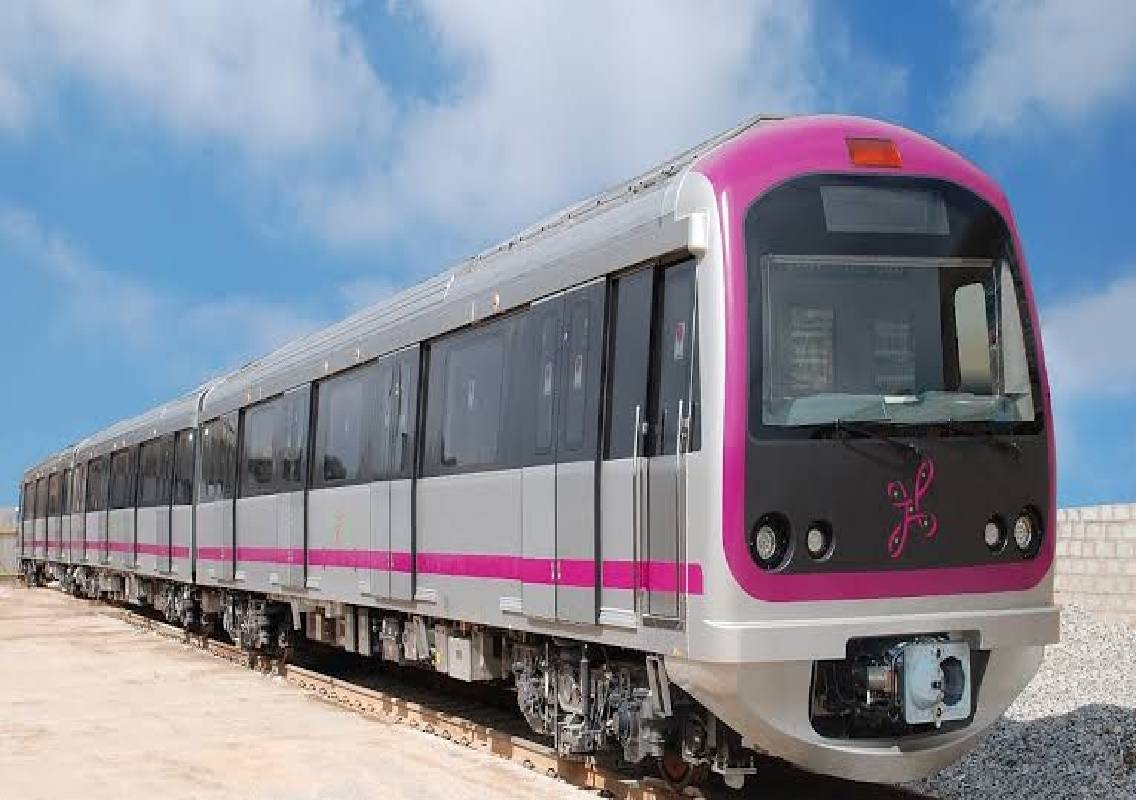


BENGALURU: The underground section of Bengaluru Metro’s Pink Line is set to cost more than Rs 1,000 crore per kilometre, with the project’s overall expenditure rising significantly from its original estimate. Revised figures put the total cost of the 21.26-km corridor at Rs 17,346 crore, compared with Rs 8,730 crore projected in the Detailed Project Report (DPR).
The cost escalation comes amid delays in completing the corridor, which will connect Kalena Agrahara in south Bengaluru with Nagawara in the north. The line includes a 13.76-km underground section, making it the longest underground stretch in Bengaluru’s Metro network.
According to revised project figures reported by Deccan Herald, the underground portion alone is estimated to cost Rs 13,876 crore, working out to approximately Rs 1,008.43 crore per kilometre.
Underground construction accounts for major expenditure
The Pink Line is part of Namma Metro’s expansion plans and is expected to improve connectivity between southern Bengaluru, the central business district and northern parts of the city.
The 13.76-km underground stretch is particularly expensive because tunnel construction involves specialised engineering, excavation, underground station development and other complex infrastructure work.
The revised estimate places the cost of the underground section at Rs 13,876 crore. This accounts for a substantial share of the overall Pink Line project expenditure of Rs 17,346 crore.
The underground section is also being compared with the proposed Hebbal-Silk Board tunnel road, whose reported cost works out to approximately Rs 1,061.49 crore per kilometre. While the two projects serve different transport purposes and have different engineering requirements, the comparison illustrates the scale of expenditure involved in constructing major underground infrastructure in Bengaluru.
Project cost nearly doubles from original estimate
The Pink Line’s overall estimated cost has increased from Rs 8,730 crore in the original DPR to Rs 17,346 crore in the revised figures.
Project delays, rising construction costs and changes in expenditure calculations have contributed to the increase. Officials have cited delays in tendering, expensive tunnelling work, higher material prices, land costs and interest during construction among the factors behind the escalation.
The extended construction timeline has also meant that the project has taken considerably longer than initially envisaged. The corridor was originally targeted for completion by March 2016, but construction began only in 2020.
The increase in expenditure highlights the financial challenges associated with delivering large urban transport projects in densely populated cities. Underground Metro construction requires substantial investment, while delays can increase the cost of materials, labour, financing and project management.
Pink Line to connect south and north Bengaluru
The complete Pink Line will extend from Kalena Agrahara on Bannerghatta Road to Nagawara, covering approximately 21.26 km and including elevated and underground sections.
The 7.5-km elevated section between Kalena Agrahara and Tavarekere includes six stations and is intended to improve Metro access for residents in southern Bengaluru. It will also provide an interchange with the Yellow Line at Jayadeva Hospital.
The remaining underground section will pass through important parts of the city, including the central areas around MG Road and Shivajinagar, before reaching Nagawara. The corridor is expected to offer an alternative to road travel along busy routes and improve connections between residential areas, commercial centres and transport hubs.
The underground portion is targeted for completion by March 2027, although construction schedules and the remaining work will determine when services can begin.
Phase 2 costs continue to rise
The increase in the Pink Line estimate comes as Bengaluru Metro’s wider expansion programme faces rising costs. The overall cost of Phase 2 has also increased substantially, with revised figures placing it at around Rs 40,425 crore.
The figures underline the financial and logistical challenges of expanding a Metro network in a rapidly growing city. While additional Metro corridors can provide greater public transport capacity and connectivity, timely completion and cost management remain important considerations.
For Bengaluru, the Pink Line represents a major investment in underground transport infrastructure. Its eventual completion is expected to improve connectivity across the city, but the latest estimates highlight the significant financial burden associated with prolonged construction and large-scale tunnelling projects.