







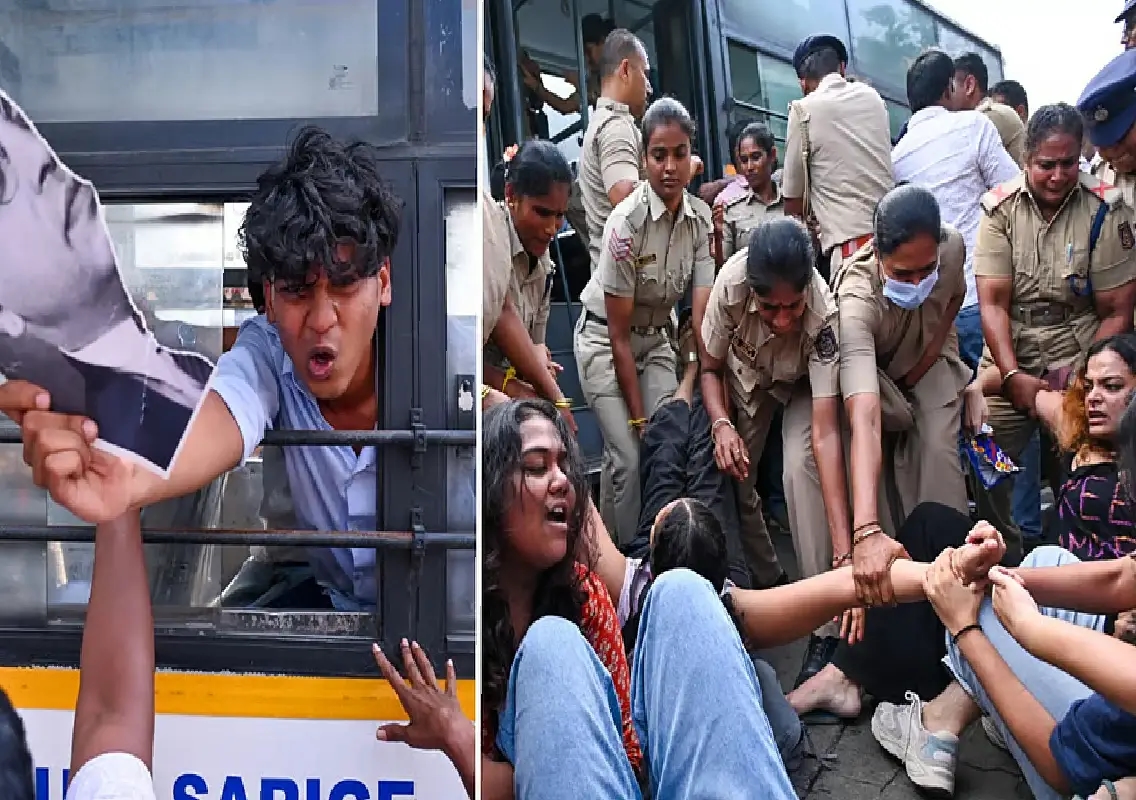


Bengaluru: A protest against the Special Intensive Revision (SIR) of electoral rolls and demanding the resignation of Chief Election Commissioner Gyanesh Kumar triggered allegations of police excesses in Bengaluru on Monday, after several protesters and journalists said they were pushed, dragged and manhandled during detentions.
Students, lawyers, activists and senior citizens had gathered near the Chief Electoral Officer’s office to demand the withdrawal of the SIR exercise and the resignation of the Chief Election Commissioner. Police detained several demonstrators before they could begin their planned march.
The incident on Seshadri Road prompted criticism from protesters and media personnel, some of whom alleged that the police used disproportionate force while dispersing the gathering. Accounts from those present described people being pushed and dragged into buses, while women protesters alleged that their clothes were pulled during the detentions.
The allegations have raised questions about the handling of demonstrations, the treatment of journalists covering public events and the safeguards required to ensure that peaceful protests are conducted without unnecessary confrontation.
Protesters allege force during detentions
According to accounts from people who attended the demonstration, police moved in before the protesters could begin their march. Several participants alleged that officers pushed them, dragged them towards waiting buses and used physical force while detaining them.
Women protesters also alleged that their clothes were pulled as police personnel attempted to move them from the protest site.
Videos recorded by people at the scene and shared on social media reportedly showed confrontations between police personnel and demonstrators. The allegations have prompted calls for a review of the police response and greater accountability in the handling of public gatherings.
The protesters had assembled to oppose the SIR of electoral rolls and demand the resignation of Chief Election Commissioner Gyanesh Kumar. Their demands placed the demonstration within the wider political debate over electoral roll revision and the functioning of the Election Commission of India.
Among those detained were activists Aakar Patel and Clifton, according to the account of the incident.
Journalists allege they were manhandled
Journalists covering the demonstration also reported being caught up in the police action.
A photojournalist who was documenting the protest alleged that a policeman in plain clothes approached from behind and snatched the camera without warning or first establishing the journalist’s identity.
The journalist said additional officers subsequently joined in, pushing and pulling despite repeated statements that the person was a member of the press.
A senior photojournalist working for a national daily and three other journalists were also reportedly manhandled. In another incident described in the account, a video journalist’s mobile phone was damaged.
The allegations have brought attention to the working conditions of media personnel covering protests and other public events. Journalists often need to document police action and interactions between authorities and demonstrators, making access to the scene and protection from interference important aspects of reporting.
The reported incidents have also raised concerns about whether police personnel adequately distinguished between protesters and journalists performing their professional duties.
The accounts of physical force and equipment damage have not, in the material provided, been accompanied by an independent inquiry report establishing the full sequence of events or responsibility for the alleged actions.
Bengaluru police cite lack of permission
In a statement issued after the incident, Bengaluru City Police said a group of protesters had assembled near K. R. Circle without permission or prior intimation.
The police said the gathering was contrary to directions issued by the Karnataka High Court requiring protests to be held at designated locations.
The statement added that the police had acted with “due restraint and sensitivity” under the prevailing circumstances.
The police account contrasts with the allegations made by protesters and journalists, who described the action as aggressive and disproportionate.
The competing accounts have made the circumstances surrounding the detentions a central issue. A detailed examination of the sequence of events, the instructions issued to police personnel and the treatment of those detained would be necessary to establish what occurred and whether the force used was justified.
The allegations also highlight the importance of clear communication between organisers and authorities over protest permissions and designated demonstration sites, while ensuring that restrictions are implemented lawfully and proportionately.
Priyank Kharge promises review
Karnataka Minister Priyank Kharge later posted on X that the police handling of the protesters would be reviewed. He also said peaceful protest must be respected.
The proposed review comes amid calls for the government to examine the conduct of officers involved in the detentions and address allegations made by protesters and journalists.
Critics have argued that a review should go beyond a general assurance and establish whether any officers acted improperly. They have called for accountability if allegations of excessive force or interference with journalists are substantiated.
The minister’s statement has placed the government’s response under scrutiny, particularly over how it balances enforcement of rules governing public gatherings with the right to peaceful protest.
Questions over police accountability
The incident has renewed debate over the handling of demonstrations in Bengaluru, particularly those involving politically sensitive issues such as electoral roll revision.
While police authorities have cited the absence of permission and the requirement to follow designated protest locations, demonstrators have raised concerns about the manner in which they were detained. Journalists have separately alleged that they were manhandled while covering the event.
The allegations remain subject to verification, and the available account does not establish the findings of any formal investigation. However, the contrasting descriptions of the police action underline the need for a transparent examination of the incident.
Any review would need to consider the circumstances of the gathering, the legal directions governing protest locations, the conduct of officers and the allegations of force against demonstrators and media personnel.
The incident has also renewed calls for clear operational guidelines to protect journalists covering public gatherings and to ensure that police action remains proportionate.
As the state government considers the promised review, protesters and journalists are seeking clarity on what happened and whether action will follow if misconduct is established.