







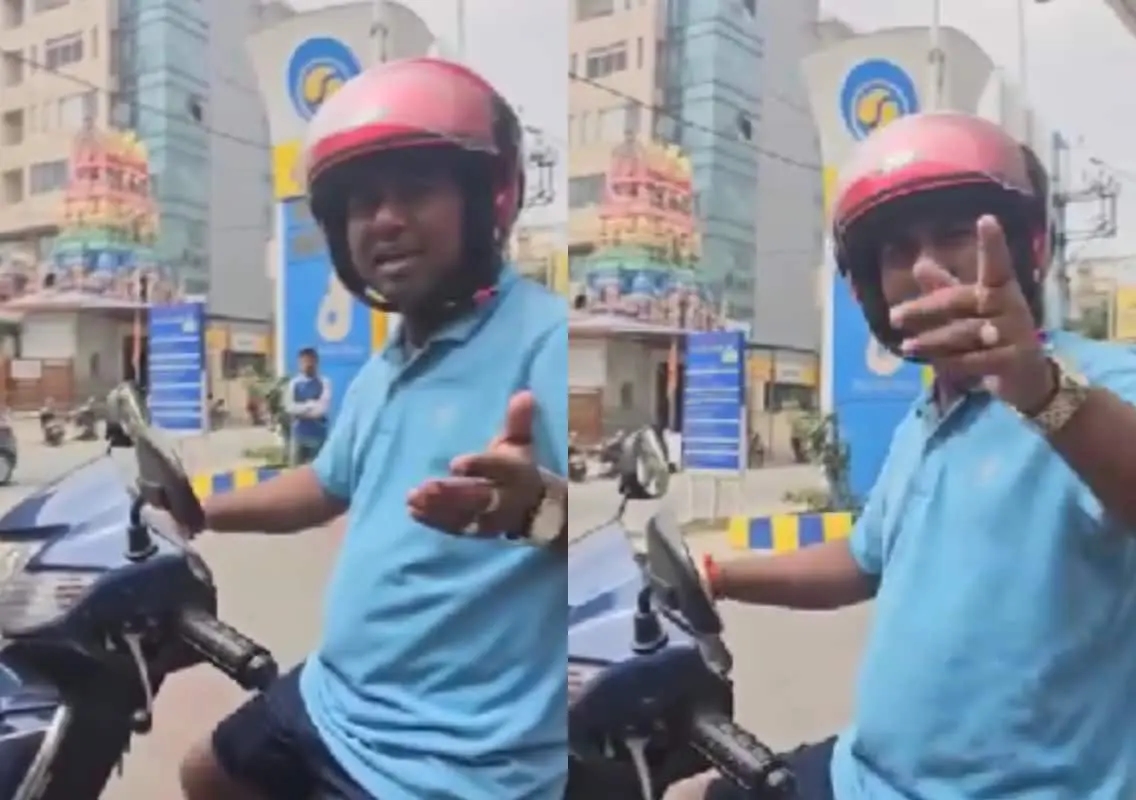


Bengaluru: A recent video circulating on social media has ignited conversations around linguistic identity and integration in Bengaluru. The video captures an interaction between a Kannada-speaking Bengaluru resident and a non-Kannada speaker who has lived in the city for over twelve years. The local confronts the non-Kannada speaker, urging him to learn Kannada, asserting that living in Bengaluru for an extended period warrants respect for the local language and culture.
In the video, the Bengaluru resident expresses disappointment that someone who has resided in the city for over a decade has not yet learned Kannada. The local insists that Kannada is essential for communication and a means to show respect to Karnataka’s heritage. He tells the man, “You have to learn the language,” reinforcing that adapting to the local language is a fundamental part of living in a new region.
ಈ ವ್ಯಕ್ತಿ ಹನ್ನೆರಡು ವರ್ಷಗಳಿಂದ ಬೆಂಗಳೂರಿನಲ್ಲಿ ವಾಸವಿದ್ದಾನೆ.
ಕನ್ನಡ ಕಲಿತಿಲ್ಲ ಇವನಿಗೆ ಕನ್ನಡ ಅವಶ್ಯಕತೆ ಇಲ್ಲವಂತೆ.
ಕನ್ನಡಿಗರು ಮಾತ್ರ ಹಿಂದಿ ಕಲಿಯಬೇಕಂತೆ pic.twitter.com/QeapmKvN5f— ಕನ್ನಡಿಗ ದೇವರಾಜ್ (@sgowda79) October 29, 2024
The exchange delves into the broader conversation around language and identity in Karnataka. At one point, the non-Kannada speaker challenges the local by asking if he knows Hindi. The Bengaluru resident admits he does but insists the focus should remain on Kannada, considering it the primary language of the state. His final message, “This is our state, our India,” reflects a growing sentiment among Kannadigas who feel that newcomers should embrace Kannada to fully integrate into Karnataka’s socio-cultural fabric.
The video concludes with the local emphasizing that Bengaluru is distinct from places like Mumbai or Gujarat, implying that each region has its linguistic identity, which deserves respect. His closing words, “At least learn Kannada, okay? This is Bengaluru, not Mumbai or Gujarat,” capture a sense of pride in Kannada and a call for newcomers to actively participate in the local culture through language.
A Growing Demand for Kannada Inclusivity in Bengaluru
This conversation highlights an ongoing tension in Bengaluru, which has seen an influx of people from various states due to its booming tech industry and cosmopolitan allure. The city’s demographic shift has brought in a considerable non-Kannada-speaking population, sparking debates on how cultural integration should unfold. While Kannada speakers feel the language should be respected and learned by long-term residents, some newcomers argue that Bengaluru’s cosmopolitan nature makes multilingualism a practical necessity.
The topic is part of a larger movement where local language advocates in Karnataka have called for increased Kannada usage across workplaces, public spaces, and educational institutions. They believe that adopting Kannada as a common language can promote inclusivity and a sense of belonging. Several Kannada-speaking groups, often through social media, regularly encourage new residents to learn and use Kannada, celebrating those who do and criticizing those who resist.
Efforts to Promote Kannada Learning for Non-Native Speakers
To foster language inclusivity, locals have taken steps to assist non-Kannada speakers in learning basic Kannada phrases and expressions that are useful in everyday interactions. Recently, an auto driver in Bengaluru introduced a novel approach with a pamphlet titled “Learn Kannada With Auto Kannadiga.” The pamphlet, displayed inside his auto-rickshaw, features a list of frequently used Kannada phrases along with their English translations, helping passengers—especially those who are new to the language—navigate common situations.
Some examples of phrases in the pamphlet include:
- “Namaskara sir” – Hello, sir
- “Elli idira” – Where are you?
- “Ille nilsi” – Stop here
- “Yeshtu aaythu” – How much?
- “UPI idya? Athwa cash aa?” – Do you accept UPI or only cash?
The pamphlet not only serves as a helpful guide for non-Kannada speakers but also as a gentle reminder of the city’s linguistic heritage. Referring to passengers as “sir” reflects a level of respect that Kannadigas traditionally show, making the experience welcoming and courteous.
The Balancing Act: Linguistic Pride and Cosmopolitan Identity
As Bengaluru continues to grow as an international hub, the balancing act between its local identity and cosmopolitan appeal is becoming increasingly complex. The city’s Kannadiga population argues that language is a vital part of their identity and preserving it is essential for the culture’s continuity. Many feel that Kannada should not be sidelined due to the city’s growing linguistic diversity, as they believe it is a crucial marker of Karnataka’s cultural richness.
Conversely, non-Kannada-speaking residents often point out that Bengaluru’s appeal lies in its openness to diverse languages and cultures, making it possible for people from all over India and the world to settle and thrive. They argue that while learning Kannada could enrich their experience, it should not be enforced, particularly in a professional environment where English is often the lingua franca.
Bridging the Gap: Embracing Diversity Through Language
The video of the Bengaluru local confronting the long-time resident has brought new urgency to the discussion of language and integration in Karnataka. For now, initiatives like the “Learn Kannada With Auto Kannadiga” pamphlet and other informal resources may offer non-Kannada speakers a gentle introduction to the language, encouraging them to engage with local culture in a more meaningful way. Additionally, language classes, community events, and online resources could further bridge the gap between locals and newcomers, fostering a Bengaluru that is both proudly Kannadiga and welcoming to the world.