







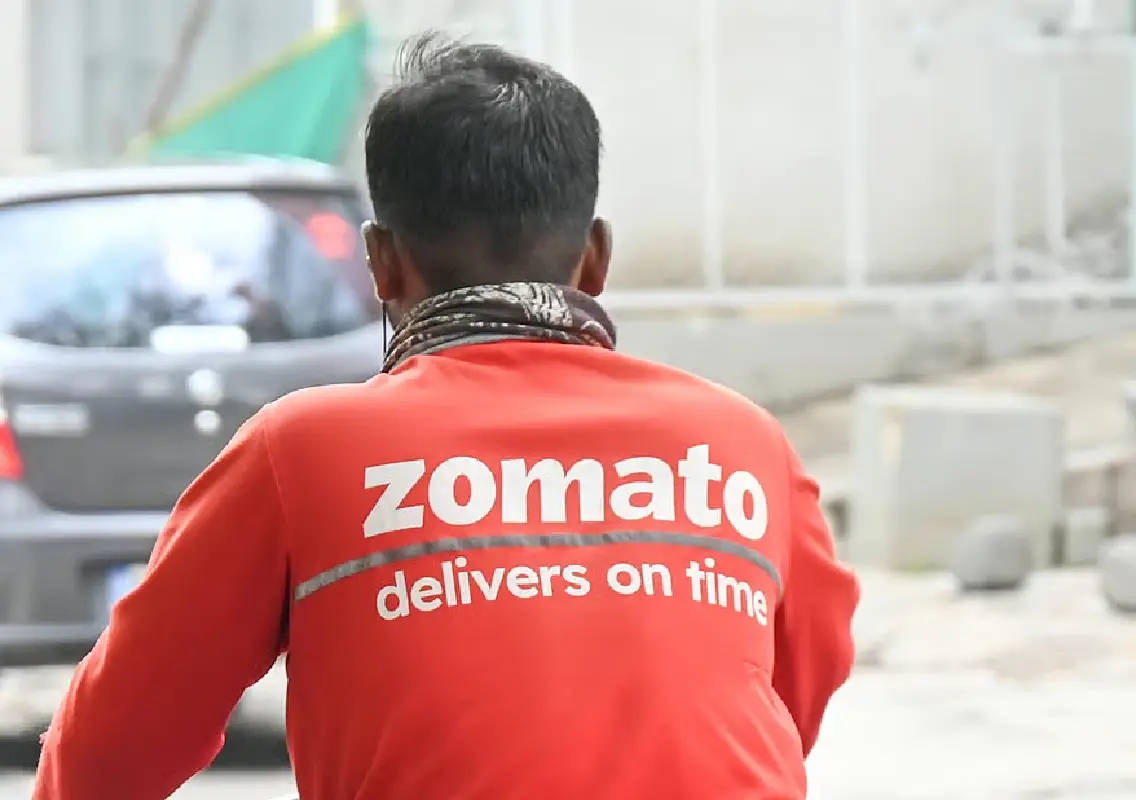


Traffic indiscipline among delivery executives in Bengaluru has reached critical levels, with the Bengaluru Traffic Police (BTP) registering 1.46 lakh violations between 2023 and 2025, fuelled largely by the city’s growing dependence on instant commerce and quick-delivery services.
Data accessed by DH shows a sharp, uninterrupted rise in cases year-on-year: 30,968 cases in 2023, 52,153 in 2024, and 63,718 cases in 2025 (as of November 15). Police officials say the numbers highlight a worsening trend, with delivery agents often found flouting rules while racing to meet stringent deadlines imposed by platforms.
Violations surge in tech corridors
Officials said the bulk of the cases emerged from high-density tech and commercial pockets, where delivery traffic is heaviest. The eastern division — which includes Whitefield, KR Puram, Indiranagar and Halasuru — has emerged as the biggest hotspot, contributing 73,971 cases in the three-year period.
The division’s numbers have nearly doubled every year, reflecting not just increased enforcement but also the swelling number of gig workers navigating narrow, congested neighbourhoods and major IT corridors.
Within the division, Whitefield subdivision alone recorded over 25,000 violations, making it one of the city’s most high-pressure zones because of its IT parks, gated communities and round-the-clock demand for food and grocery deliveries.
Deputy Commissioner of Police (Traffic–East) Sahil Bagla said special drives are being conducted regularly to address visible violations. “Wrong-side riding, footpath riding, signal jumping and helmetless riding continue to be our biggest concerns,” he said.
Instant-delivery pressure behind violations
Police say many violations stem from the rise of 10–15 minute delivery guarantees that incentivise speed over safety.
“The pressure of 10-minute delivery is pushing riders into breaking basic traffic rules,” an officer said, adding that any long-term solution must involve delivery companies rethinking timelines and incentive structures.
A delivery partner from a food platform questioned the necessity of such speed-driven models:
“Why risk lives to deliver Maggi or atta in 10 minutes? These are not ambulances or essential medicines,” he said.
South division also records steep rise
The BTP’s South Division registered 44,313 cases over the same period, with consistently high numbers from Mico Layout, Adugodi and HSR Layout. The surge in violations is tied to dense residential clusters and busy restaurant zones that see high app-based order volumes throughout the day.
Deputy Commissioner of Police (Traffic–South) Gopal M Byakod pointed to a particular challenge posed by e-bike riders, many of whom operate outside the legal framework. Since several e-bikes fall below licensing thresholds and do not come under the Motor Vehicles Act, police cannot fine or penalise riders for specific violations such as helmetless riding or lack of registration plates.
“This loophole is being exploited,” he said, adding that the department has raised the concern with higher authorities.
Aggregators called for compliance
Following a meeting chaired by the Bengaluru Police Commissioner, food, grocery and courier aggregators have been instructed to sensitise riders, enforce safety briefings and maintain updated records of delivery partners. Individual police stations have also been asked to hold awareness sessions.
Stricter enforcement measures — such as driver licence suspension, vehicle impoundment and escalated penalties for repeat offenders — are likely to be taken up in upcoming review meetings, officials indicated.
Traffic authorities say the combination of high order density, tight deadlines and a rapidly expanding gig workforce has made the city more vulnerable than ever to rule-breaking on its roads.
Call for policy rethink
Urban mobility experts argue that Bengaluru’s delivery boom requires a regulatory reset. Suggestions include designated waiting bays for delivery riders, tech-enabled speed monitoring for gig platforms, and coordinated enforcement across divisions.
“Instant commerce cannot grow at the cost of road safety,” a senior traffic officer said. “We need shared responsibility — from companies, customers and riders.”
For now, the numbers tell a worrying story: with nearly 1.5 lakh violations in just under three years, the city is grappling with a safety challenge that shows no signs of slowing down.