







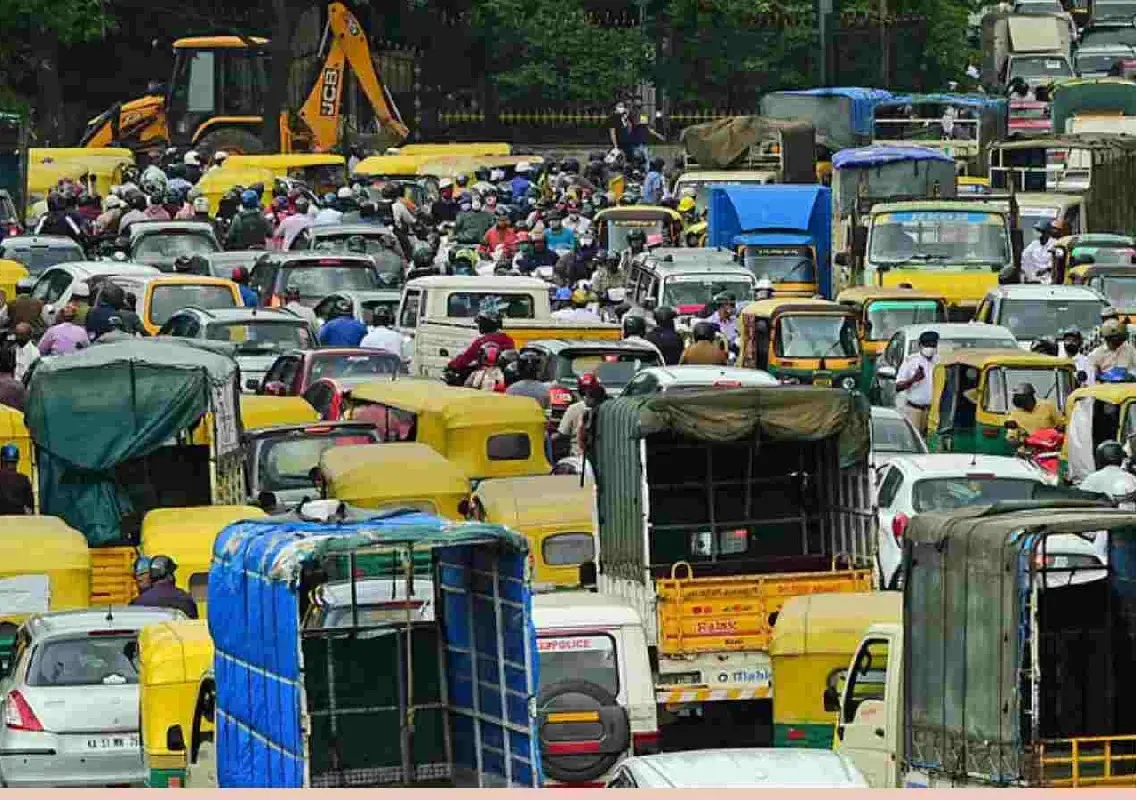


Bengaluru: The city is witnessing a sharp rise in private vehicle ownership, raising alarms among mobility experts who fear Bengaluru may soon be trapped in a permanent traffic gridlock. Fresh data from the Transport Department shows 58,913 private vehicles were registered in August 2025 alone, reflecting a nearly 20 per cent increase since April.
Two-wheelers lead the surge
Of the newly registered vehicles, 45,595 were two-wheelers and 13,318 were cars, compared to 36,888 two-wheelers and 12,278 cars in April. Each subsequent month has shown consistent growth, underscoring a larger trend of Bengaluru’s increasing dependence on private vehicles.
With over 1.06 crore two-wheelers and cars already on the roads, the numbers suggest a city moving further away from sustainable mobility.
“Bengaluru likely to become a permanent gridlock city”
Civic activist Sandeep Anirudhan described the situation as alarming.
“Bengaluru has probably the worst person-to-vehicle ratio in the world. This city is likely to become a permanent gridlock city. Population is increasing rapidly, but mass transit infrastructure development is extremely slow. The number of buses has not increased. So everyone is purchasing private vehicles,” he said.
He further blamed unplanned development and the government’s failure to empower planning bodies under the 74th Constitutional Amendment.
“If the government doesn’t move towards a planned approach to development, this will worsen until the city collapses completely,” Anirudhan warned.
Experts urge long-term planning
Urban planners argue that only scientific and data-driven planning can prevent Bengaluru’s transport collapse. They stressed the need to strengthen the Metropolitan Planning Committee and District Planning Committees to design long-term solutions.
Despite repeated expert advice, authorities continue to approve vehicle-centric projects like tunnel roads and flyovers, often cutting into green spaces and public infrastructure, rather than improving mass transit.
Commuters already feeling the strain
For daily commuters, the problem is no longer theoretical. In several parts of the city, average commute times now exceed an hour, with peak-hour jams extending well into mid-day.
Residents say the stress of traffic is compounded by worsening air pollution and a steady decline in quality of life.
Unless Bengaluru shifts focus from cars and bikes to buses, metro, and other sustainable transport, experts warn that congestion and pollution may soon reach irreversible levels.