







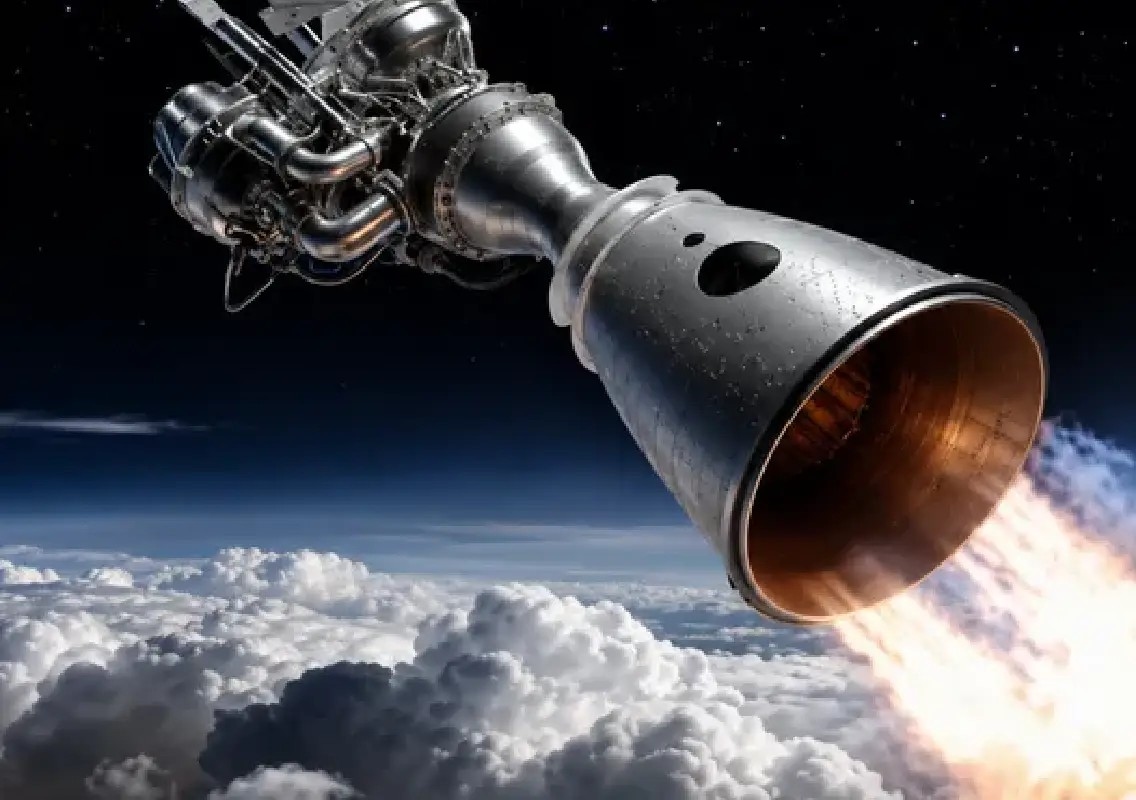


Bengaluru: Bengaluru-based space technology startup Astrobase Space Technologies has achieved a major milestone in India’s private space sector by unveiling the country’s first domestically integrated 80-tonne-class Liquid Oxygen (LOX)-Methane Full-Flow Staged Combustion (FFSC) rocket engine.
The development marks a significant step towards advanced reusable rocket technology, placing the startup among a select group of organisations globally working on one of the world’s most complex rocket propulsion systems.
A breakthrough for India’s private space industry
Astrobase co-founder Devakumar Thammisetty described the achievement as the culmination of years of research and testing.
“Astrobase’s full engine design and manufacturing milestone has been unlocked. It has taken years of development efforts, including subscale and full-scale powerhead hardware hot-fire validations. Next stop—engine hot fire,” he said.
Founded in 2024, Astrobase Space Technologies was established by entrepreneur Neeraj Khandelwal and former ISRO propulsion scientist Devakumar Thammisetty, who has more than 13 years of experience in cryogenic propulsion and reusable launch systems.
Why the technology is significant
The Full-Flow Staged Combustion (FFSC) engine is regarded as one of the most advanced liquid rocket engine technologies in the world.
Unlike conventional rocket engines, an FFSC engine uses all of its fuel and oxidiser to power turbines before combustion, resulting in greater efficiency, higher thrust, improved reliability and enhanced reusability.
However, the technology is extremely challenging to develop due to the need to precisely manage high-pressure fuel and oxygen-rich combustion cycles.
Only SpaceX has flown an FFSC engine
Globally, SpaceX remains the only company to have successfully flown an FFSC-powered rocket using its Raptor engine aboard the Starship programme.
The former Soviet Union also developed the RD-270 engine in the 1960s, but it never reached operational flight.
Astrobase has already completed sub-scale engine hot-fire tests and turbopump trials and currently operates facilities in Bengaluru and Anantapur, Andhra Pradesh, where it manufactures and tests propulsion systems.
The achievement is expected to strengthen India’s growing private space ecosystem and support future developments in reusable launch vehicles, satellite deployment and commercial space missions.