







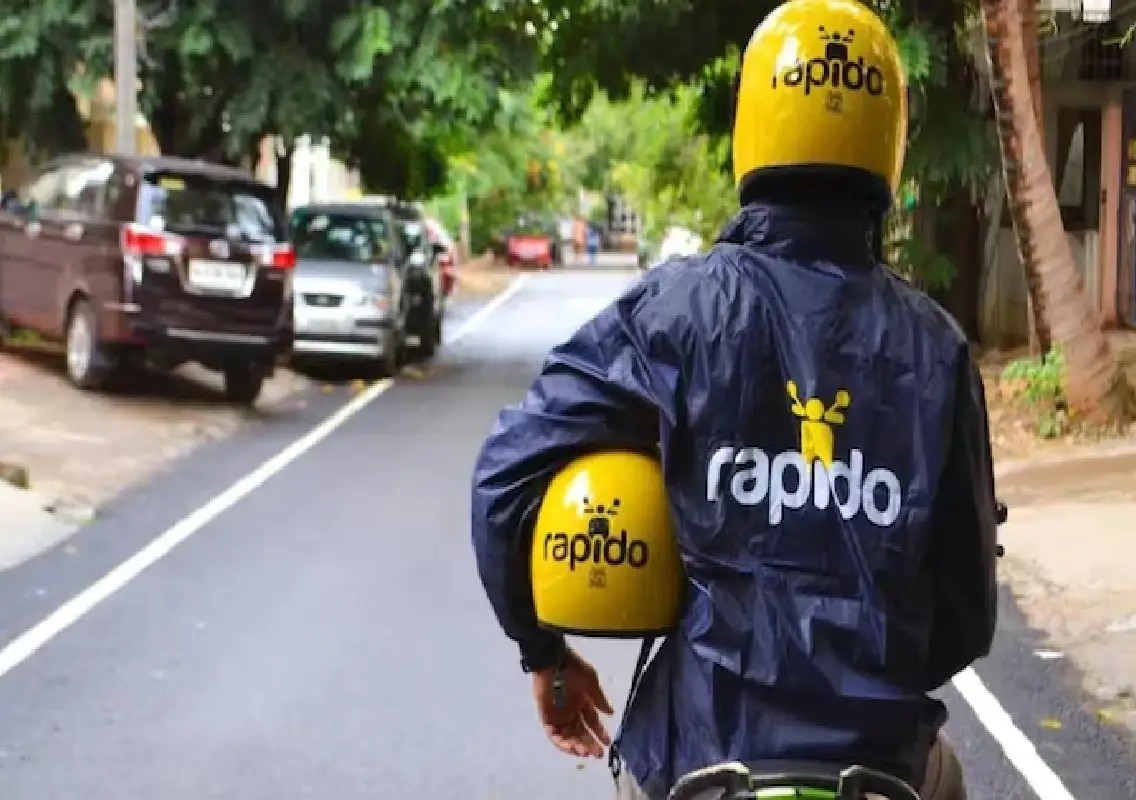


Bengaluru: A second-year BBA student from Bengaluru spent his three-month college break working as a rider on the Rapido platform, earning up to Rs 1,200 a day while gaining a first-hand understanding of the financial pressures and operational challenges faced by gig workers.
The student shared his experience in a detailed post on Reddit, explaining that he took up the work during his college holidays to understand how app-based delivery and ride services function from a worker’s perspective. His experience, which involved long working hours, fuel expenses, waiting periods and occasional difficulties with platform support, has drawn attention to the realities of India’s growing gig economy.
According to the student, he would typically begin work at around 8 am and continue until 4.30 pm, spending nearly eight-and-a-half hours on the road. On a good day, he said, he could earn approximately Rs 1,200.
However, he stressed that his experience as a student temporarily doing gig work was very different from the situation of workers who depend on such earnings to support themselves and their families.
Learning how the platform works
When he initially joined the platform, the student said he had little understanding of how ride requests, deliveries and demand patterns worked. Over time, however, he began identifying the locations and time periods where the demand for rides was higher.
He also learnt how to make better use of the hours when passenger bookings were relatively slow. Instead of remaining idle during the afternoon, he would accept food delivery orders between noon and 3 pm.
This flexibility helped him improve his daily earnings. Once he became familiar with demand patterns and the way the platform allocated work, earning a reasonable amount became comparatively easier, he said.
However, the experience also made him realise that the amount shown as daily earnings does not necessarily reflect the actual financial return for a gig worker.
Fuel costs, vehicle maintenance, time spent waiting for orders and the uncertainty of work can significantly affect the income available to a rider at the end of the day.
A frustrating delivery experience
One incident involving a food delivery order particularly highlighted the difficulties workers can face when there is a problem involving multiple platforms.
The student accepted a Swiggy food order through Rapido because the delivery destination was located close to his home. However, after reaching the ice cream shop, he learnt that a power cut had disrupted the operation of the machines and the restaurant was unable to prepare the order.
What followed was a prolonged attempt to find out which platform was responsible for resolving the issue.
The restaurant reportedly asked him to contact Swiggy. Swiggy directed him towards Rapido, while Rapido, according to the student, redirected him back to Swiggy.
He described the situation as being caught in a “Swiggy-Rapido infinite loop”, with no immediate solution from either side.
After waiting for nearly 45 minutes, he eventually found a solution himself. Since the delivery destination was a tuition centre, he searched for its contact number on Google Maps and called the establishment.
The person who answered the call reportedly spoke to the restaurant staff, following which the order was finally cancelled.
The student pointed out that resolving the situation could have been considerably more difficult if the destination had been a private residence. According to his experience, riders do not receive direct access to a customer’s contact details until the food order has been picked up.
Long hours and hidden costs
The student’s Reddit account focused on an important aspect of gig work that is often overlooked when daily earnings are discussed.
While earning Rs 1,200 on a good day may appear attractive, the actual experience of working on the road for more than eight hours involves several costs and uncertainties.
Petrol expenses can take away a significant portion of a rider’s earnings. Workers may also spend considerable time waiting for bookings, travelling to pick-up locations or dealing with cancellations and technical issues.
Unlike a conventional job with a fixed salary, the amount earned by a gig worker can vary depending on demand, incentives, weather conditions, location and the number of hours spent online.
The student said the experience changed his perspective on the work performed by thousands of riders who depend on such platforms for their primary income.
He spent time working around busy areas, including railway stations, and also observed the broader transport ecosystem in Bengaluru. Although auto-rickshaw drivers were present in many of these areas, he said he did not face any confrontation during his three months as a rider.
A different view of the gig economy
The student’s biggest takeaway from the experience was the difference between doing gig work temporarily and relying on it for a livelihood.
“Doing gig work for 3 months as a student is very different from doing it because your family depends on it,” he wrote.
His post encouraged readers to look beyond the headline figure of daily earnings and consider the less visible pressures involved in app-based work.
For a student, the work provided flexibility and a chance to earn money during a college break. For a full-time worker, however, the same job may involve the constant pressure of earning enough each day to meet household expenses, pay for fuel and vehicle maintenance, and deal with the uncertainty created by cancellations or platform-related issues.
The experience also raises broader questions about the support available to gig workers when problems arise. In situations involving restaurants, customers and multiple digital platforms, workers can sometimes find themselves caught between different support systems while continuing to lose valuable working time.
Beyond the Rs 1,200 daily earning
The Bengaluru student’s three-month stint as a Rapido rider offers a glimpse into both the opportunities and challenges of India’s expanding gig economy. The work gave him the flexibility to earn during his college break and taught him how demand patterns could be used to improve earnings.
At the same time, it exposed him to the hidden costs of fuel, long hours, waiting periods and the difficulty of resolving issues when platform support fails.
Ultimately, his experience suggests that daily income figures alone do not tell the complete story. The real value of gig work must also be measured against the time, expenses, uncertainty and personal pressures involved.
For someone working temporarily during a college break, gig work may be an opportunity to earn and learn. For those whose families depend on the income, however, every cancelled order, wasted hour and unresolved problem can have far greater consequences.