







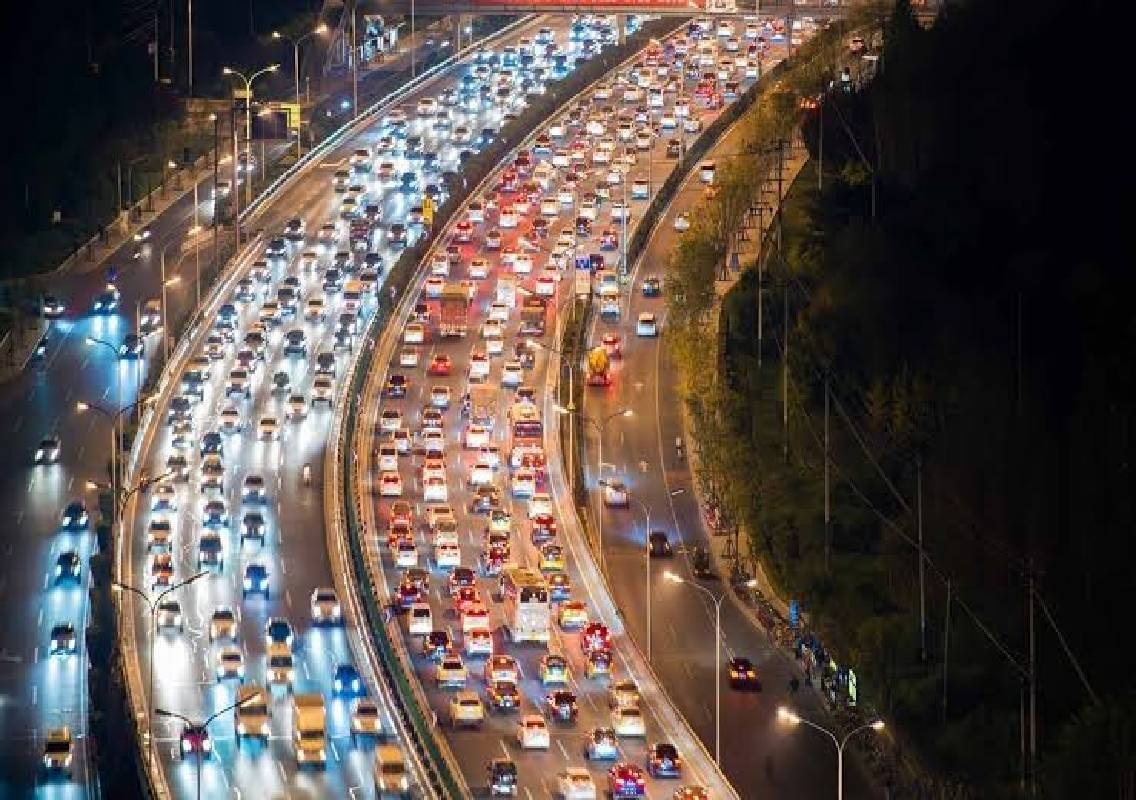


Bengaluru: Bengaluru has long attracted professionals with its strong job market, technology industry, startup ecosystem, young workforce and pleasant weather. But as the city continues to expand, a growing mobility crisis is threatening to undermine many of the advantages that made Bengaluru one of India’s biggest destinations for professionals.
The city’s traffic problem is no longer simply about crowded roads. Unpredictable journey times, gaps in public transport connectivity and dependence on private vehicles are increasingly affecting how people live and work in Bengaluru.
A recent viral video in which a woman questioned the value of Bengaluru’s pleasant weather when traffic made it difficult to step outside captured a frustration shared by many residents. The episode highlighted how commuting has become an increasingly important part of the city’s quality-of-life debate.
Bengaluru’s economic corridors bear the pressure
The mobility challenge is particularly visible along major employment corridors such as the Outer Ring Road, Bellandur, Marathahalli, Silk Board, KR Puram, Whitefield and Electronic City.
These areas represent the strength of Bengaluru’s technology and services economy, but they also experience some of the city’s most intense traffic pressure. A journey that appears manageable on a map can take an hour or more during peak periods, while accidents, road works and sudden rain can further increase travel times.
The problem is therefore not merely the number of vehicles on the roads. It is also the uncertainty surrounding travel. For commuters, an unpredictable journey can affect work schedules, family time and everyday planning.
Metro expands but ridership remains below projections
Bengaluru has significantly expanded its public transport infrastructure, particularly through Namma Metro. The Metro network has grown from its initial 7-km stretch to around 96 km of operational lines with 83 stations.
However, the expansion has not yet produced the expected shift away from private vehicles. Daily Metro ridership is around 10 lakh passengers, compared with an earlier projection of about 30 lakh passengers a day for the operational corridors.
One major reason is the difficulty many commuters face in reaching Metro stations and completing the final part of their journey.
A person living several kilometres away from a station may still need a bus, auto-rickshaw, motorcycle or cab to reach the Metro. The same challenge can arise after getting off the train. This makes private vehicles a more convenient option for many commuters despite the availability of Metro services.
Last-mile connectivity remains a major gap
Bengaluru has multiple transport options, including Metro trains, BMTC buses, autos, cabs, two-wheelers and app-based mobility services. The bigger challenge is connecting these modes into a seamless journey.
A commuter may be willing to use public transport, but poor footpaths, unreliable feeder services or long waits can make the overall journey inconvenient.
This makes last-mile connectivity crucial to the city’s mobility future. Expanding the number of Metro stations or buses alone may not be enough if commuters cannot easily travel between their homes, stations and workplaces.
The broader objective, therefore, needs to be making an entire journey convenient rather than simply expanding individual transport networks.
BMTC remains crucial to Bengaluru’s mobility
While Metro expansion has received considerable attention, BMTC continues to carry a much larger daily passenger load.
The bus network handles an estimated 35–42 lakh passenger trips a day, considerably higher than current Metro ridership. This gives BMTC a central role in connecting neighbourhoods and employment centres that cannot be served directly by rail.
The introduction of the One Karnataka Mobility App and WhatsApp-based bus ticketing has been aimed at making public transport easier to access.
However, technology can address only part of the problem. For commuters, the practical questions remain whether a bus is available when needed, whether it arrives on time and whether connections between different modes are smooth.
Traffic restrictions offer only limited relief
Authorities have also experimented with restrictions on certain categories of vehicles on selected flyovers and elevated corridors.
However, such measures can create a difficult balancing act. Restricting vehicles in one location may improve traffic flow there, but diverted traffic can create congestion on nearby roads.
Recent changes involving restrictions on two-wheelers and other vehicles on selected elevated corridors have illustrated the challenge of managing Bengaluru’s limited road space.
This has led to a broader question about whether the city should continue focusing primarily on managing congestion or build enough efficient alternatives to reduce dependence on private vehicles.
Long commutes carry an economic cost
The consequences of Bengaluru’s mobility crisis extend beyond the time spent sitting in traffic.
For the city’s technology and services economy, long commutes can affect productivity, employee satisfaction and family life. They may also influence decisions about where companies establish offices and where professionals choose to live.
Infosys co-founder Kris Gopalakrishnan recently highlighted the scale of the problem by referring to a 31-km journey that took 2.5 hours. When journeys of this length become routine, traffic becomes more than a daily inconvenience and starts affecting the city’s competitiveness.
Bengaluru needs an integrated mobility system
The city’s mobility challenge is unlikely to be solved through a single flyover, road-widening project or traffic restriction.
Bengaluru needs its Metro, BMTC buses, walking infrastructure, cycling facilities, autos and other transport services to operate as interconnected parts of one system.
Recent policy efforts have also recognised the need for better coordination. Karnataka constituted the Urban Mobility Mission Committee for Bengaluru in August, bringing together government agencies, transport operators, technology companies and citizen representatives to address congestion, first- and last-mile connectivity and other mobility concerns.
The city is also preparing a comprehensive mobility plan, with inadequate first- and last-mile connectivity identified as one of the factors affecting Metro ridership.
The challenge ahead
Bengaluru’s biggest strength has always been its ability to attract people looking for jobs, technology opportunities and a better quality of life. But that advantage could weaken if residents increasingly spend a significant portion of their day travelling from one part of the city to another.
The city already has the jobs, technology ecosystem and weather that attract people from across India. The challenge now is to create a mobility system that allows residents to enjoy those advantages without allowing daily travel to become one of Bengaluru’s biggest weaknesses.