







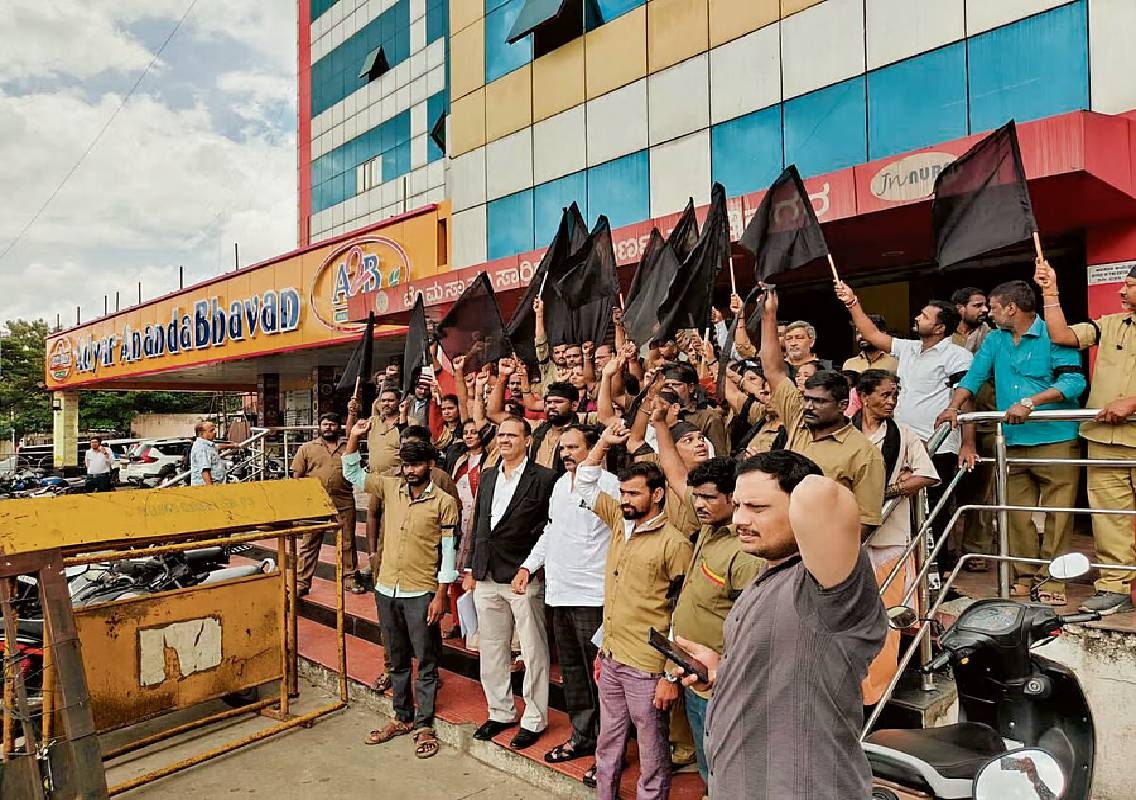


Bengaluru: The federation submitted a complaint to transport and police authorities, seeking action against aggregators that facilitate bike-taxi services in the city. The development comes amid an ongoing legal and regulatory dispute over the operation of bike taxis in Karnataka.
The private transport operators have also announced a protest by displaying black flags on autos and taxis. They have warned that stronger protests could follow if the Government does not respond within the 15-day deadline.
The latest demand adds another chapter to Bengaluru’s prolonged bike-taxi controversy, which has involved transport unions, app-based aggregators, riders, commuters, the Karnataka Transport Department and the courts.
Transport federation seeks action against bike-taxi apps
The Federation of Karnataka State Private Transport Associations has demanded that authorities take immediate steps against applications offering bike-taxi services.
The federation has asked officials to remove such applications from app stores and online marketplaces, arguing that the services are being offered without the necessary regulatory framework.
According to the transport bodies, the current rules governing app-based transportation do not provide a clear statutory framework for two-wheeler passenger services. The federation has also sought action under provisions of the Motor Vehicles Act, Information Technology Act and Bharatiya Nyaya Sanhita.
The operators have also asked authorities to preserve digital evidence and investigate the financial operations of companies providing these services.
Unions give Government 15-day deadline
The transport federation has given the authorities 15 days to act on its complaints.
The deadline has raised the possibility of further protests in Bengaluru if the unions do not receive a response they consider satisfactory.
As part of their initial protest, members have begun displaying black flags on their vehicles. The federation has indicated that the protest could intensify if its demands are not addressed.
The move comes at a time when the Karnataka Government is already dealing with a legal challenge over the status and regulation of bike taxis.
Safety concerns raised by private operators
Safety is one of the key concerns raised by the transport operators.
The federation has alleged that some bike-taxi platforms may not adequately verify vehicle owners or conduct sufficient background checks before allowing motorcycles to be used for passenger services.
The operators have also raised concerns about insurance coverage and passenger safety.
They argue that commercial passenger transportation requires clear rules relating to permits, vehicle registration, insurance and driver verification.
The federation believes these requirements should be clearly enforced before bike-taxi services are allowed to expand further in Bengaluru.
Legal battle over bike taxis continues
The dispute is not limited to the transport unions and the Government.
The legal status of bike taxis in Karnataka has also been the subject of court proceedings.
In January 2026, the Karnataka High Court held that motorcycles could not be denied consideration for contract carriage permits simply because they were two-wheelers.
The court also observed that motorcycles are recognised as transport vehicles under the Motor Vehicles Act.
However, the judgment did not prevent the State Government from regulating bike-taxi services or prescribing conditions for permits.
The Karnataka Government has challenged the High Court ruling before the Supreme Court.
This has left the industry in a complicated legal position, with questions surrounding permits and regulation continuing to be debated.
Karnataka Transport Department resumes crackdown
The State Transport Department resumed enforcement action against bike taxis earlier this month after the Government approached the Supreme Court.
On August 5, officials seized 263 motorcycles in Bengaluru as part of a crackdown on alleged unauthorised bike-taxi operations.
The enforcement operation continued the following day.
Transport officials inspected around 220 two-wheelers and booked cases against 71 bike taxis, while 70 vehicles were seized during the second day of the drive.
The Government has maintained that privately registered motorcycles cannot be used for commercial passenger transportation without the required permissions and permits.
Bike taxi services remain popular with commuters
Despite the opposition from traditional transport operators, bike taxis have become popular among sections of Bengaluru commuters.
They are particularly useful for passengers looking for affordable last-mile connectivity and shorter travel times through congested roads.
Students, office workers and commuters travelling to and from Metro stations have often relied on bike taxis because motorcycles can navigate traffic more easily than larger vehicles.
The recent enforcement drive, however, has affected availability.
Commuters reported longer waiting times and fewer bike-taxi riders on platforms after the crackdown began.
Commuters face higher auto fares
The bike-taxi controversy has also had an indirect impact on auto-rickshaw users.
Following the enforcement drive, some commuters reported higher fares and reduced availability of app-based autos.
Reports found that some aggregators were charging minimum auto fares of around Rs 70, significantly above the fare structure notified by the Karnataka Government.
This has created a complicated situation.
While traditional transport operators are demanding action against bike taxis, some commuters have argued that bike taxis provide an important affordable alternative, particularly in a city where traffic congestion can make auto and cab journeys expensive and time-consuming.
Government has also acted against aggregators
The dispute over fares is not limited to bike taxis.
Earlier this month, the Karnataka Transport Department issued notices to Ola, Uber and Rapido over alleged violations of government-notified fares.
The department directed aggregators to comply with prescribed fares and ensure that drivers receive the payments stipulated under the State’s rules.
The notices followed complaints from driver associations.
This indicates that the Government is facing pressure from multiple sides — traditional transport operators seeking stricter regulation, commuters seeking affordable services and app-based platforms operating within a changing regulatory environment.
Operators demand one-city, one-fare policy
The private transport federation has also raised concerns about fare differences in app-based transport services.
It has sought implementation of a “one city, one fare” policy for Bengaluru.
The operators have alleged that aggregators are not consistently following government-prescribed fare structures.
According to the federation, passengers should not be charged substantially different amounts for similar journeys based on the platform or the time of booking.
The demand comes amid continuing disagreements over commissions, driver earnings and passenger fares.
Bike-taxi operators have a different view
Bike-taxi riders and their associations have opposed the enforcement drive.
The Bike Taxi Welfare Association has argued that the High Court’s ruling supports the possibility of operating bike taxis subject to appropriate regulation.
The association has also called for a clear policy rather than repeated enforcement action.
During the earlier crackdown, representatives said Karnataka should consider introducing a proper regulatory framework similar to the rules adopted by some other States.
The argument is that regulation could allow bike taxis to operate legally while ensuring compliance with safety and commercial transport requirements.
Calls for a clear regulatory framework
The continuing dispute has highlighted the absence of a settled framework acceptable to all stakeholders.
Traditional operators want bike taxis restricted until the legal and regulatory issues are resolved.
Bike-taxi associations want a framework that allows them to operate with proper permits and commercial registration.
The Government, meanwhile, has maintained enforcement against services it considers unauthorised while challenging the High Court’s ruling in the Supreme Court.
A clear regulatory policy could potentially address several of these competing concerns.
Supreme Court decision could be crucial
The Supreme Court proceedings are likely to play an important role in determining the future of bike taxis in Karnataka.
The High Court had held that two-wheelers could be considered for contract carriage permits, but the State Government has challenged that decision.
Until the legal position becomes clearer, enforcement and protests are likely to remain part of the dispute.
The latest 15-day ultimatum from private transport operators adds further pressure on the Government.
Bengaluru’s mobility challenge
The bike-taxi controversy comes against the backdrop of Bengaluru’s broader transportation problems.
The city continues to face severe traffic congestion, increasing travel times and challenges with first- and last-mile connectivity.
The Karnataka Government recently established the Urban Mobility Mission Committee for Bengaluru to coordinate efforts involving government agencies, private mobility companies, technology firms and citizens.
Bike taxis form one part of this wider mobility ecosystem.
Their future could therefore have implications beyond the interests of individual transport operators.
Balancing drivers and commuters
One of the biggest challenges for policymakers will be balancing the interests of traditional drivers, bike-taxi riders and commuters.
Auto and taxi drivers argue that unregulated bike taxis threaten their livelihoods because they compete for the same passengers.
Bike-taxi riders, on the other hand, depend on the platforms for income and argue that they should be allowed to operate if they meet clearly defined legal requirements.
Commuters generally want affordable, reliable and safe transportation options.
A long-term policy will need to consider all three groups.
Questions over insurance and permits
The transport federation’s concerns about insurance and permits are particularly significant.
Passenger transport involves risks that require appropriate insurance coverage and regulatory oversight.
Traditional commercial vehicles generally operate under specific registration and permit requirements.
The unions argue that similar standards should apply to motorcycles being used to transport passengers for payment.
The Government will ultimately have to determine how those requirements should apply to app-based bike-taxi services.
Digital platforms face growing scrutiny
The latest complaint also reflects growing scrutiny of app-based mobility companies.
Platforms have transformed Bengaluru’s transportation market by connecting passengers with autos, taxis and motorcycles through mobile applications.
However, their rapid expansion has also created regulatory challenges.
Authorities now have to determine how existing transport laws should apply to technology-driven services that may not fit neatly into older categories.
The bike-taxi dispute is therefore part of a larger debate over how India’s transport regulations should adapt to the app economy.
What the transport unions want
The federation’s demands extend beyond simply stopping bike taxis.
It has called for action against the applications facilitating the services, examination of their regulatory compliance and investigation of their financial operations.
The operators have also raised concerns about unpaid taxes and requested that authorities examine whether companies are complying with applicable laws.
The federation has warned that failure to act could result in further protests and legal action against officials for alleged dereliction of duty.
What happens next
The immediate focus will be on the Government’s response to the 15-day deadline.
If authorities take action, the situation could move towards another phase of enforcement against bike-taxi platforms.
If no action is taken, transport unions have indicated that protests could intensify.
Meanwhile, the Supreme Court proceedings will remain crucial to determining the wider legal framework for bike-taxi operations in Karnataka.
Conclusion
Bengaluru: Private transport operators have demanded immediate action against bike-taxi aggregators, alleging that the services are operating without a clear regulatory framework and raising concerns over permits, insurance and passenger safety. The Federation of Karnataka State Private Transport Associations has given authorities 15 days to respond and has begun a black-flag protest.
The demand comes amid an ongoing legal dispute over bike taxis in Karnataka. The High Court had allowed motorcycles to be considered for contract carriage permits, while the State Government has challenged the decision before the Supreme Court. At the same time, the Transport Department has resumed enforcement against allegedly unauthorised bike-taxi operations.
The issue has also affected commuters, with bike-taxi availability falling during the crackdown and complaints emerging about higher auto fares. The Government’s challenge now is to establish a clear regulatory system that addresses safety and permit concerns while preserving affordable and reliable mobility options for Bengaluru residents.