







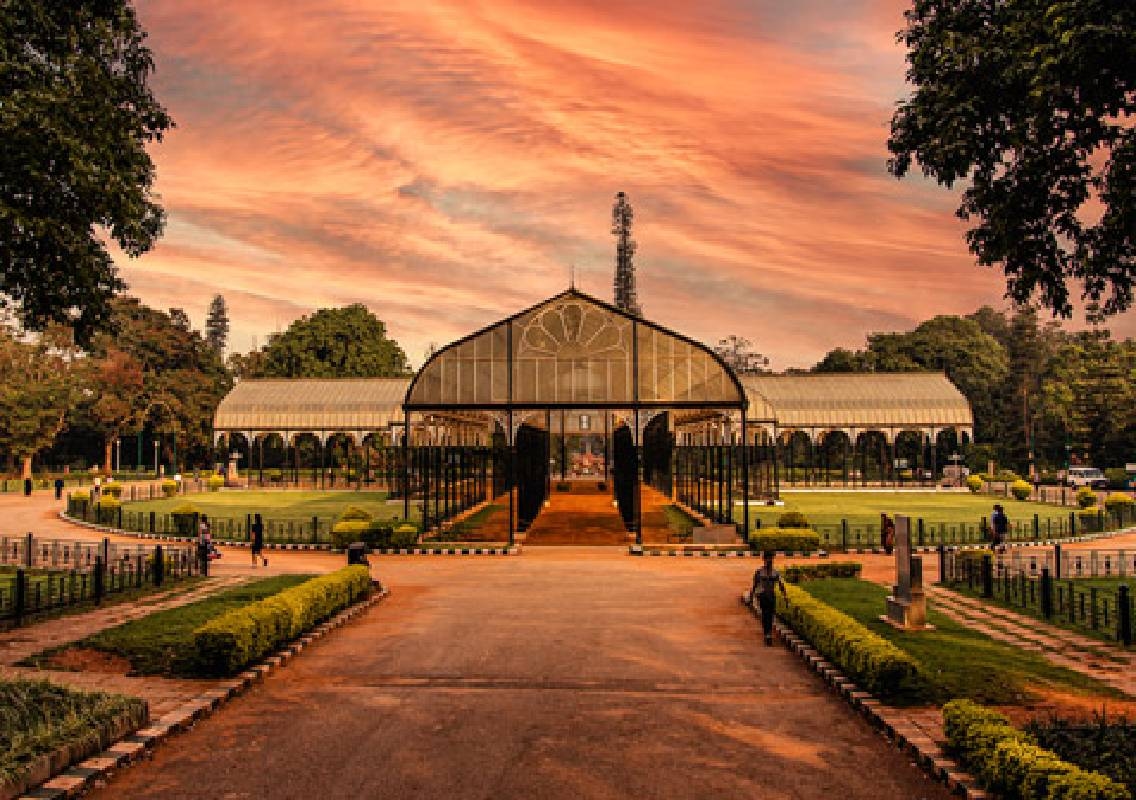


Bengaluru: The Karnataka government is exploring alternative routes for the proposed Hebbal–Central Silk Board tunnel road after strong opposition to the use of Lalbagh land and concerns over possible damage to the botanical garden’s ancient rock formation.
Forest, Environment and Ecology Minister Ramalinga Reddy has said that Lalbagh land will not be used for the tunnel road project and that alternative routes are being examined. However, the final alignment has not yet been decided.
Government looks for alternative tunnel route
The proposed tunnel road is planned to connect Hebbal with the Central Silk Board area as part of Karnataka’s efforts to address Bengaluru’s traffic congestion. The project is around 16.7–17.5 km long, with the government estimating its cost at around ₹17,782 crore.
The original alignment faced opposition because it involved the use of Lalbagh land for tunnel-related infrastructure. Following protests by citizens, environmentalists and experts, the government is now considering routes that would avoid Lalbagh altogether.
According to Ramalinga Reddy, options being examined include using a portion of NIMHANS land, cemetery land near Wilson Garden or routing the tunnel through Lalbagh Road. Officials are expected to study the feasibility and impact of these alternatives before taking a final decision.
Chief Minister D.K. Shivakumar had earlier directed officials to explore alternatives to using Lalbagh land. Greater Bengaluru Development Minister Krishna Byre Gowda also confirmed that officials were examining possible alternative alignments.
Protests intensified over Lalbagh impact
The proposed tunnel project became a major point of contention after the Karnataka government introduced the Karnataka Government Parks (Preservation) (Amendment) Bill, 2026.
The Bill sought to allow up to 5% of government park land to be used for public infrastructure and utility projects. It faced strong opposition from citizens, environmental groups and political leaders, particularly because of concerns that the provision could facilitate the use of Lalbagh land for the tunnel project.
The Karnataka Cabinet subsequently withdrew the Bill following the protests. The government said the legislation could be brought back after wider public consultation and consideration of suggestions.
The withdrawal of the Bill and the decision to examine a new tunnel alignment have now shifted the focus towards finding a route that does not affect Lalbagh.
GSI raised concerns over ancient rock formation
The controversy gained further momentum after the Geological Survey of India submitted a report to the Karnataka High Court warning about potential risks to the ancient geological formation inside Lalbagh.
According to the GSI report, the proposed tunnel could pose a risk to the Peninsular Gneiss rock formation, which is more than three billion years old and is classified as a geological monument.
The GSI examined the Detailed Project Report and raised concerns about the proposed construction of shafts for Tunnel Boring Machines near the ancient rock formation. The agency warned that construction-related vibrations and redistribution of stress could potentially create new fractures or widen existing cracks in the rock.
The report also flagged possible changes to groundwater levels and flow paths. Such changes could affect Lalbagh Lake and aquifers in the surrounding area and potentially influence ground stability near tunnel ramps.
Tunnel project faces wider criticism
While the government has maintained that the tunnel road is intended to ease Bengaluru’s traffic congestion, the project has faced criticism from mobility experts and civil society groups.
Some experts, including researchers associated with the Indian Institute of Science, have argued that Bengaluru should focus more on public transport infrastructure, particularly Metro expansion and the suburban rail project, rather than relying heavily on expensive road infrastructure.
Civil society groups have also said that avoiding Lalbagh alone would not address their concerns about the tunnel road. Petitioners challenging the project have raised broader questions about its cost, traffic benefits and statutory clearances.
The Karnataka High Court is also examining petitions concerning the project. One report noted that the court had directed that any contract for the tunnel project would remain subject to the outcome of the petitions.
Final route yet to be decided
For now, the Karnataka government has made it clear that Lalbagh land will not be used for the tunnel road, but the alternative alignment remains undecided.
Officials will have to assess the engineering feasibility, land requirements, environmental implications and impact on surrounding neighbourhoods before selecting a new route. Some alternatives could themselves affect residential areas, groundwater resources or other public land, meaning the route change may trigger further public scrutiny.
The government is therefore faced with the challenge of balancing its proposed traffic infrastructure plans with concerns over Bengaluru’s environment, heritage and public spaces.
The final decision on the alignment is expected to depend on the feasibility studies and the government’s assessment of the alternatives.