







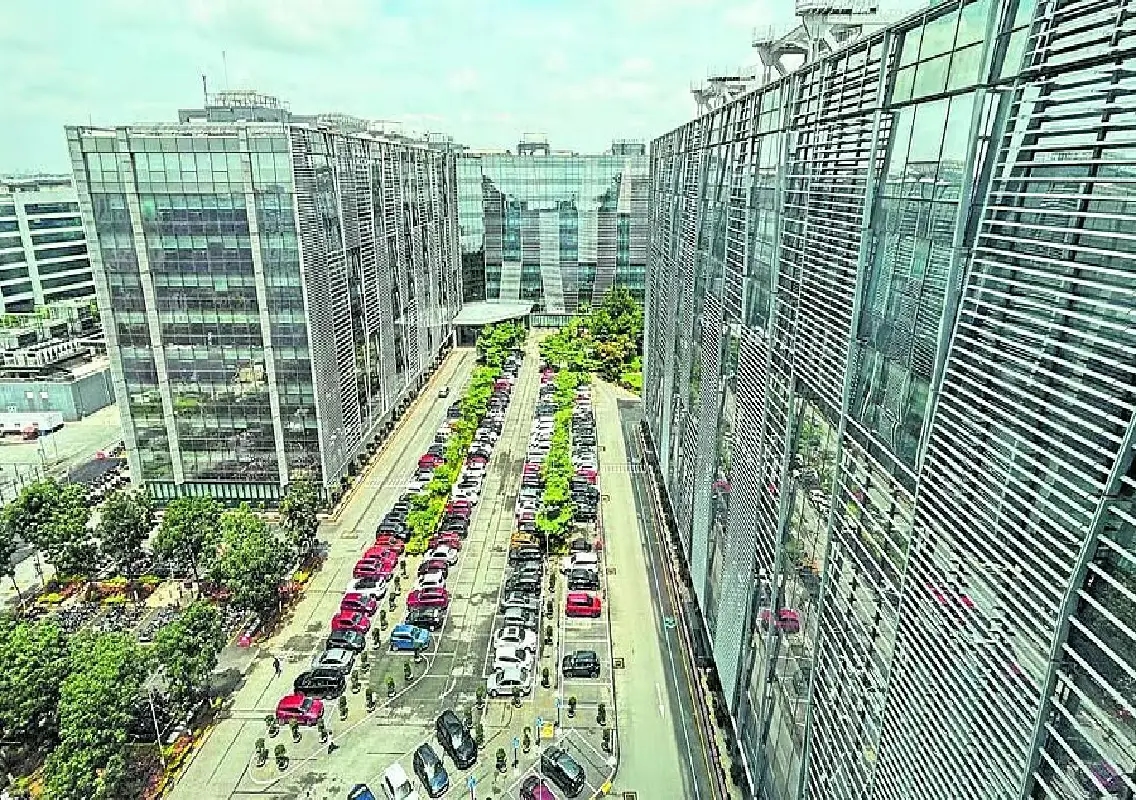


Bengaluru: As India’s technology capital continues its rapid expansion, Bengaluru is facing a mounting water challenge. Population growth, urban sprawl and the rise of water-intensive industries—especially data centres—have sharply increased demand for high-quality water. With limited scope to draw additional supplies from the Cauvery river, the Karnataka government and civic authorities are now looking beyond conventional sources, increasingly focusing on treated wastewater as a critical solution.
Growing city, rising water stress
Bengaluru’s water demand has been climbing steadily over the past decade. Alongside residential consumption, industrial demand is growing at a faster pace, driven by IT parks, manufacturing units and a new wave of data centres that require large volumes of consistently high-quality water for cooling systems.
According to planning estimates cited by the Bangalore Water Supply and Sewerage Board (BWSSB), the city’s total water requirement could rise to around 2,900 million litres per day (MLD) by 2031. If industrial usage continues to account for roughly 17 per cent of total demand, industrial water requirements alone could touch nearly 493 MLD. This presents a major challenge in a city already struggling with groundwater depletion and seasonal shortages.
Greywater: an underused lifeline
Despite these pressures, Bengaluru possesses a largely underutilised resource—treated wastewater or greywater. The city currently has 34 sewage treatment plants (STPs) operated by BWSSB, along with more than 3,500 decentralised STPs within apartment complexes.
However, most residential apartments reuse only 20–30 per cent of treated water for non-potable purposes such as flushing and gardening. The remaining treated water is often discharged into stormwater drains, sometimes illegally, as transporting it to other users is costly and logistically complex.
This gap has opened opportunities for private players specialising in advanced water reuse.
Private players step in with advanced treatment
One such company is Boson White Water, operated by Trans Water System Private Limited. Its director, Vikas Brahmavar—recognised as a DH Changemaker in 2024—explains that the company focuses on upgrading STP-treated water to very high industrial-grade quality.
Boson installs its proprietary 11-stage treatment system within apartment complexes at its own cost, after completing regulatory formalities. The system further treats STP water to what the company calls “White Water” quality, with total dissolved solids (TDS) below 70 parts per million and hardness below 20 ppm—meeting stringent industrial standards.
Apartments incur no financial burden, remain compliant with environmental regulations, and Boson collects the treated water and supplies it to nearby industries within a 4–5 km radius using leased tankers. Currently, the company supplies about 12.36 lakh litres per day from apartment STPs and has recycled over 111 crore litres of wastewater in the past four years.
Pilot projects with BWSSB
To scale this model citywide, Boson has partnered with BWSSB using a Rs 50 lakh grant from Titan. A pilot project at the Kadubeesanahalli STP, which has a capacity of 50 MLD, treats about 70,000 litres per day of BWSSB’s treated water into high-quality reuse water.
This water is supplied to IT parks along the Outer Ring Road, including data centres, primarily for cooling tower applications. According to Brahmavar, using high-quality treated water in cooling towers reduces blowdown frequency, lowers chemical usage, improves operational efficiency and significantly cuts freshwater demand.
The treatment systems are patent-designed, use advanced filtration materials and are fully IoT-enabled, allowing real-time monitoring of water quality and quantity. While the water is technically potable, it is currently used only for non-potable industrial purposes due to psychological and cultural barriers.
Where BWSSB’s treated water is going
A BWSSB official said the board is already supplying tertiary-treated water for non-potable use to major consumers such as Kempegowda International Airport, Rail Wheel Factory, BEL, Indian Air Force facilities, Arvind Mills and Global Village tech park. This water is sourced mainly from Yelahanka STP and other treatment plants.
Smaller treatment units also operate within Cubbon Park (4 MLD) and Lalbagh (1.5 MLD), supplying water exclusively for horticulture. Treated water is used at prominent locations including Raj Bhavan, Vidhana Soudha, M S Building, Bangalore Golf Course, Race Course, Indira Gandhi Musical Fountain and Kanteerava Stadium.
Demand projections and policy challenges
Studies underline the scale of future demand. A Bengaluru Urban Water Balance Report by WELL Labs estimated industrial water use at about 240 MLD in 2015. If sectoral shares remained constant, demand could have risen to around 441 MLD by 2021, nearly doubling within six years.
BWSSB officials say they are encouraging industries and IT parks to shift to treated water for non-potable uses, which account for 85–90 per cent of total water demand. Adoption is increasing, with examples such as Wipro using zero-bacteria-treated water from Agaram Lake.
However, public perception remains a major hurdle. Past experiences with inconsistent quality, staining and high TDS have reduced trust in treated water. Zero-liquid-discharge systems in apartments are often unpopular as they can affect aesthetics and property sales.
Industry concerns over pricing
Small-scale industries have raised concerns about water pricing. S S Hussain, General Secretary of the Karnataka Small Scale Industries Association (KASSIA), said industries are charged around Rs 110 per 1,000 litres, compared to residential tariffs starting at Rs 7–8 per 1,000 litres.
“There is no issue with availability, only pricing and confidence in quality,” he said, adding that BWSSB has struggled to persuade small industries to adopt treated water. Planned separate pipelines for treated water in areas such as Peenya Industrial Estate have also seen delays.
Conclusion
As Bengaluru confronts worsening water stress, treated wastewater is emerging as a crucial part of the city’s future water strategy. While technology and pilot projects show promise, wider adoption will depend on policy support, pricing reforms and sustained efforts to build public and industrial confidence in the quality of reused water.