







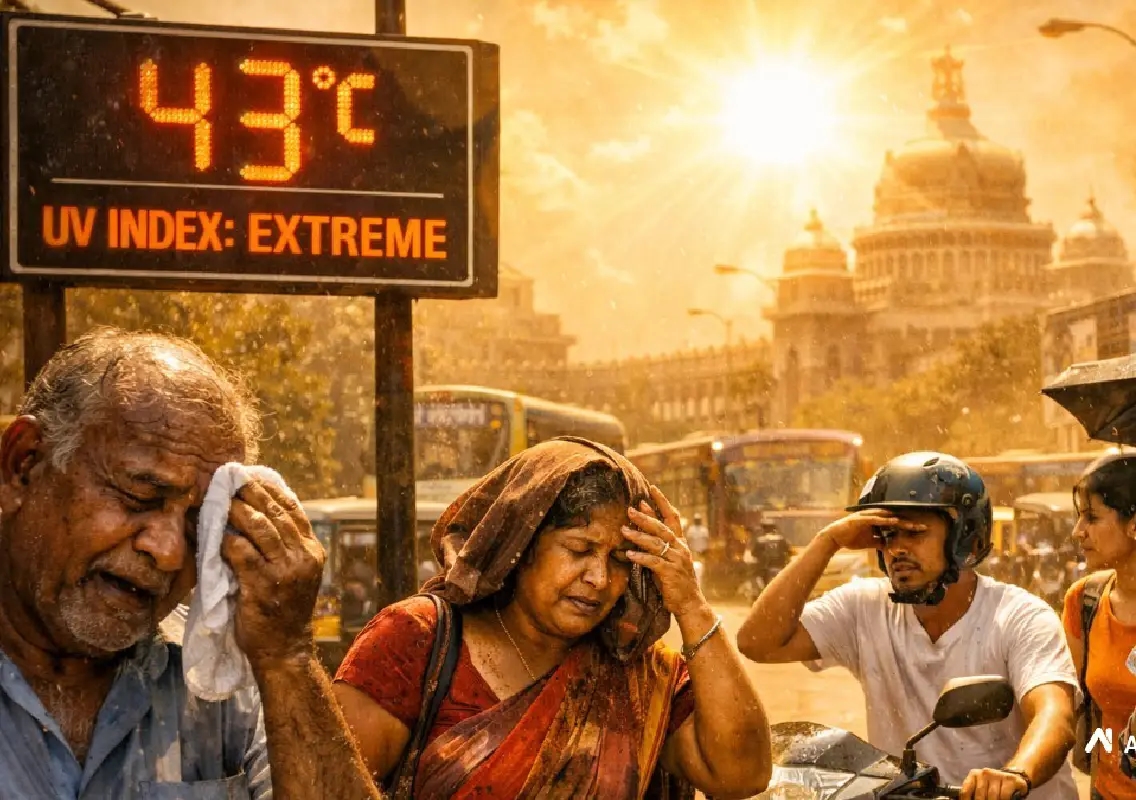


Several districts across Karnataka are witnessing a sharp rise in temperatures even before the peak summer season, with some areas recording maximum temperatures above 40°C. At the same time, Bengaluru has experienced an alarming surge in ultraviolet (UV) radiation, prompting concern among weather experts and health professionals.
According to reports, the UV index in Bengaluru recently reached 13, a level classified as “extreme” and significantly higher than the safe threshold.
Early heatwave conditions in Karnataka
The first week of March has seen above-normal temperatures across different parts of the state. Bengaluru recorded maximum temperatures between 32°C and 33°C, while minimum temperatures hovered around 19°C.
The India Meteorological Department (IMD) said that temperatures in parts of coastal Karnataka and North Interior Karnataka were 1.6°C to 3°C above normal in recent days.
Weather officials have also predicted dry conditions across coastal, south interior and north interior Karnataka for the next four to five days.
UV radiation reaches extreme levels
While temperatures in Bengaluru have been relatively moderate compared to some other districts, the spike in UV radiation has raised greater concern.
Experts say any UV index reading above 8 is considered harmful. At 13, the current levels fall within the “extreme” category, which significantly increases the risk of sun-related health problems.
Health professionals warn that prolonged exposure to high UV radiation can cause sunburn, premature skin ageing, eye damage and an increased risk of skin cancer.
Urban factors such as glass building facades, large concrete surfaces and declining tree cover may also contribute to higher heat and UV exposure in cities like Bengaluru and Mangaluru.
Health precautions advised
Medical experts have advised residents to take precautions when spending time outdoors during the daytime.
Recommended safety measures include wearing light-coloured, full-sleeved cotton clothing, using wide-brimmed hats and UV-protective sunglasses, and applying high-SPF sunscreen to exposed skin.
Authorities also encourage people to limit outdoor activities during peak sunlight hours, remain hydrated and seek shaded areas whenever possible.
With summer approaching, experts say monitoring temperature trends and UV levels will be crucial to reducing the risk of heat-related illnesses and protecting public health.