







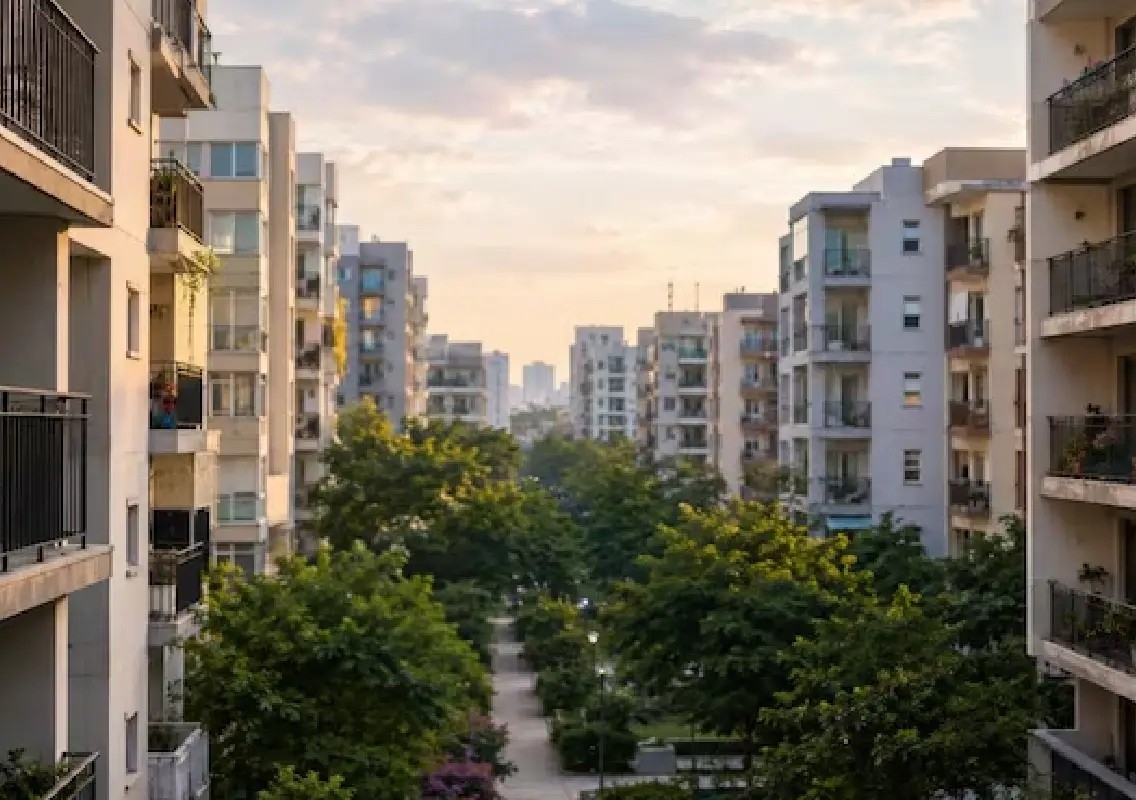


A Bengaluru entrepreneur has gone viral after humorously comparing apartment complexes to independent nations, complete with governments, opposition parties and political rivalries, prompting thousands of residents to share similar experiences from their own housing societies.
Dipika Jaikishan, a Bengaluru-based startup co-founder, sparked the conversation with a social media post describing Resident Welfare Associations (RWAs) as miniature democracies where everyday residential issues often become subjects of intense debate.
‘Apartment complexes are sovereign nations’
In her widely shared post, Jaikishan joked that modern apartment communities function like self-governing states with their own leadership structures, bureaucracies and legislative processes.
According to her, housing society elections often attract more enthusiasm than mainstream politics, with residents passionately campaigning for committee positions and engaging in long-running rivalries over seemingly minor issues.
She humorously observed that debates over visitor parking, maintenance charges, pet policies and common facilities can sometimes resemble high-stakes political battles.
WhatsApp groups become the new parliament
One of the most relatable aspects of her post was the comparison of society WhatsApp groups to parliamentary sessions.
Jaikishan noted that discussions about dogs, parking spaces, swimming pool timings, gas pipelines and fire safety measures frequently escalate into heated arguments involving dozens of residents.
Her remarks resonated strongly with urban dwellers who have experienced similar disagreements within gated communities and apartment associations.
Social media users share their stories
The post quickly attracted reactions from residents across cities, many of whom agreed that apartment societies often mirror larger political systems.
Some users remarked that housing associations reveal how democratic processes function at the grassroots level, while others joked that reality television shows could easily be created around the drama unfolding inside residential communities.
Several commenters pointed out that disputes often arise because of the substantial maintenance funds managed by housing associations, making committee elections and administrative decisions particularly important to residents.
While humorous in tone, the discussion highlighted the growing role of RWAs in urban India, where apartment communities increasingly shape residents’ everyday experiences, civic engagement and neighbourhood governance.