







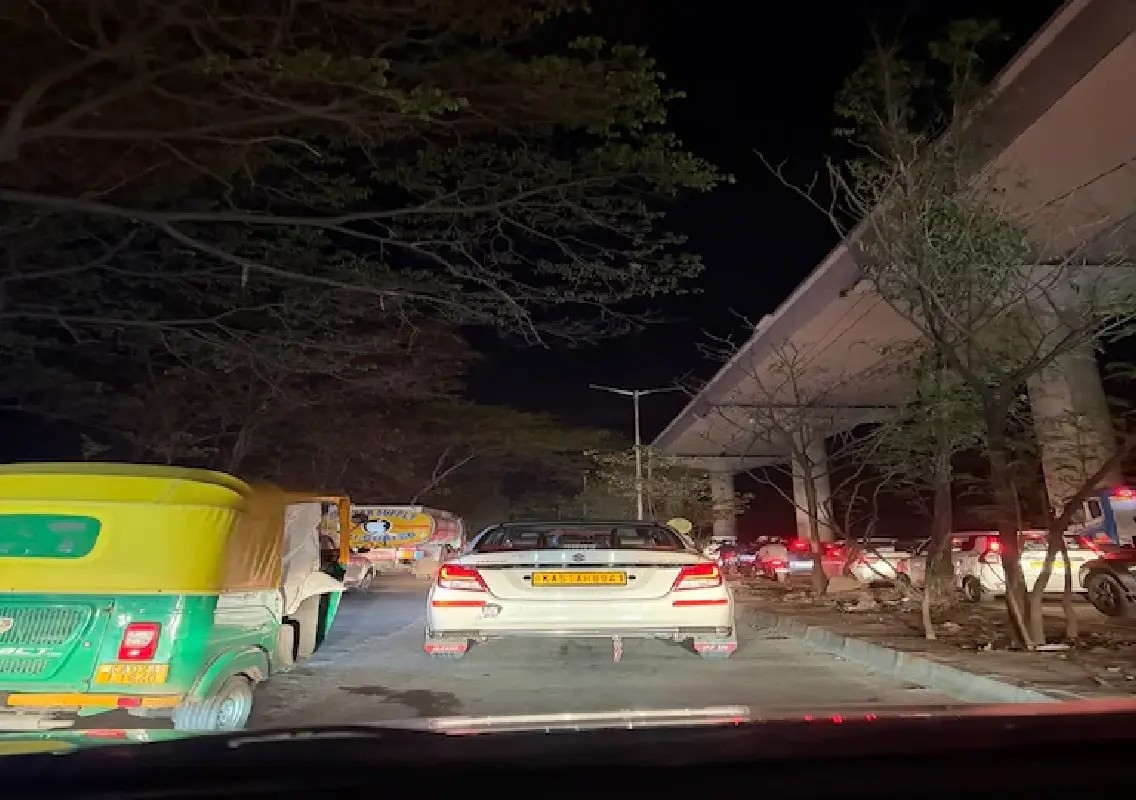


Bengaluru: A viral social media post showing heavy traffic congestion on a Bengaluru road at around 2 am has reignited discussions about the city’s chronic traffic problems, with residents pointing to ongoing infrastructure projects, airport connectivity challenges and rapid urban growth as key reasons behind round-the-clock gridlock.
The debate began after an X user, Siddhant, shared a photograph of vehicles moving slowly through a congested stretch of road in the early hours of the morning. Accompanying the image, he wrote, “Why? Bengaluru, why? At 2 in the night seriously?”, expressing surprise at witnessing a traffic jam during what is traditionally considered a low-traffic period.
The post quickly gained traction online, drawing reactions from residents who said such scenes have become increasingly common across several parts of the city.
Social media users cite multiple causes
The viral post sparked widespread discussion, with many users attributing late-night congestion to a combination of metro construction works, airport-bound traffic, road diversions and Bengaluru’s expanding population.
Several residents noted that traffic bottlenecks are no longer restricted to peak office hours, with major corridors often experiencing congestion late into the night due to ongoing infrastructure works and heavy vehicle movement.
The discussion mirrors earlier instances when motorists reported severe traffic snarls on key stretches such as the Outer Ring Road and Marathahalli even after midnight, prompting concerns over the city’s growing mobility challenges.
Metro construction impacts traffic flow
A significant portion of the online discussion focused on the impact of ongoing metro construction projects on road traffic.
Bengaluru is currently witnessing large-scale expansion of the Namma Metro network, including the Blue Line corridor connecting major IT hubs along the Outer Ring Road and eventually linking the city to Kempegowda International Airport. The project is expected to ease congestion in the long term but has resulted in temporary traffic disruptions across several stretches during construction.
Residents argued that while the metro expansion is necessary, road space restrictions and diversions associated with the project have contributed to traffic bottlenecks even during non-peak hours.
Airport connectivity remains a concern
Many users also highlighted airport-bound traffic as a major contributor to late-night congestion.
Since flight schedules operate throughout the day and night, roads leading to Kempegowda International Airport often witness continuous vehicle movement, particularly from taxis, airport buses and private vehicles transporting passengers.
The proposed metro connection to the airport is expected to provide an alternative mode of transport and reduce dependence on road-based travel once completed. According to Bengaluru Metro Rail Corporation Limited (BMRCL), the airport metro corridor is targeted for completion by 2027.
Traffic challenges extend beyond peak hours
The viral image has once again highlighted Bengaluru’s broader traffic management challenges.
Recent reports have documented long commute times on major corridors, with residents frequently sharing experiences of spending hours in traffic due to road works, bottlenecks and increasing vehicle density.
In some instances, traffic disruptions have also been linked to VVIP movements and construction projects, further intensifying public frustration.
Urban mobility experts have repeatedly stressed the need for integrated transport planning, improved public transportation networks and better traffic management systems to address the city’s long-standing congestion issues.
Residents call for long-term solutions
The viral post has renewed calls for faster completion of infrastructure projects, expansion of public transport services and improved urban planning.
Many social media users argued that Bengaluru’s growth as a major technology and business hub has outpaced the development of transport infrastructure, resulting in persistent congestion across key corridors.
While authorities continue to invest in metro expansion, road improvements and traffic management measures, residents say visible improvements in travel times will depend on the timely completion of ongoing projects and the creation of sustainable alternatives to private vehicle use.
The late-night traffic jam may have surprised many online users, but for several Bengaluru residents, it has become yet another example of how congestion has evolved into an around-the-clock reality in India’s technology capital.