







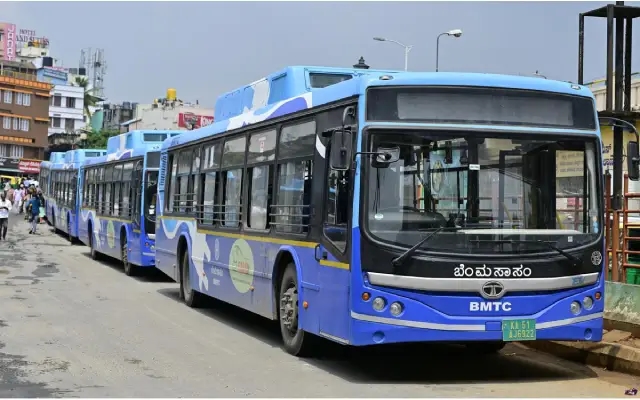


When the Bengaluru Metropolitan Transport Corporation (BMTC) began electrifying its fleet, the move was celebrated as a breakthrough in sustainable urban transport. However, a few years into the shift, challenges are mounting. New BMTC data shows that electric buses now account for the bulk of breakdowns across the city, raising doubts over the long-term reliability of Karnataka’s green mobility drive.
Between 2024 and 2025, BMTC reported 645 breakdowns, of which 577 involved electric buses — a dramatic jump from just 16 cases the previous year. Diesel buses, once notorious for stranding passengers, logged only 68 failures. The breakdown rate, which had held steady at zero per 10,000 km for three consecutive years, has now risen to 0.02%. Nearly nine out of every ten buses stalling on Bengaluru’s streets are electric.
Officials blame the spike on heavy rains and related battery issues. “Most e-buses are run under contract, so BMTC is not directly handling their maintenance,” a spokesperson said. Mobile repair vans with mechanics have been deployed across seven zones to provide on-road support.
BMTC’s e-bus journey began in 2021 and accelerated after 2022, with support under the FAME II and Smart City schemes. By September 2024, the fleet had crossed 1,000 vehicles and continues to expand rapidly. But depot staff highlight maintenance backlogs, shortage of genuine spare parts, and tighter budgets post-Shakti scheme as key concerns.
Commuters and traffic police also warn that stalled buses frequently clog junctions, creating traffic chaos and road safety hazards.