







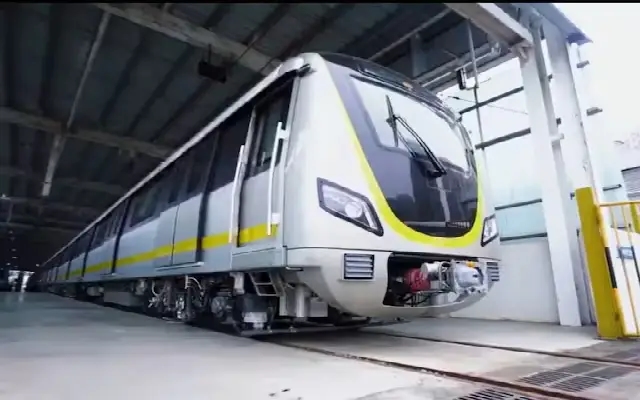


Bengaluru’s highly anticipated first driverless metro, slated for deployment on the Yellow line, is gearing up for a crucial phase of testing: the integration of its signalling system. The forthcoming signalling test is a vital component of the mainline testing process for the driverless metro, according to officials.
The driverless trains in Bengaluru are set to feature advanced integration with a sophisticated signalling system, enabling seamless communication and collision prevention. Currently, the new rolling stock is undergoing various tests, including static and electrical circuit testing. The next phase will involve the integration of the signalling system.
The driverless metro project received its first batch of six coaches earlier this year, and these coaches are presently undergoing multiple tests at the Hebbagodi Metro depot. With 37 tests already completed, the focus is now on system integration with signalling, telecommunications, and power supply.
Following the completion of mandatory safety tests, including oscillation trials by the Research Designs and Standard Organization (RDSO) and an inspection by the Commissioner of Metro Rail Safety (CMRS), the railway board’s approval is required before the driverless metro can commence revenue service.
The Yellow line, spanning 18.82 km and connecting RV Road to Bommasandra, is strategically designed to enhance connectivity to major IT hubs and areas hosting prominent companies like Infosys and Biocon. The line comprises 16 stations and includes connectivity with other metro lines, facilitating seamless travel across the city.