







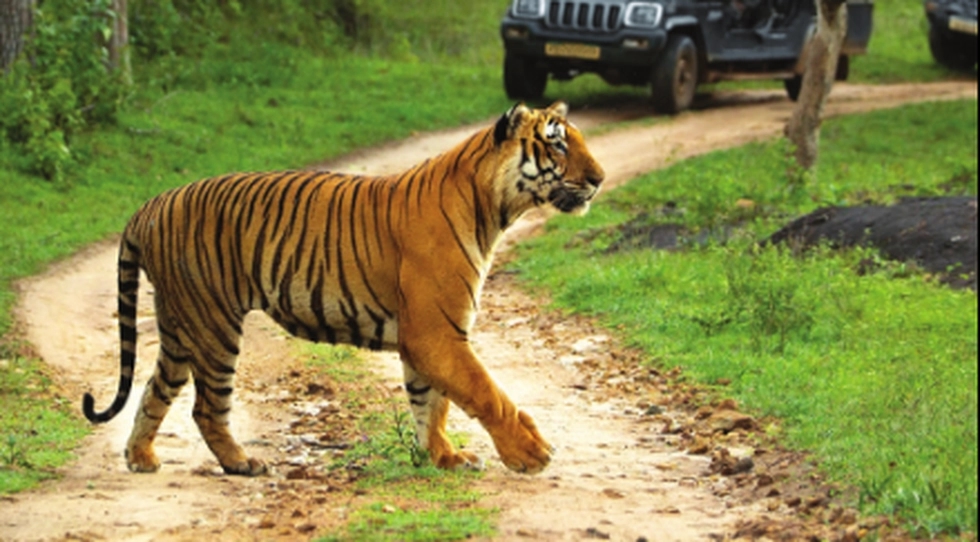


The tiger population in the outskirts of Bengaluru appears to be increasing, with more sightings reported in areas like Bannerghatta National Park (BNP). Whether this is a result of successful conservation efforts by the forest department or an overpopulation in existing reserves, the big cats are now migrating long distances to establish new territories.
BNP, which is closest to Bengaluru, has reported sightings of multiple tigers within its 106.83 sq km area. Recently, a lone male tiger was spotted near the Bannerghatta zoo boundary, close to the safari zone, which houses several tigresses. Another tiger was sighted near the Harohalli range, an area already known for frequent human-elephant conflicts due to its proximity to urban areas.
A forest department official shared, “It seems there are two or three tigers wandering in the park, based on the multiple pugmarks we’ve observed. However, nothing is confirmed yet.” The official also raised concerns about the safety of the tigers in this area, given the rapid urbanization surrounding BNP. The increasing presence of leopards and elephants near human settlements is evidence of the growing pressure on wildlife habitats.
Despite these challenges, BNP is ecologically suitable for tigers, with a healthy prey base and connectivity to Tamil Nadu. However, the growing threat of poaching and human intrusion remains a major concern.
A recent report, Status of Tigers, Prey and Other Mammals in Tiger Reserves of Karnataka (2024), noted a rise in tigers migrating in search of safer habitats. The forest department is currently reviewing camera trap images to confirm the number of tigers and trace their origins.
- Bengaluru cardiologist takes sabbatical to focus on personal wellness
- Google plans restructuring at Hyderabad and Bengaluru offices amid global layoffs
#BengaluruTigers #ConservationEfforts #WildlifeMigration #UrbanizationThreat