







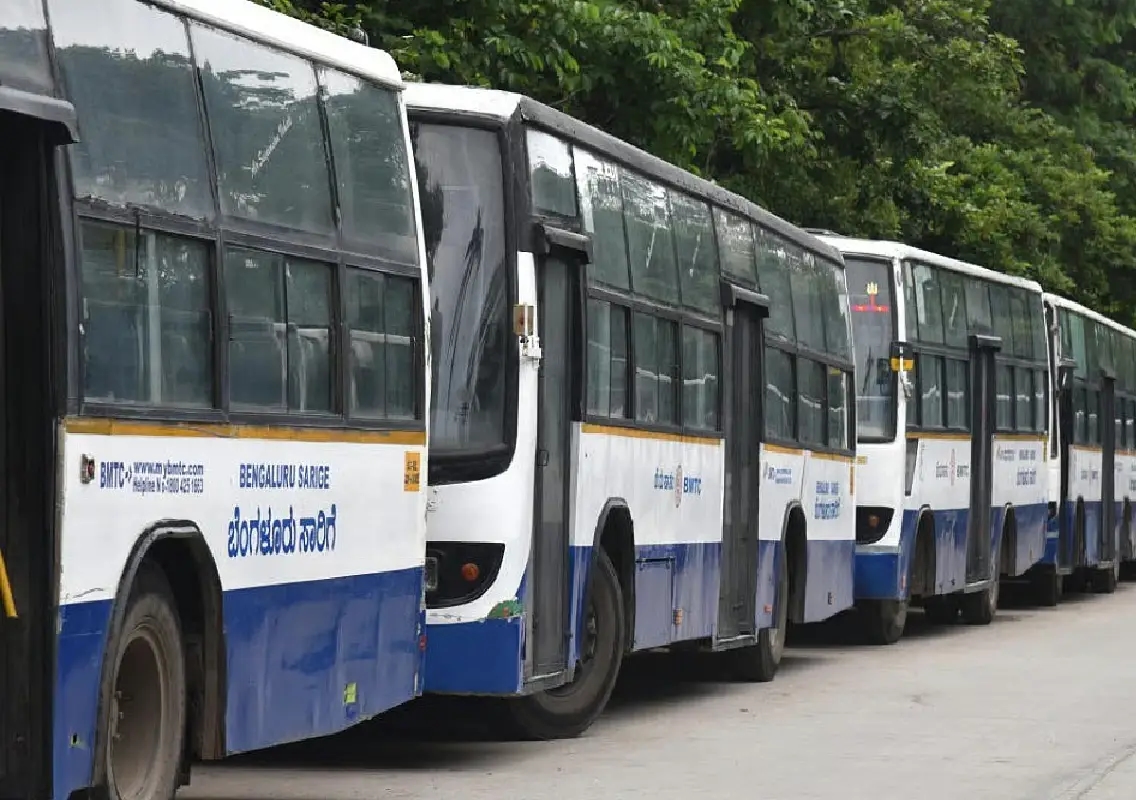


While Bengaluru’s Namma Metro continues to expand, the city’s true public transport backbone remains the Bengaluru Metropolitan Transport Corporation (BMTC) bus network, which carries millions of commuters every day.
Despite serving a city with nearly 1.5 crore residents, the Metro currently handles just over one million passengers daily. In contrast, BMTC buses transport around 45 lakh passengers each day, connecting neighbourhoods across the sprawling city.
Buses remain the city’s main transport mode
From garment factory workers to IT professionals commuting to tech hubs, BMTC buses remain the most widely used mode of public transport in Bengaluru.
The corporation plans to significantly expand its fleet in the coming years, aiming to operate over 10,000 city buses, which would make Bengaluru one of the cities with the largest bus networks in the country.
Of these, more than 6,500 buses are expected to be electric, marking a major shift toward cleaner and more sustainable urban mobility.
BMTC has already introduced 1,730 electric buses as part of its transition to greener transport.
Electric bus operations face challenges
However, the move to electric buses has not been without difficulties. Unlike diesel buses that are purchased outright, electric buses are leased under a Gross Cost Contract (GCC) model.
Under this system, manufacturers provide the buses along with charging infrastructure, maintenance services, and operational support. BMTC pays them based on the number of kilometres operated, while the corporation deploys conductors.
Transport Minister Ramalinga Reddy has expressed concerns about reliability issues, including frequent breakdowns caused by suspension, steering, and battery problems.
Trip cancellations have also been reported. In some cases, buses expected to run around 190 kilometres daily manage only 130–140 kilometres, affecting service schedules.
Government seeks improvements
The Karnataka government has raised these concerns with central authorities and companies supplying the buses. Officials have also imposed penalties totalling ₹25 crore on manufacturers due to operational lapses.
Transport officials believe that while electric buses are cheaper to operate and environmentally friendly, stable operations and better driver training will be essential for long-term success.
For a city heavily dependent on buses for daily mobility, ensuring that the electric fleet operates reliably may prove just as crucial as expanding the network.