









Bengaluru:
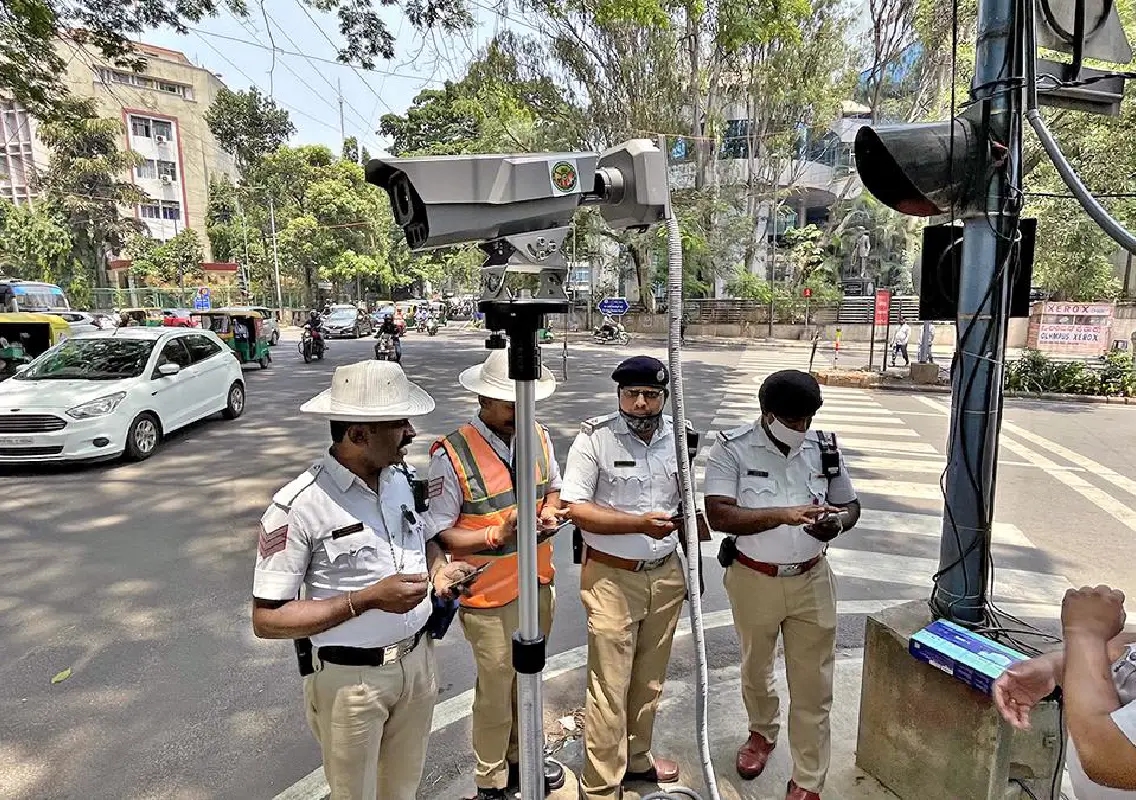
Cameras — not constables — are increasingly policing the city’s roads. Between January and July 2025, nearly 87% of all traffic violations in Bengaluru were booked through contactless, AI-powered methods, according to data from ASTraM (Actionable Intelligence for Sustainable Traffic Management) compiled by the city traffic police.
Over this seven-month period, Bengaluru recorded over 3 million traffic violations — averaging 11,828 automated challans a day, compared to just 1,586 manual cases issued on the ground.
Automation Takes the Wheel
The city’s expanding network of AI-based cameras under the Intelligent Traffic Management System (ITeMS) has now taken over much of what human enforcement once did.
Contactless enforcement includes automated detection via cameras, Digital Field Traffic Violation Reports (FTVRs), citizen submissions through the ASTraM app, and even crowdsourced evidence from social media.
The top offences detected by automation were:
- Riding without helmets – 36%
- Pillion riders without helmets – 19%
- Seat belt violations – 16%
- Signal jumping – 13%
Manual enforcement, on the other hand, was dominated by no-entry (26%) and wrong parking (24%) violations. Across months, automated bookings consistently made up over 85% of all cases, peaking at 90% in January.
‘Awareness and Camera Coverage Growing Together’
Joint Commissioner (Traffic) Karthik Reddy told TOI that both public awareness and camera coverage had expanded rapidly this year.
“As people have become more alert, the number of reported violations has gone up — which is a good thing. We added 25 ITeMS cameras this year, and Elcita handed over about 18–19 more, taking the total to 75. The ASTraM app has also boosted awareness,” he said.
However, Reddy admitted that illegal parking and one-way violations remain persistent problems.
“Both worsen congestion and endanger lives. In the past two months alone, we booked over 1.5 lakh physical cases,” he said.
As of September 25, Bengaluru traffic police collected ₹44 lakh in fines, with nearly half of all booked violations already cleared.
Reddy stressed that the long-term fix lies in strengthening public transport — particularly expanding Namma Metro and BMTC services — to reduce private vehicle dependence.
Tech Promise, Real-World Glitches
While automation has streamlined enforcement, many commuters complain that the ASTraM app, launched in January as an upgrade to the older Public Eye platform, still struggles with usability.
“The geo-tagging doesn’t work properly on the outskirts,” said Manoj Lad, a 37-year-old resident of Sarjapur. “In areas like Kumbalgodu, it shows ‘out of coverage area.’ You also can’t upload photos from the gallery or track whether cases were acted upon.”
Basavanagudi-based civic volunteer NS Siddharth echoed the sentiment:
“You have to take the picture live, which isn’t always possible. These tools could empower citizens, but poor functionality weakens them.”
Responding to criticism, Reddy said stricter verification was necessary to ensure legal validity.
“Earlier, public reports failed because photos couldn’t be verified or violators denied being at the scene. Now, we mandate geo-tagged, time-stamped evidence with location tracking — it ensures submissions hold up when contested,” he said.
Cameras Outpace Constables, But Tech Must Catch Up
With thousands of new vehicles registered every month, experts say Bengaluru’s shift to AI-led traffic policing is both inevitable and essential.
Yet, as commuters point out, technology designed to enforce the law must also evolve to serve its users.
For now, even as cameras dominate Bengaluru’s roads, the city’s drivers want one thing from its new digital cops — fewer glitches, and a smoother ride toward accountability.