







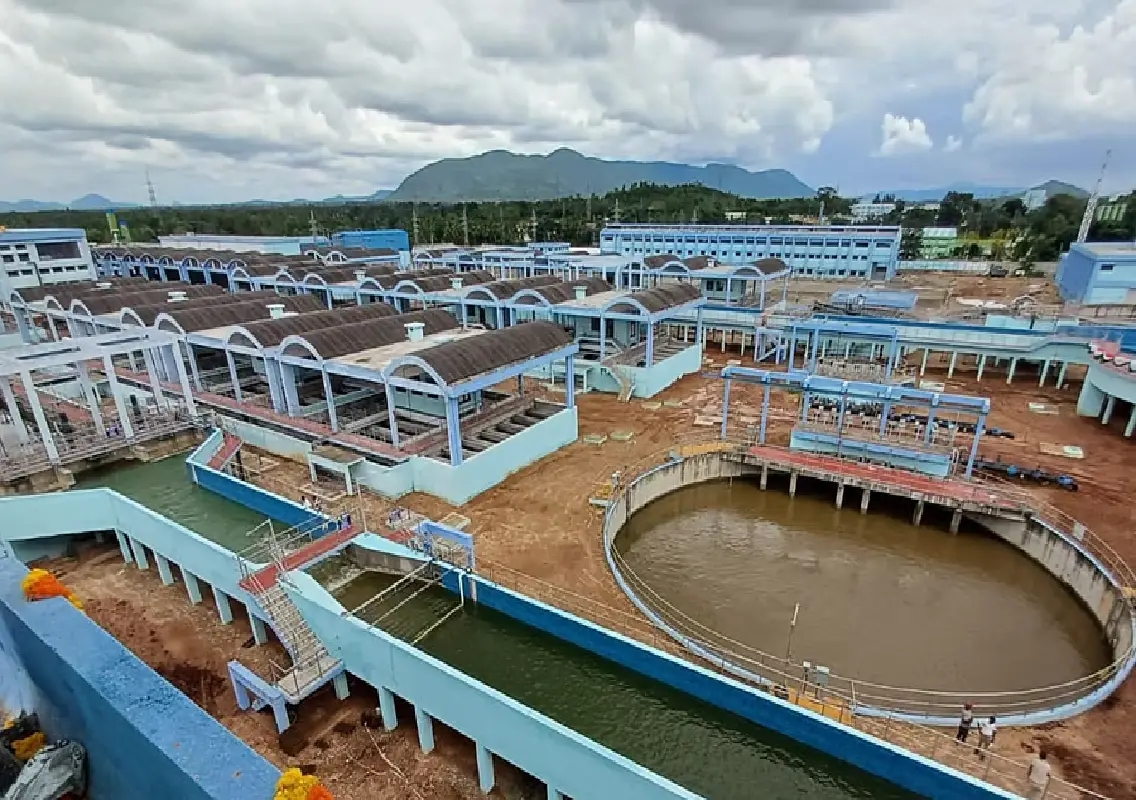


Bengaluru: Even as the Bangalore Water Supply and Sewerage Board (BWSSB) prepares to roll out the Cauvery Stage 6 project, concerns are mounting over the low uptake of water connections under the earlier Stage 5 scheme in Bengaluru.
The State Cabinet recently approved the ambitious Cauvery Stage 6 project, which also found mention in the 2026–27 Budget. The project aims to bring an additional 500 million litres per day (MLD) of water from the Cauvery River to meet the growing demands of the city and its expanding suburbs.
Stage 5 sees lukewarm response
Despite the completion of Cauvery Stage 5 nearly 18 months ago, BWSSB has struggled to attract the expected number of water connection applicants. Initially, the board anticipated at least 3.5 lakh connections across 110 villages that were added to BBMP limits in 2008.
However, so far, only about 1.2 lakh residents have applied for connections. Taking into account the slower-than-expected urban development in these areas, BWSSB has revised its target to 1.8 lakh connections.
Even with the revised estimate, only around 70% of the expected connections have materialised, raising concerns about public acceptance of Cauvery water supply.
Preference for borewell water
Officials attribute the low response primarily to residents’ continued reliance on borewell water. Many households in these areas have long depended on groundwater, which is often perceived as free and readily available.
A senior BWSSB official noted that while monthly water charges are not a major concern, the initial cost of obtaining a connection—running into several thousand rupees—has discouraged many residents.
Additionally, delays in project execution have contributed to scepticism. Residents who paid for connections early in the project reportedly lost confidence due to repeated missed deadlines, leading others to hesitate in applying.
Sarala Cauvery scheme introduced
To address affordability concerns, BWSSB introduced the ‘Sarala Cauvery’ scheme, allowing residents to pay connection charges in instalments.
Under the scheme:
- Houses up to 600 sq ft can pay ₹1,000 upfront
- The remaining amount can be paid in 12 monthly instalments
- A nominal service fee of 0.15% is applicable
Despite this initiative, only about 25,000 buildings have applied under the scheme, indicating that financial flexibility alone may not be sufficient to drive adoption.
Gradual improvement expected
BWSSB officials remain cautiously optimistic about improving response rates. Chairman Ramprasat Manohar V stated that applications have been increasing gradually in recent months.
“It takes time for people to shift from traditional sources. We are hopeful of achieving 100% coverage by 2027,” he said.
The board is also monitoring illegal water usage and encouraging residents to opt for authorised connections.
Stage 6 to expand supply to suburbs
Under Cauvery Stage 6, BWSSB plans to supply around 150 MLD of water to rapidly urbanising areas such as Anekal, Nelamangala, Hoskote, and Devanahalli.
However, officials acknowledge that these areas may also show resistance similar to Stage 5, as residents continue to rely on borewells and local water sources.
Long-term need for sustainable water supply
Despite the challenges, BWSSB emphasises that Cauvery water projects are critical for Bengaluru’s long-term sustainability. Rapid urbanisation, population growth, and depleting groundwater levels make it essential to establish a reliable and safe water supply system.
Officials also highlighted concerns about groundwater contamination, which could pose health risks if left unchecked.
Moreover, utilising the full share of water allocated to Bengaluru from the Cauvery River remains a strategic priority for the state.
Conclusion
While the approval of Cauvery Stage 6 marks a significant step towards strengthening Bengaluru’s water infrastructure, the lukewarm response to Stage 5 highlights the challenges of changing public behaviour. For long-term water security, authorities will need to combine infrastructure expansion with awareness, affordability, and trust-building measures to encourage wider adoption of piped water supply.