







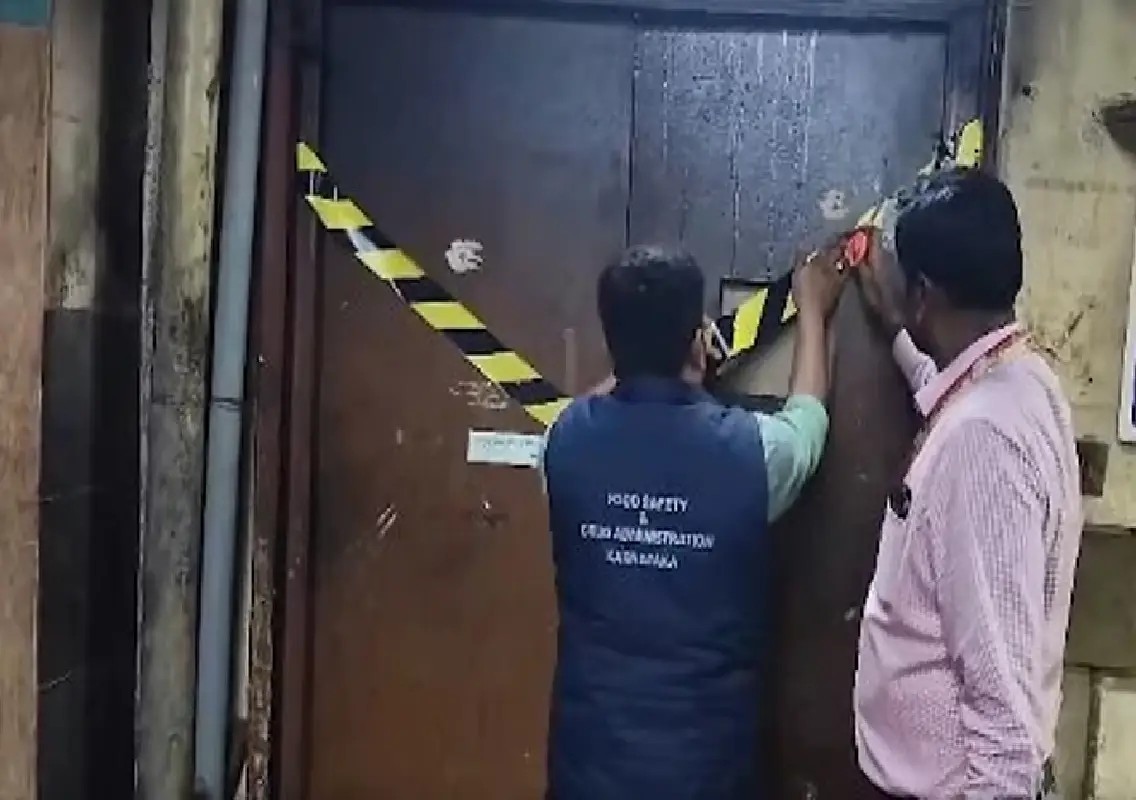


Bengaluru: The Food Safety Wing of the Department of Food Safety and Drug Administration conducted a special inspection at Chairman’s Club in Sahakaranagar (Dollars Colony) on September 3 and found several violations related to food safety, hygiene, storage and labelling.
During the inspection, officials found the club kitchen operating under unhygienic conditions. Expired food products were also detected and seized. In view of the serious deficiencies, authorities ordered the closure of the kitchen and initiated further legal action under the Food Safety and Standards Act, 2006, and the Food Safety and Standards Rules, 2011.
40 kg expired chilli seized
One of the major violations detected during the inspection was the storage of 40 kg of expired chilli as a food product.
The presence of expired food material raised concerns about the safety of food being prepared and served at the establishment. Food businesses are required to ensure that ingredients used in preparation are within their permissible shelf life and are stored appropriately.
The expired chilli was seized by the food safety officials as part of the enforcement action.
Labelling violations detected
Officials also found products that did not comply with prescribed labelling requirements.
Around 5 kg of bread crumbs and 2 kg of Sajeera food products were found to have improper labelling that was not in accordance with Food Safety and Standards Authority of India (FSSAI) regulations.
Proper labelling is an important food safety requirement as it enables consumers and enforcement authorities to identify details such as the product, ingredients and other mandatory information.
Non-compliance with labelling requirements can therefore lead to regulatory action against food establishments.
Kitchen found in unhygienic condition
The inspection team observed highly unhygienic conditions in the food preparation and storage areas of the club kitchen.
Maintaining cleanliness in kitchens and food storage areas is essential to prevent contamination and reduce the risk of food-borne illnesses. Food establishments are expected to follow prescribed hygiene and sanitation practices while handling, preparing and storing food.
The conditions observed by officials were considered serious enough to warrant closure of the kitchen.
Unauthorised artificial colours found
Another violation involved the use or storage of unauthorised or prohibited artificial colours in food products.
The use of permitted food colours is regulated, while certain artificial colours and substances are prohibited because of potential food safety concerns. Food businesses are required to ensure that only approved ingredients and additives are used in accordance with applicable regulations.
The detection of unauthorised or prohibited colours added to the list of deficiencies recorded during the inspection.
Food handling measures not followed
Officials also found that the required food safety measures for the storage and handling of food products had not been followed.
Proper handling and storage are necessary to maintain food quality and prevent contamination. This includes appropriate segregation, storage conditions and hygienic handling of ingredients and prepared food.
The violations indicated deficiencies in the overall food safety practices followed in the kitchen, according to the inspection findings.
Vegetarian and non-vegetarian food stored together
The inspection team also found that vegetarian and non-vegetarian food products had been stored together.
Segregation of different categories of food during storage and handling is an important hygiene practice. Keeping vegetarian and non-vegetarian products together without appropriate separation can increase the risk of cross-contamination.
The finding was included among the major violations recorded by the food safety officials during the inspection.
Kitchen closed, legal action initiated
Considering the nature and extent of the food safety and hygiene deficiencies, officials closed the Chairman’s Club kitchen following the inspection.
Further legal action has been initiated under the Food Safety and Standards Act, 2006, and the Rules, 2011.
The enforcement action highlights the responsibility of food establishments to comply with food safety regulations and maintain hygienic conditions at every stage of food preparation, storage and handling.
The inspection also underscores the role of regular enforcement drives in identifying violations before they pose a greater risk to consumers.
With expired food, improper labelling, unhygienic conditions, unauthorised artificial colours and inadequate storage practices among the violations detected, the authorities have now initiated proceedings against the establishment.