









Bengaluru: The investigation into a recent high-value drug bust in the city has revealed a complex and troubling narrative involving a trained chemical engineer, interstate financiers and alleged lapses in policing, raising serious questions about how illegal drug manufacturing networks take root in urban India.
At the centre of the case is Prashant Patil, a native of Belagavi and a qualified chemical engineer, who is the prime accused in what investigators believe was an attempt to establish clandestine drug-processing units in and around Bengaluru. According to senior officers of the Central Crime Branch (CCB), Patil had once harboured ambitions of launching a startup but instead chose what police describe as the “easy money” route of narcotics manufacturing.
From startup dreams to drug production
Police said Patil came into contact with two businessmen from Rajasthan who allegedly financed the setting up of drug-processing units. During discussions, Patil is said to have outlined a business model centred on manufacturing narcotic substances and supplying them through existing networks.
Investigators believe his technical expertise played a crucial role in designing and supervising the chemical processes involved in producing drugs, particularly MD (mephedrone). Officers said Bengaluru was chosen due to its perceived large customer base and the ease of transporting narcotics to neighbouring states using established supply routes.
Breakthrough from Maharashtra arrest
The illegal network came to light following the arrest of a suspected drug peddler by the Maharashtra Anti-Narcotics Task Force (ANTF), Konkan unit, in Vashi, Navi Mumbai. The accused, Abdul Kadir Rashid Shaikh, was caught with narcotic substances on the Mumbai–Pune Highway.
During interrogation, Shaikh allegedly revealed that he had been in contact with Patil for several months. Police said the two had discussed manufacturing drugs for profit, believing that enforcement loopholes could be exploited to run operations undetected.
Multiple arrests and suspected locations
Based on information provided during questioning, police arrested Suraj R Yadav and Malkhan R Bishnoi, both natives of Bihar, who were residing within the limits of the Bagalur police station. For the past three months, the duo had been working as carpenters while allegedly assisting in drug-related activities, investigators said.
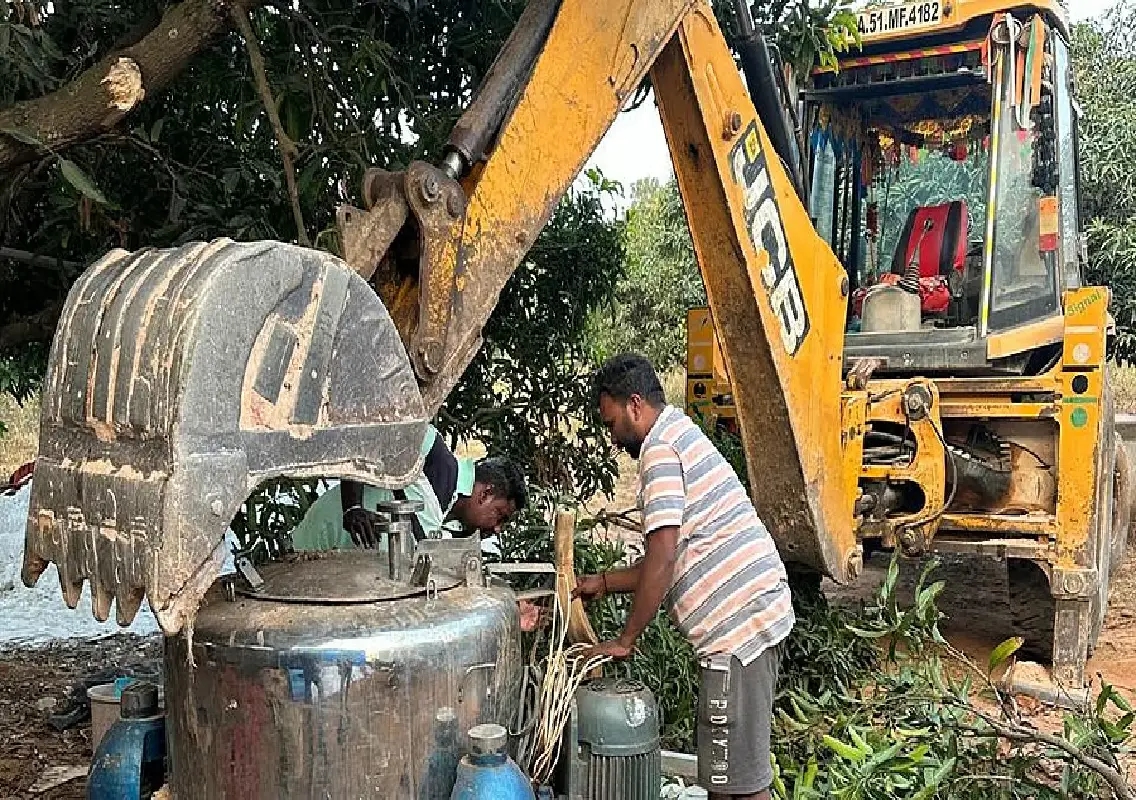
Police claimed that machinery and accessories for illegal drug manufacturing were procured and installed at an isolated farmhouse in a mango grove under the jurisdiction of the Kothanur police station. Raw materials were allegedly stored at Yerappanahalli, within the Avalahalli police station limits.
During an ANTF raid, the machinery was reportedly destroyed with the help of a JCB to prevent further misuse.
Conflicting claims over manufacturing units
Further interrogation and technical analysis led investigators to identify Patil as allegedly being involved in MD drug production at multiple locations. Suspects reportedly disclosed three production sites — a unit operating under the name “RJ Event” in Spandana Layout Colony, an RCC house in Yerappanahalli, Kannur, and another site in Avalahalli.
However, Bengaluru Police Commissioner Seemant Kumar Singh cast doubt on these claims after personally inspecting the sites on Sunday. “I personally visited the spots and verified the facts. There was no unit or factory operating there. Only about 17 litres of chemical substances were found stored in a house and in an open area,” he said.
This discrepancy has raised questions about whether large-scale manufacturing had already been dismantled or whether the accused exaggerated operations during interrogation.
Administrative action against police officers
In a major administrative development linked to the case, the Bengaluru City Police Commissioner on Monday ordered the suspension of three police inspectors for alleged dereliction of duty. The officers are accused of failing to gather prior intelligence about the illegal activities taking place in their respective jurisdictions.
Senior officials said the suspensions were meant to send a strong message that lapses in monitoring and intelligence gathering would not be tolerated, particularly in cases involving organised narcotics networks.
Larger concerns over drug networks
The case has highlighted the increasing sophistication of drug manufacturing operations and the involvement of educated professionals in organised crime. Officials said such networks often exploit technical knowledge, interstate financing and local enforcement gaps to operate discreetly.
Earlier this month, the CCB had seized drugs worth ₹2.5 crore in a separate operation, underlining the scale of the narcotics problem in the city. Law enforcement agencies believe Bengaluru’s connectivity, growing population and nightlife culture make it a lucrative market for drug syndicates.
Conclusion
While the investigation into Prashant Patil and his alleged associates is ongoing, the case has already exposed vulnerabilities in policing and intelligence systems. Authorities have maintained that further arrests are possible as technical analysis and financial trails are examined. The episode serves as a stark reminder that the fight against narcotics requires not just enforcement but sustained vigilance, inter-state coordination and accountability within the system.