







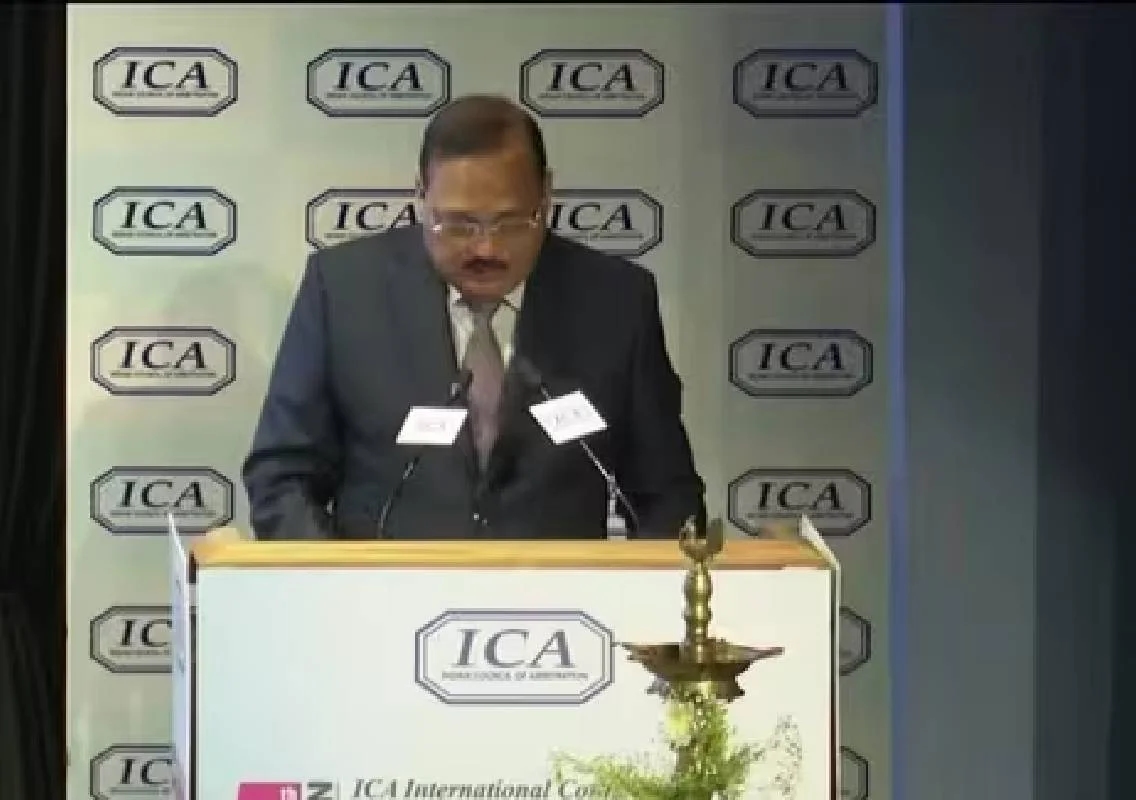


Bengaluru: Surya Kant has urged judicial officers across the country to embrace artificial intelligence (AI) with caution and clarity, stressing that technology should assist the judiciary, not replace human judgment.
Speaking at the 22nd biennial state-level conference of judicial officers organised by the Karnataka State Judicial Officers Association, the Chief Justice highlighted both the potential and risks of integrating AI into the justice delivery system.
AI should assist, not replace judges
Addressing the theme “Reimagining the Judiciary in the Era of Artificial Intelligence”, Justice Kant emphasised that AI must remain a tool to enhance efficiency rather than a substitute for judicial reasoning.
He explained that judges must continue to rely on their independent thinking, experience, and constitutional values while using technological tools. According to him, the process of adjudication goes beyond data and algorithms, involving ethical, social, and moral considerations.
Balanced approach to technology adoption
The Chief Justice called for a balanced and informed adoption of AI in the judiciary. He said that, with proper training, judicial officers can use AI to improve productivity in areas such as legal research, case management, and handling large volumes of data.
He noted that such tools can help reduce administrative burdens, allowing judges to devote more time to core judicial functions.
The event was attended by several dignitaries, including Karnataka Chief Minister Siddaramaiah, Supreme Court judges B V Nagarathna and Aravind Kumar, and Karnataka High Court Chief Justice Vibhu Bakhru.
Concerns over AI ‘hallucinations’
Justice Kant also raised concerns about the risks associated with AI, particularly instances where platforms generate incorrect or fabricated information.
He warned about “hallucinations” in AI outputs, including fake legal precedents and inaccurate citations, which could undermine the integrity of judicial proceedings.
“These are not minor errors but serious issues that can distort legal arguments and affect outcomes,” he said, adding that unchecked reliance on such tools could compromise trust in the justice system.
Warning against misuse in legal processes
The CJI cautioned against the misuse of AI tools to create misleading pleadings or baseless claims that appear convincing but lack merit. Such practices, he noted, place an additional burden on an already strained judicial system.
He stressed that every AI-generated input must be independently verified by judicial officers, reiterating that accountability for accuracy and fairness cannot be delegated to machines.
Justice must remain a human endeavour
Reaffirming the core principles of the judiciary, Justice Kant said that justice is inherently a human process shaped by reasoning, values, and lived experience.
He warned that over-reliance on AI could reduce complex judicial reasoning to mechanical outputs, thereby weakening the depth and independence of decision-making.
Call for introspection and adaptability
Highlighting the evolving nature of the legal system, the Chief Justice said the judiciary must adapt to technological advancements while preserving its fundamental identity.
He called for continuous learning, reflection, and responsible use of technology to ensure that justice remains fair, accessible, and humane.
Conclusion
Justice Surya Kant’s remarks underline a critical moment for the Indian judiciary as it navigates the rise of AI. While technology offers significant opportunities to improve efficiency, its use must remain guided by human judgment, ensuring that the essence of justice is never compromised.